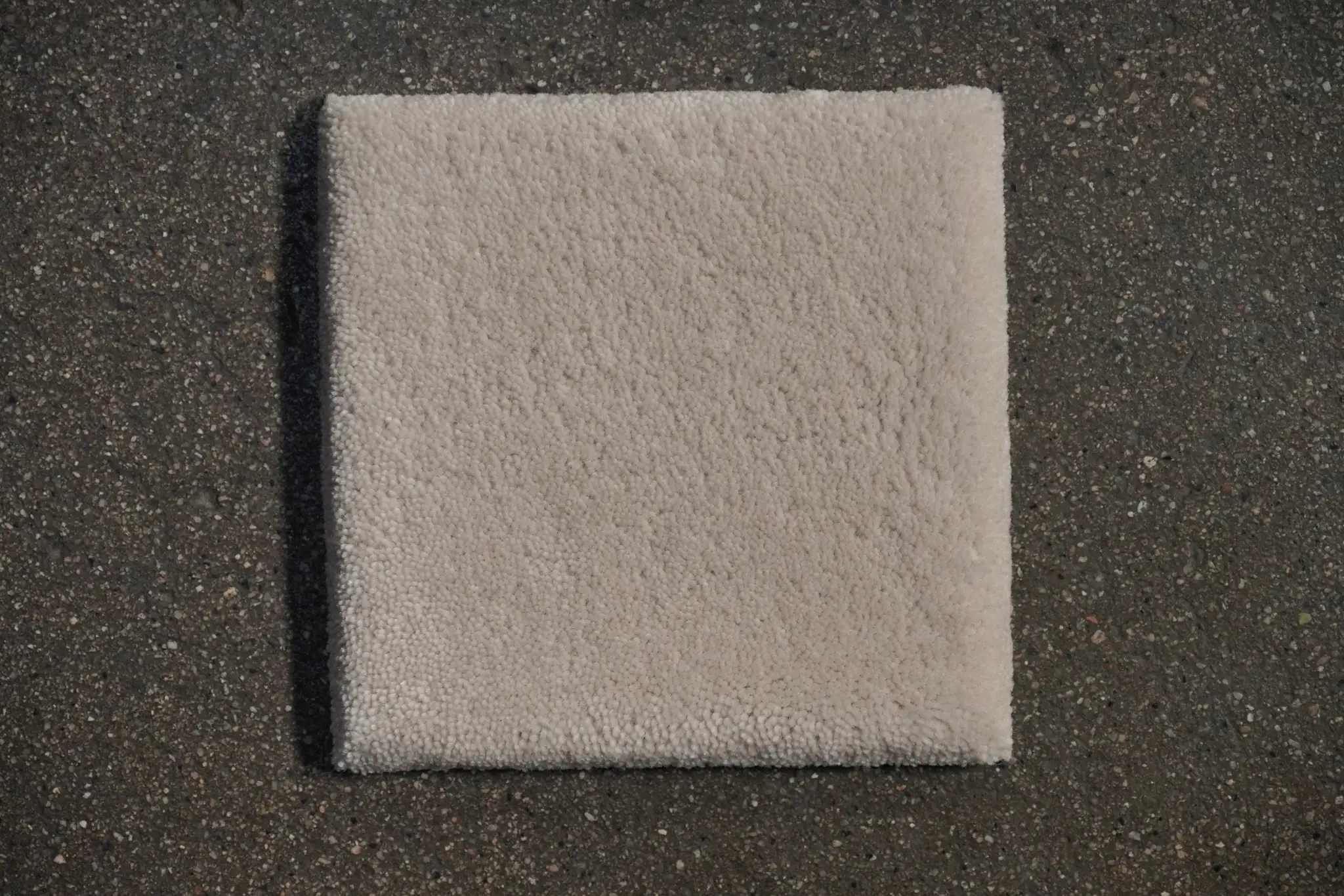
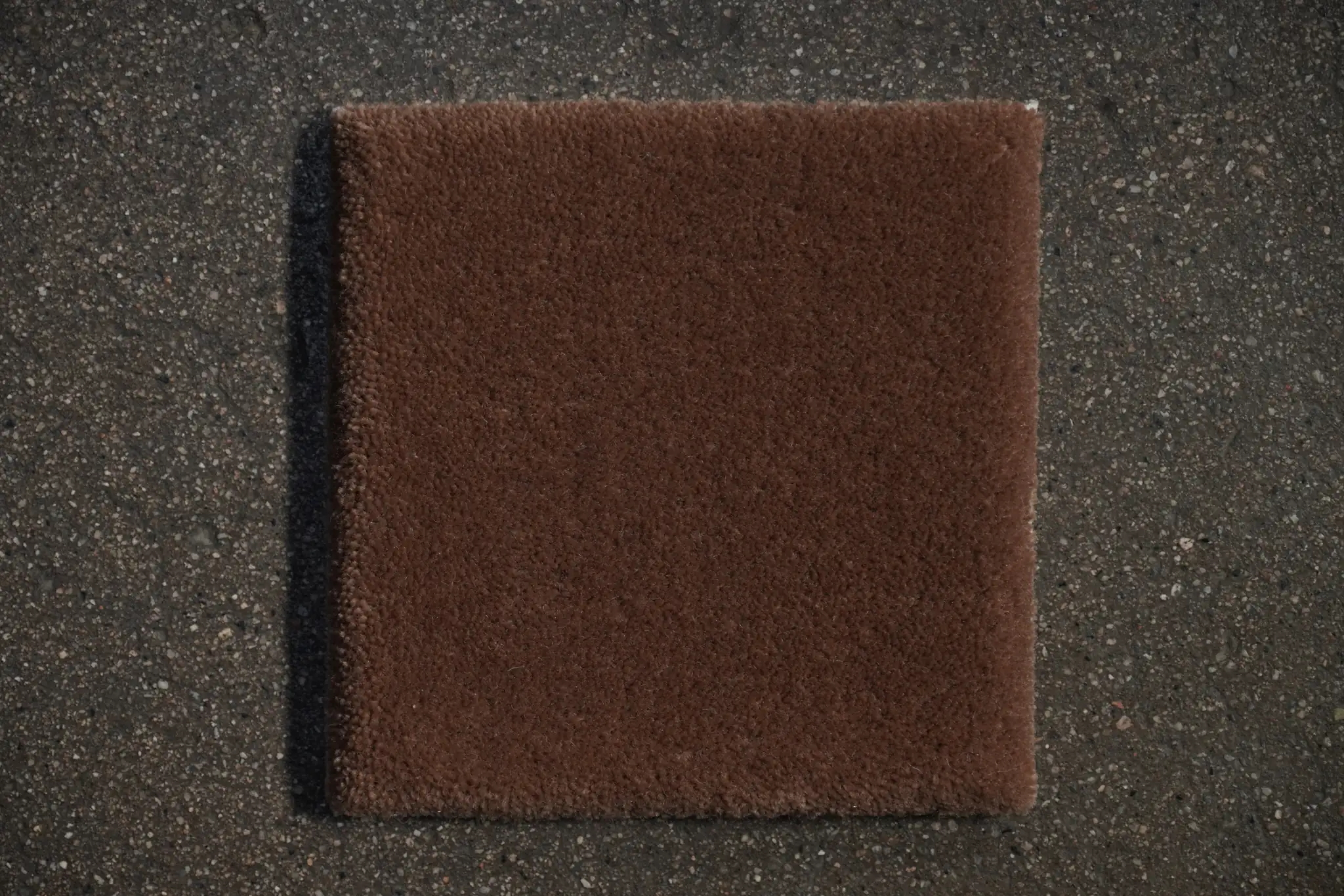
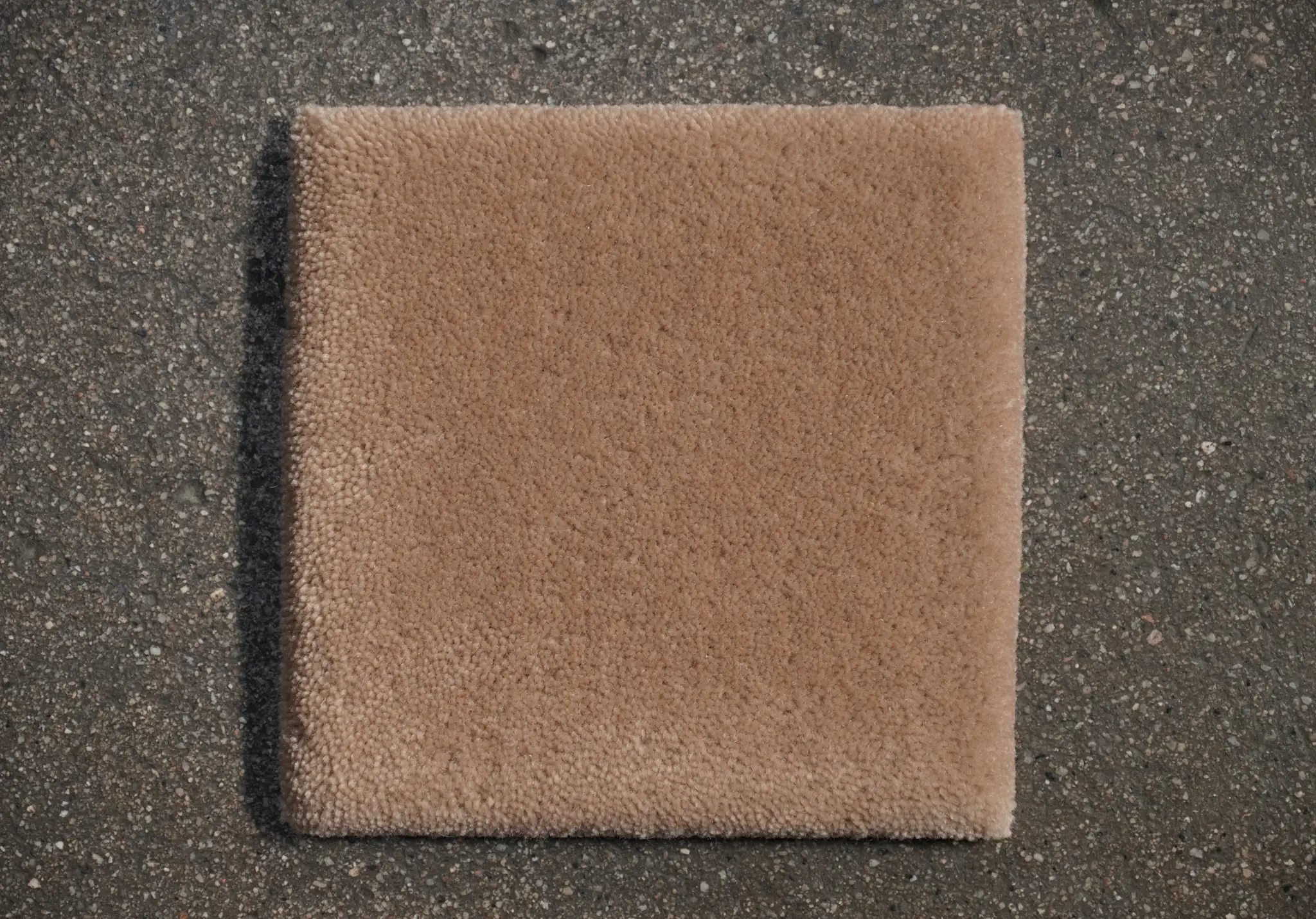
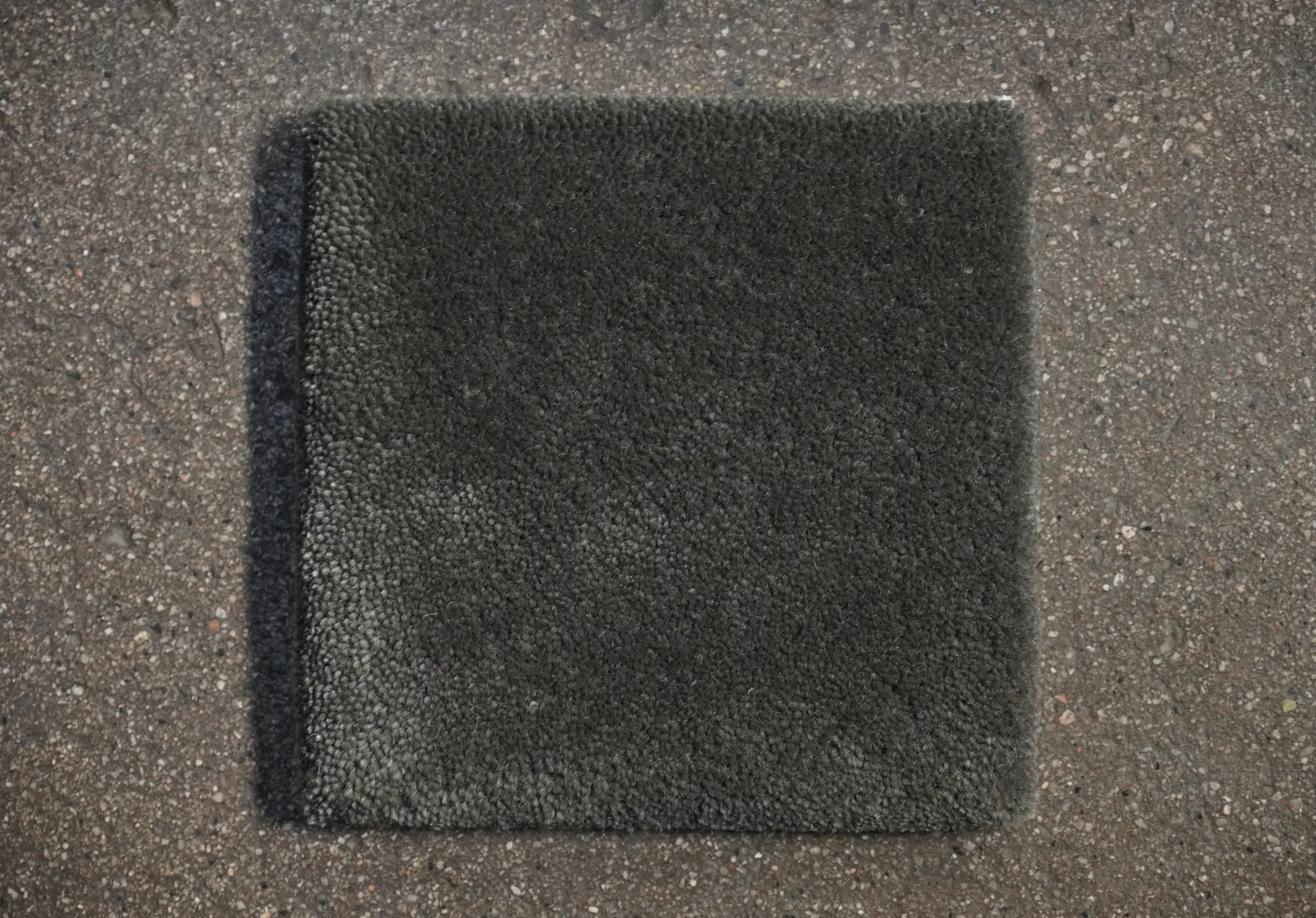
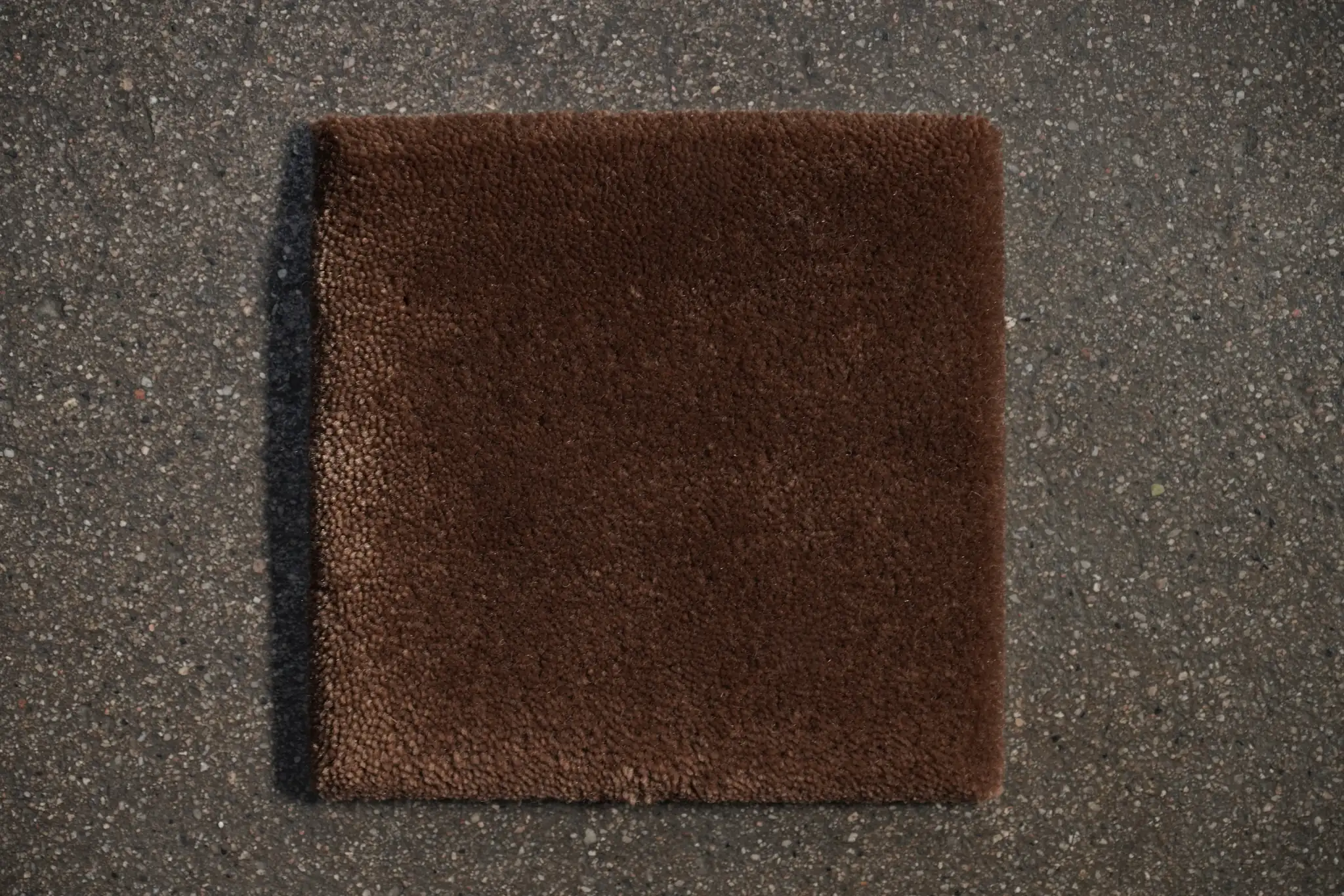
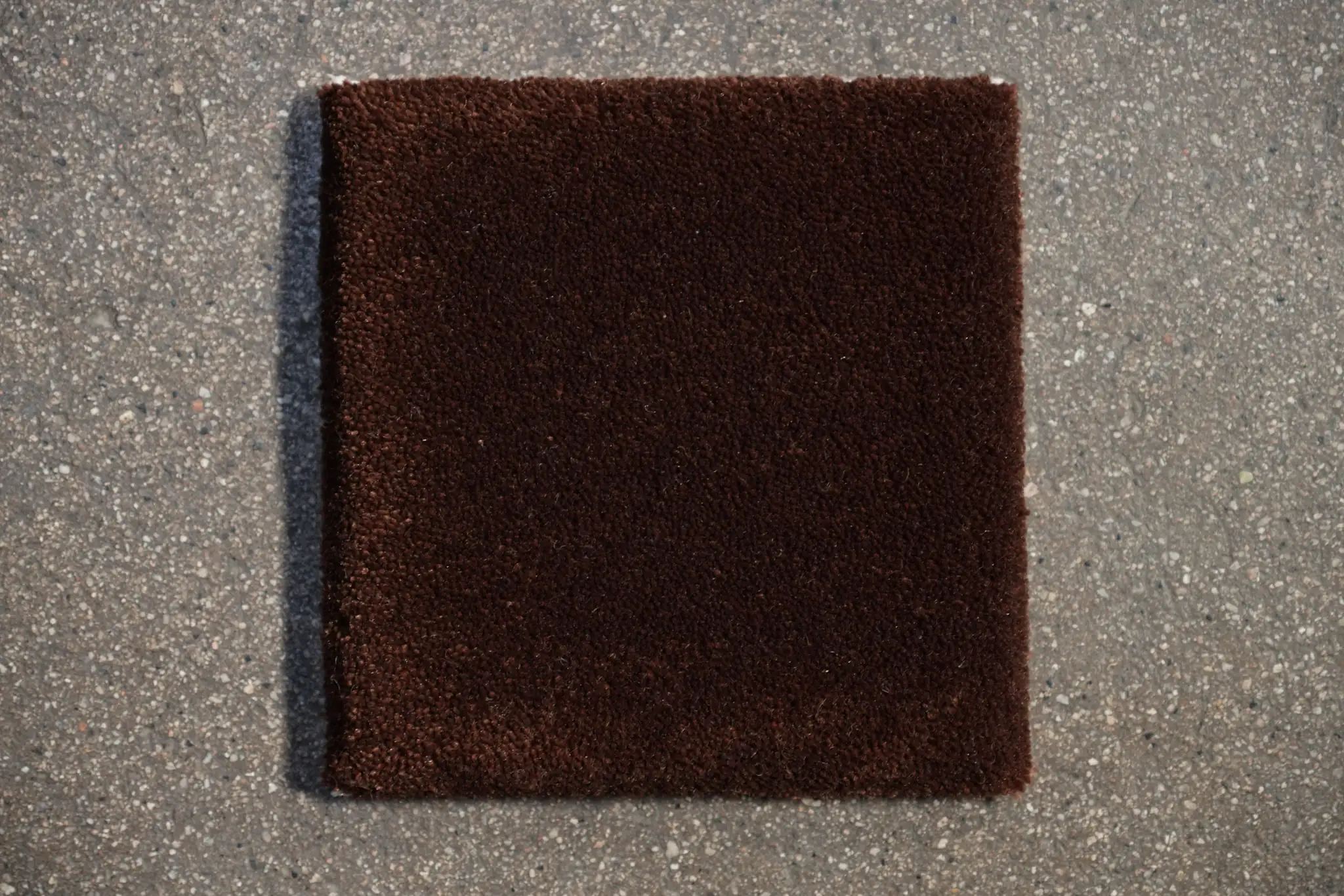
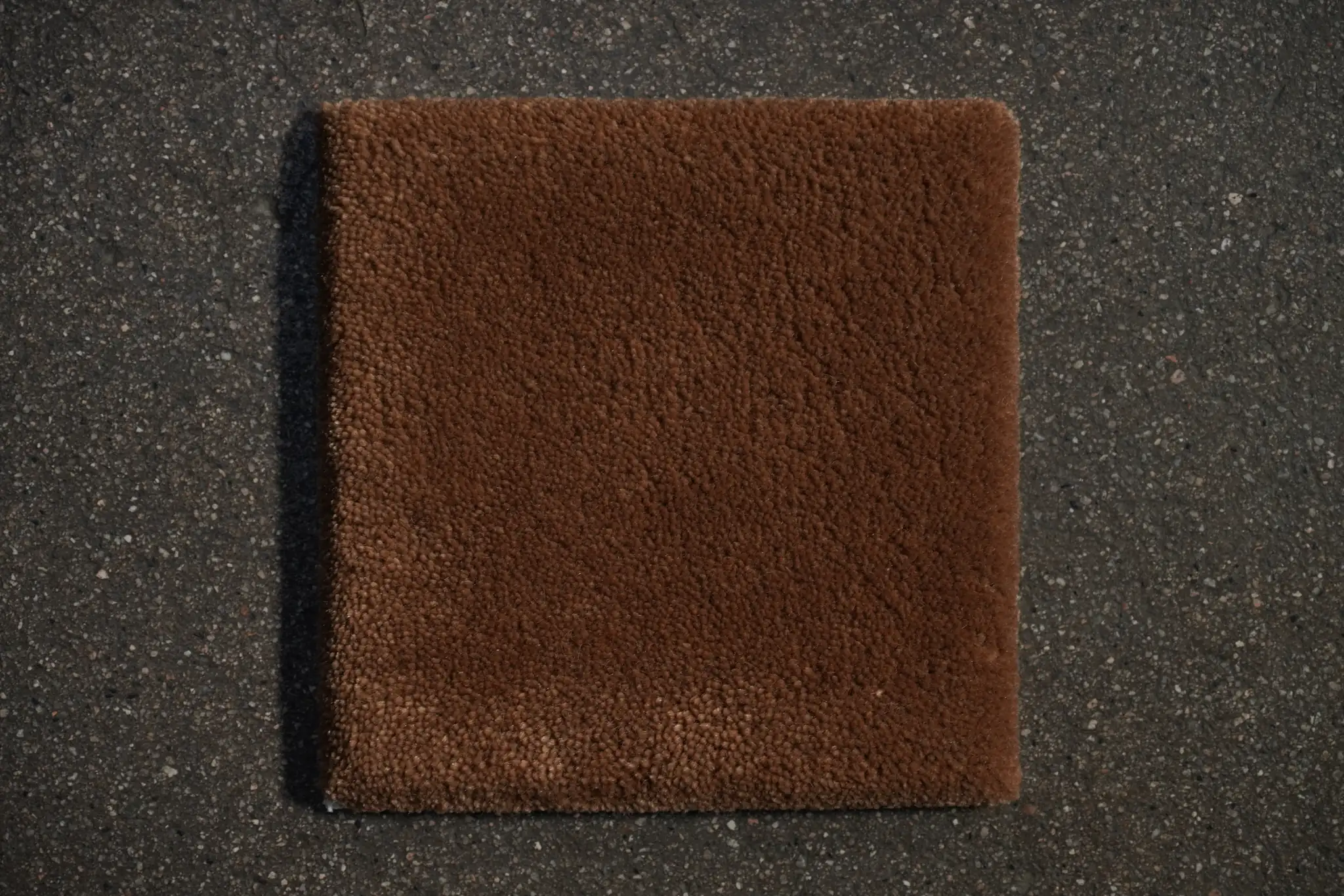
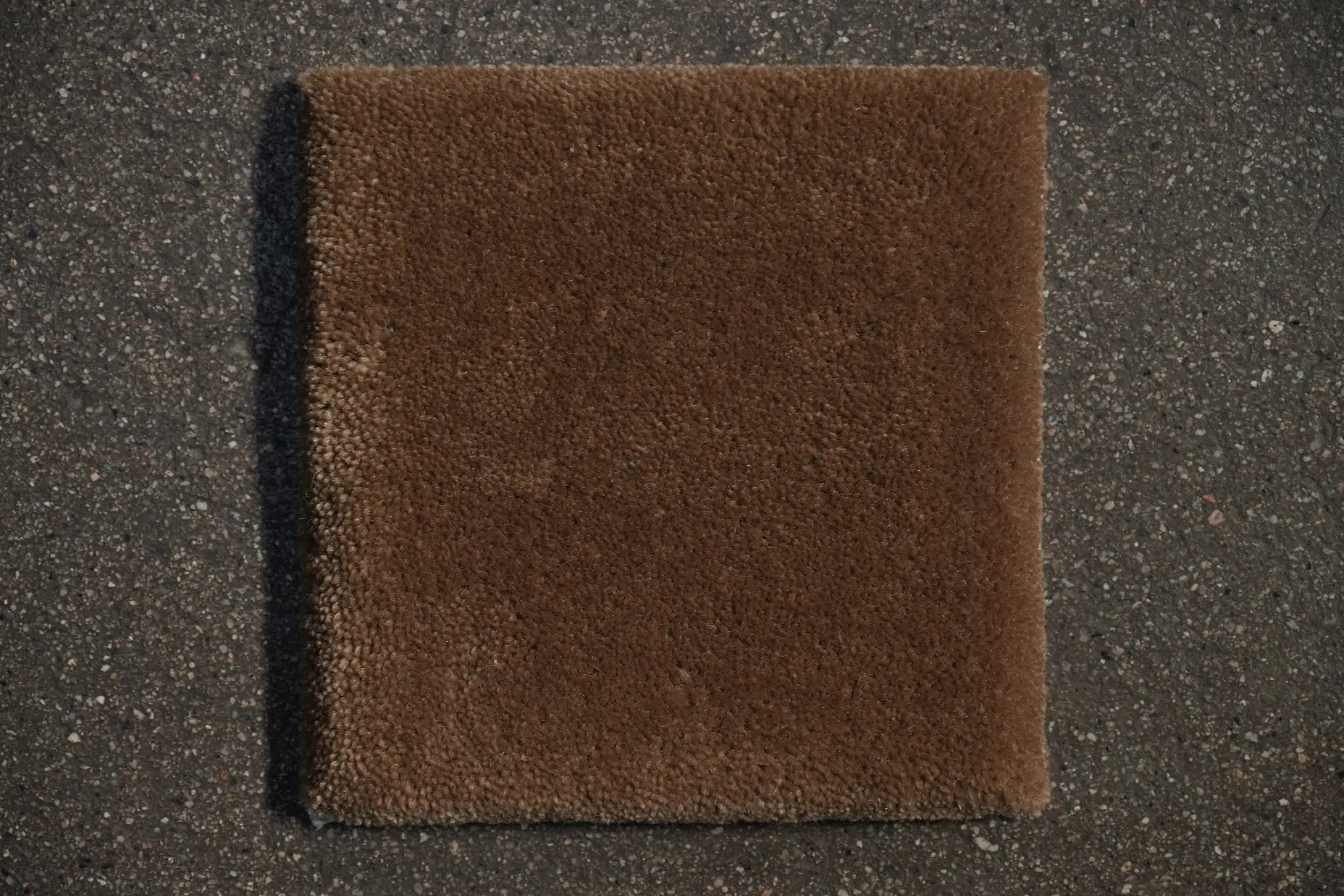
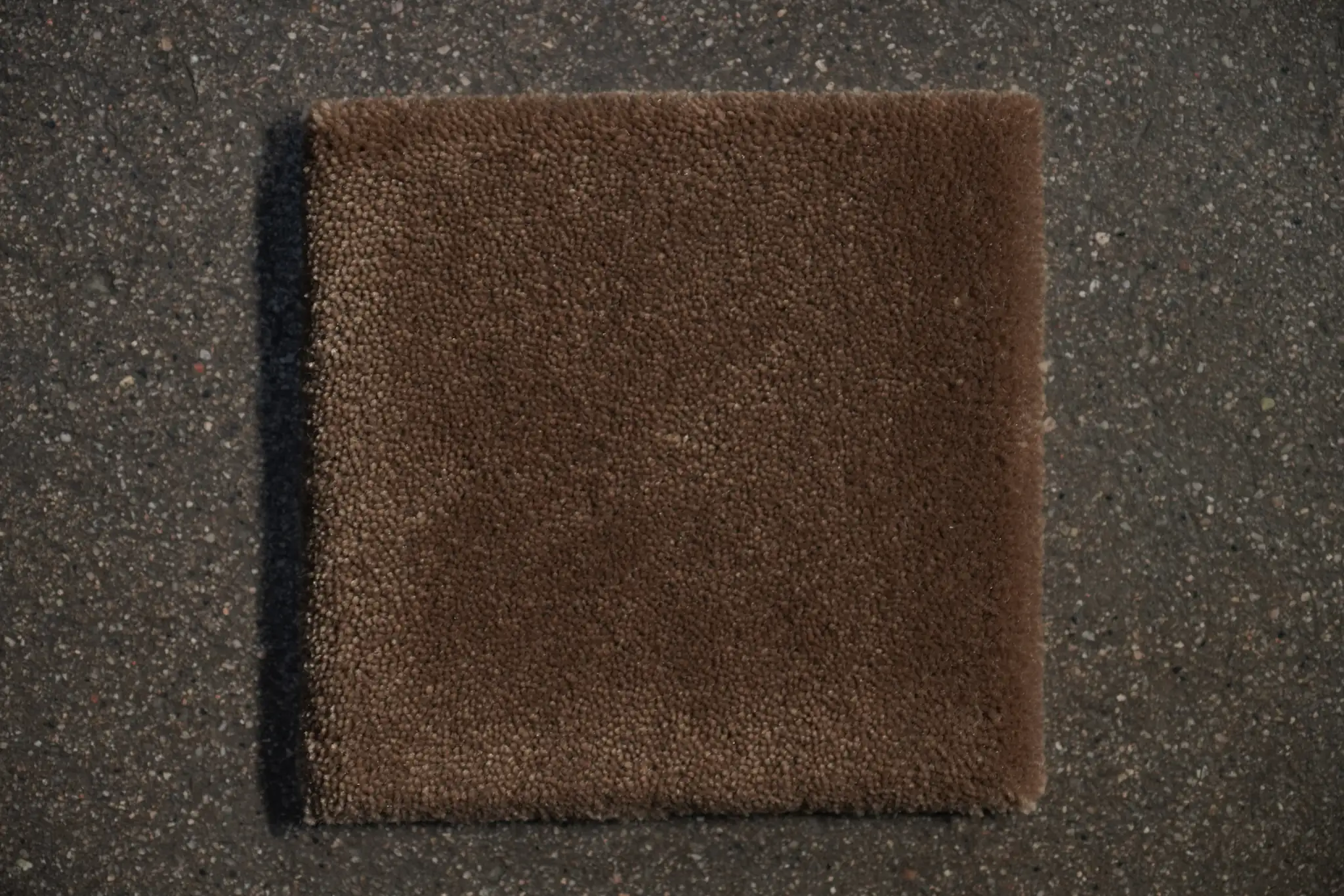
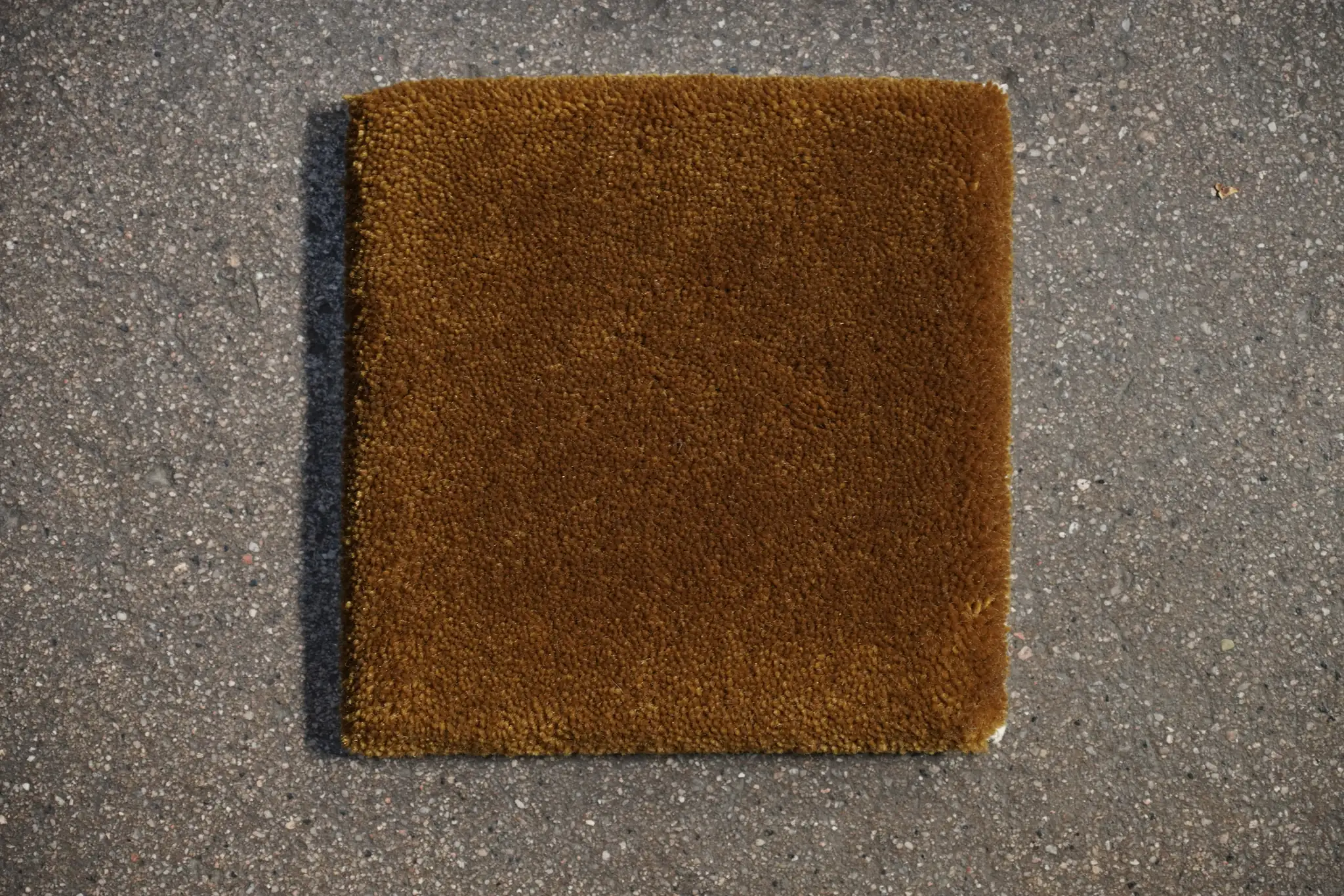
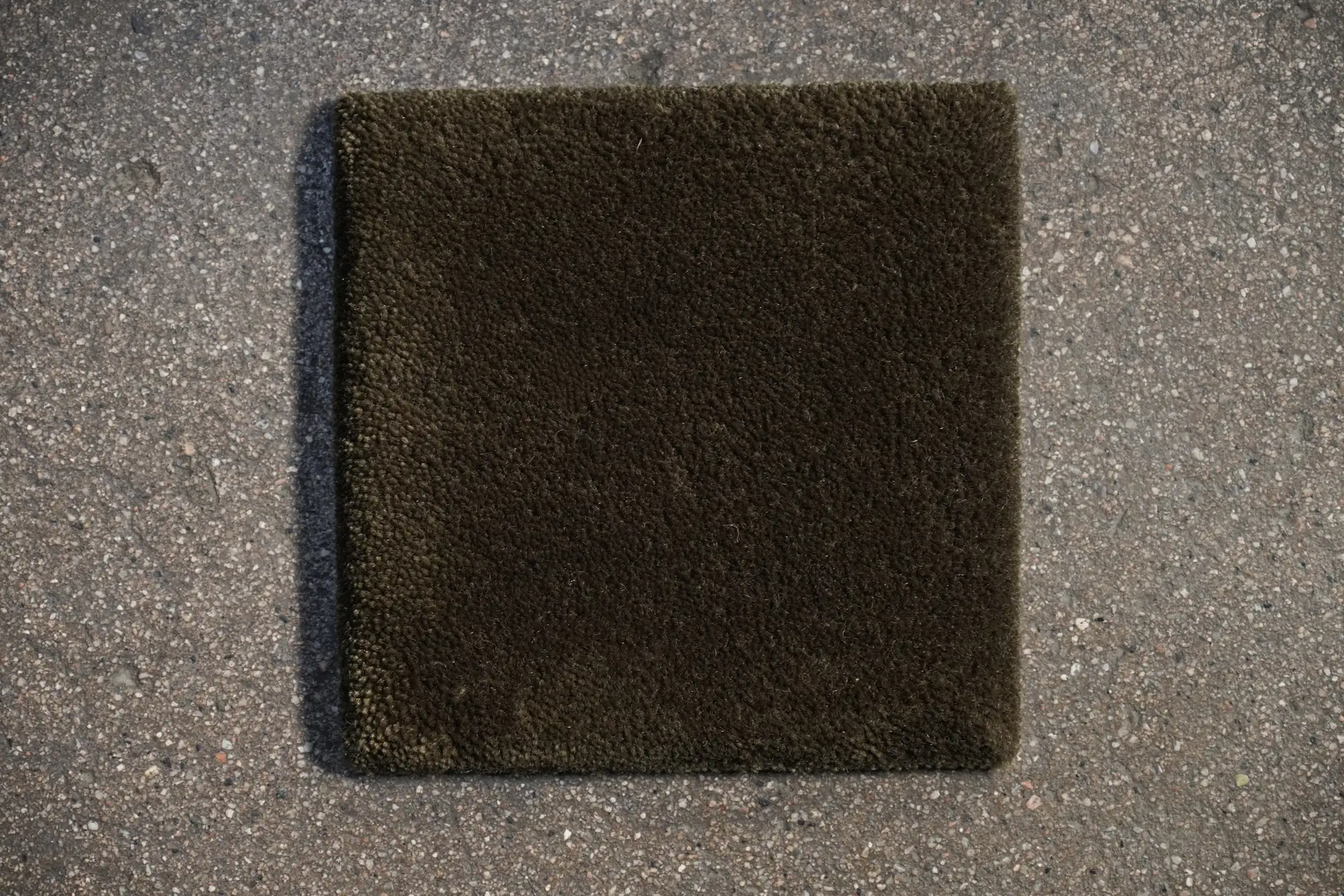
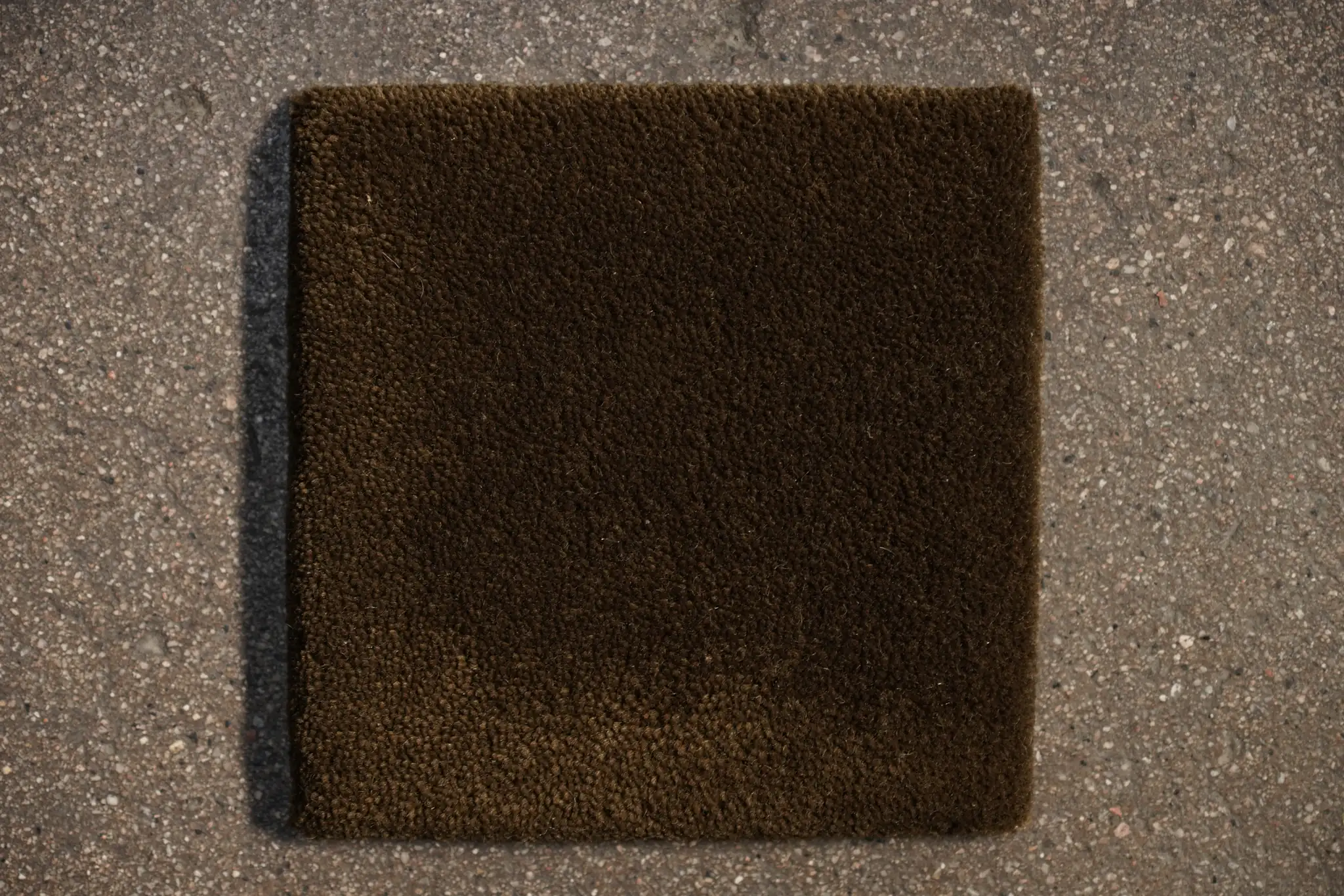
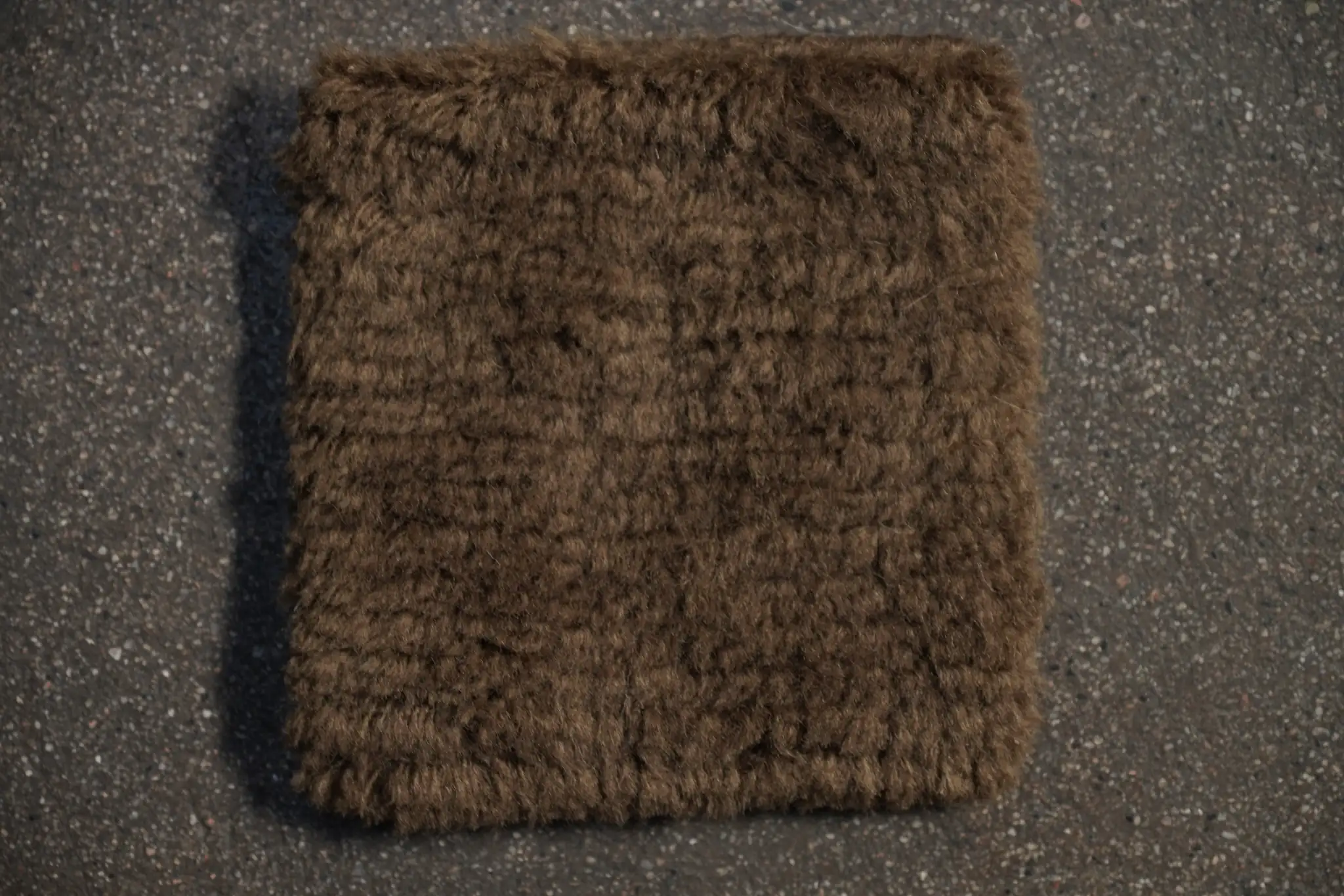
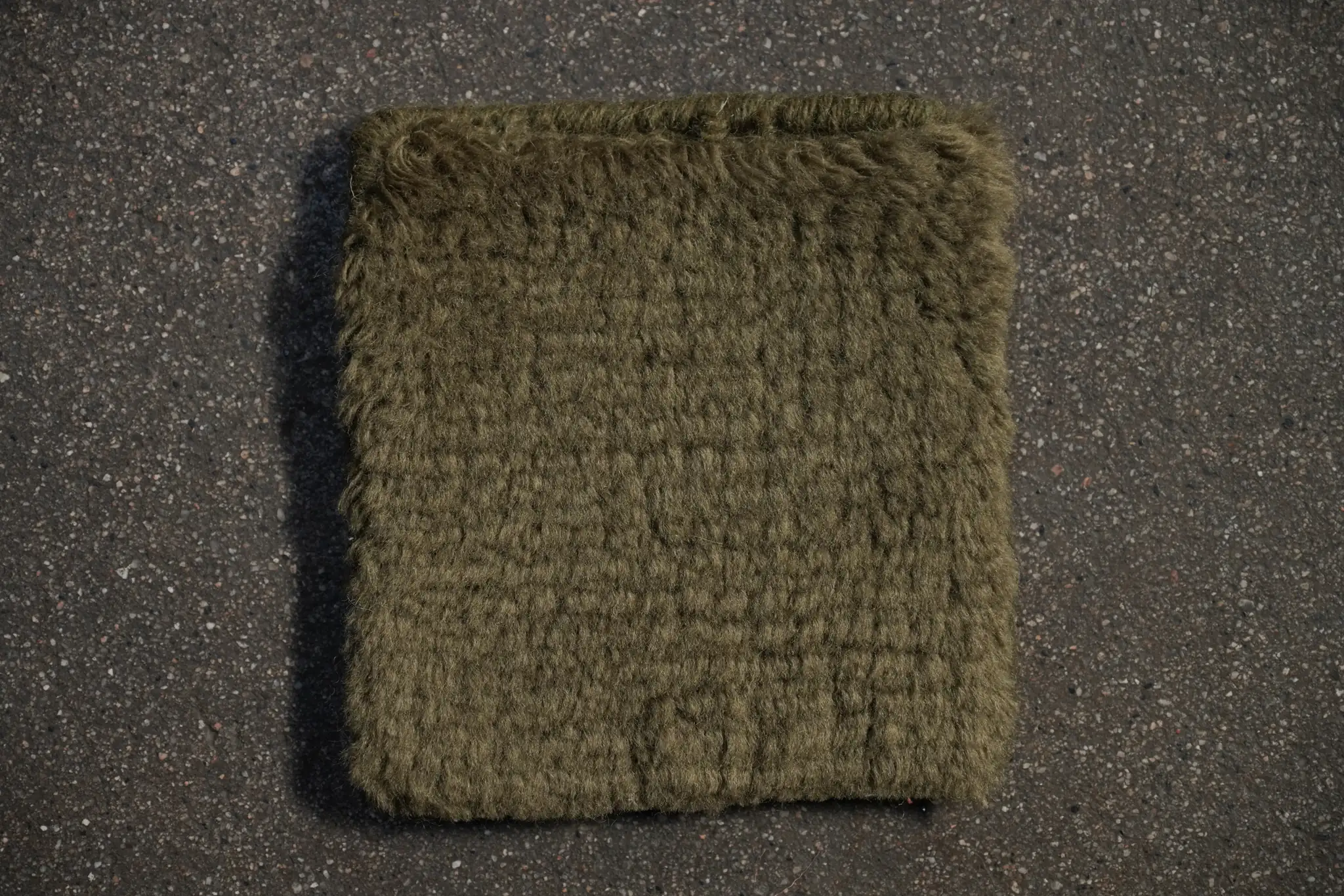
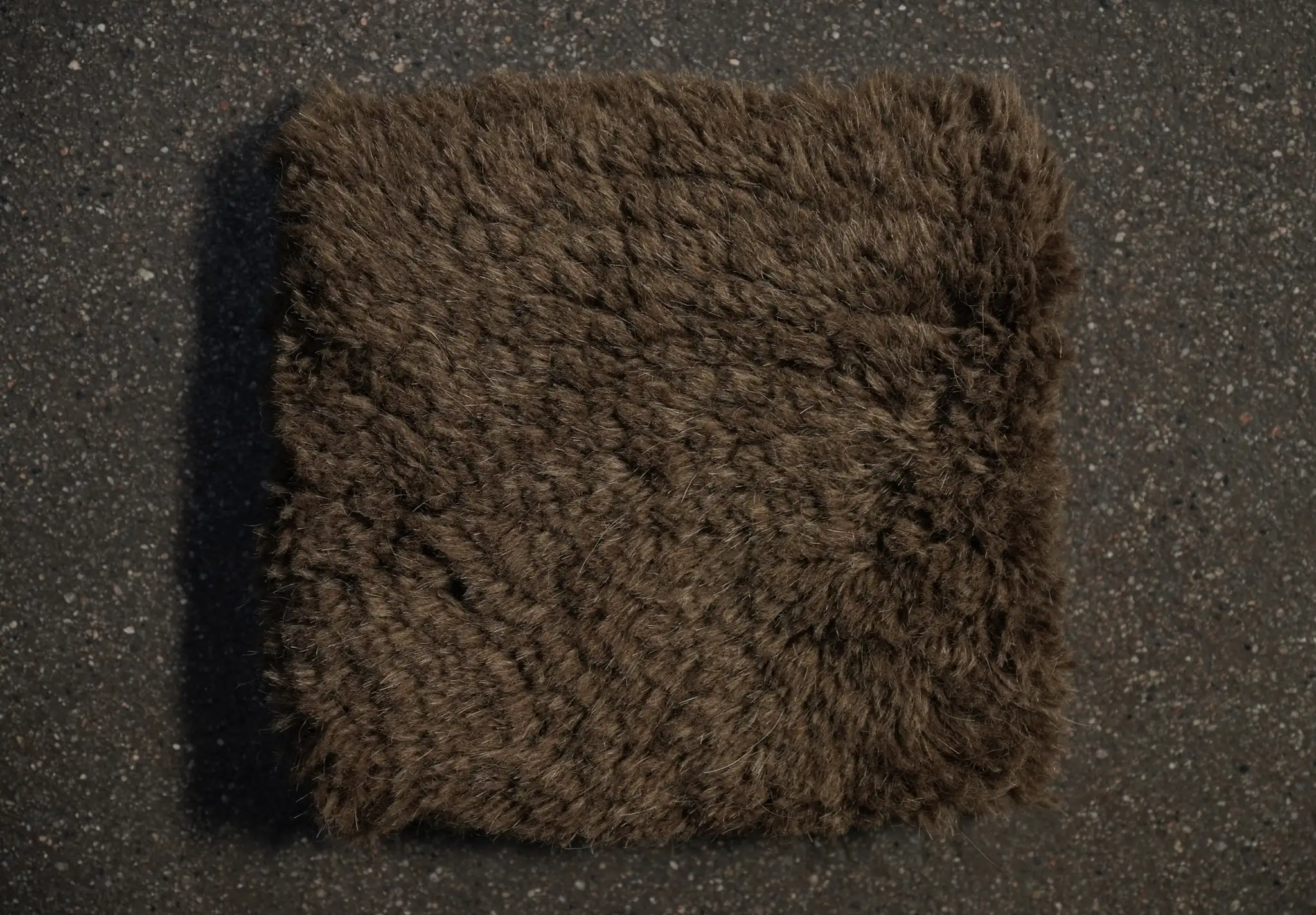
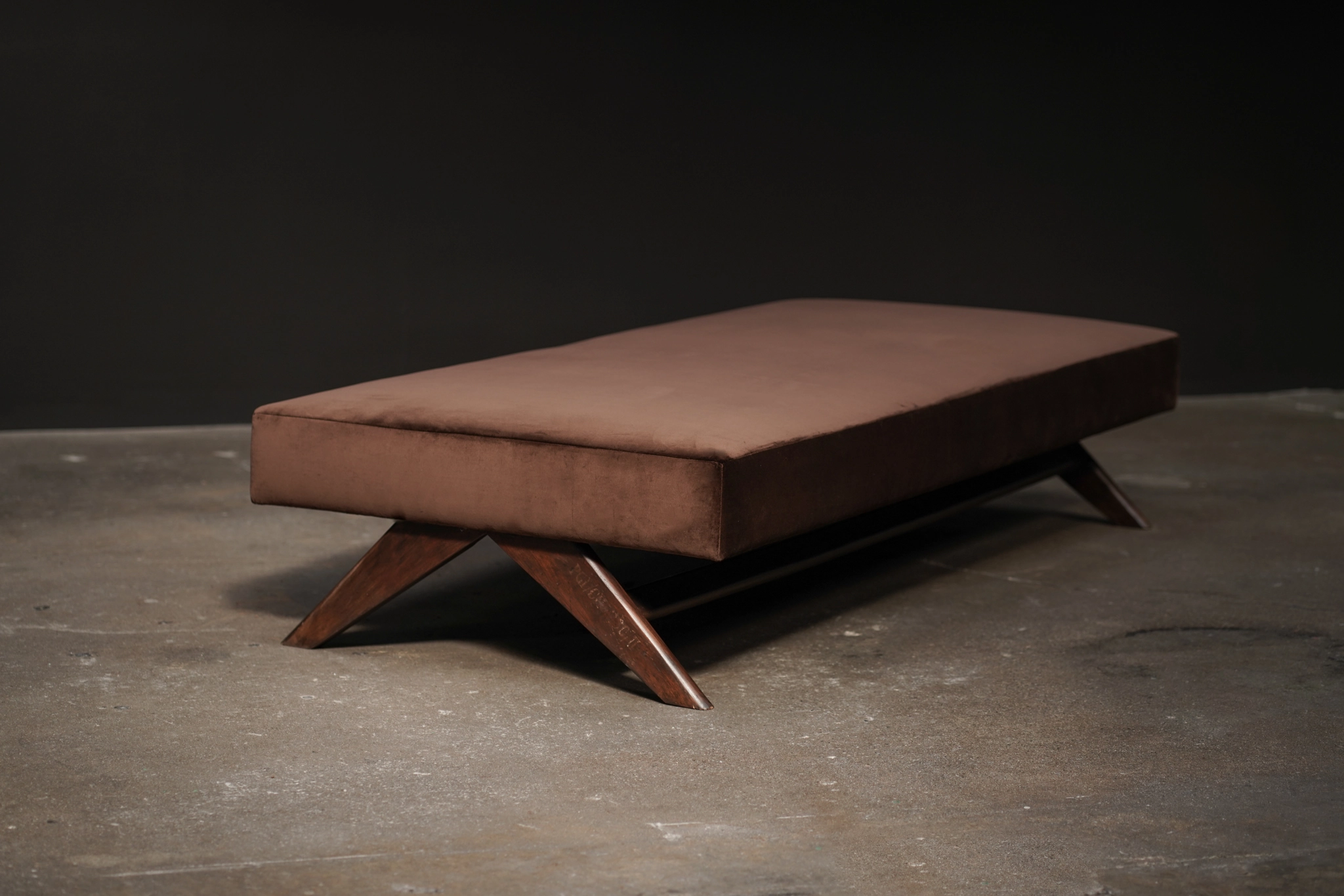
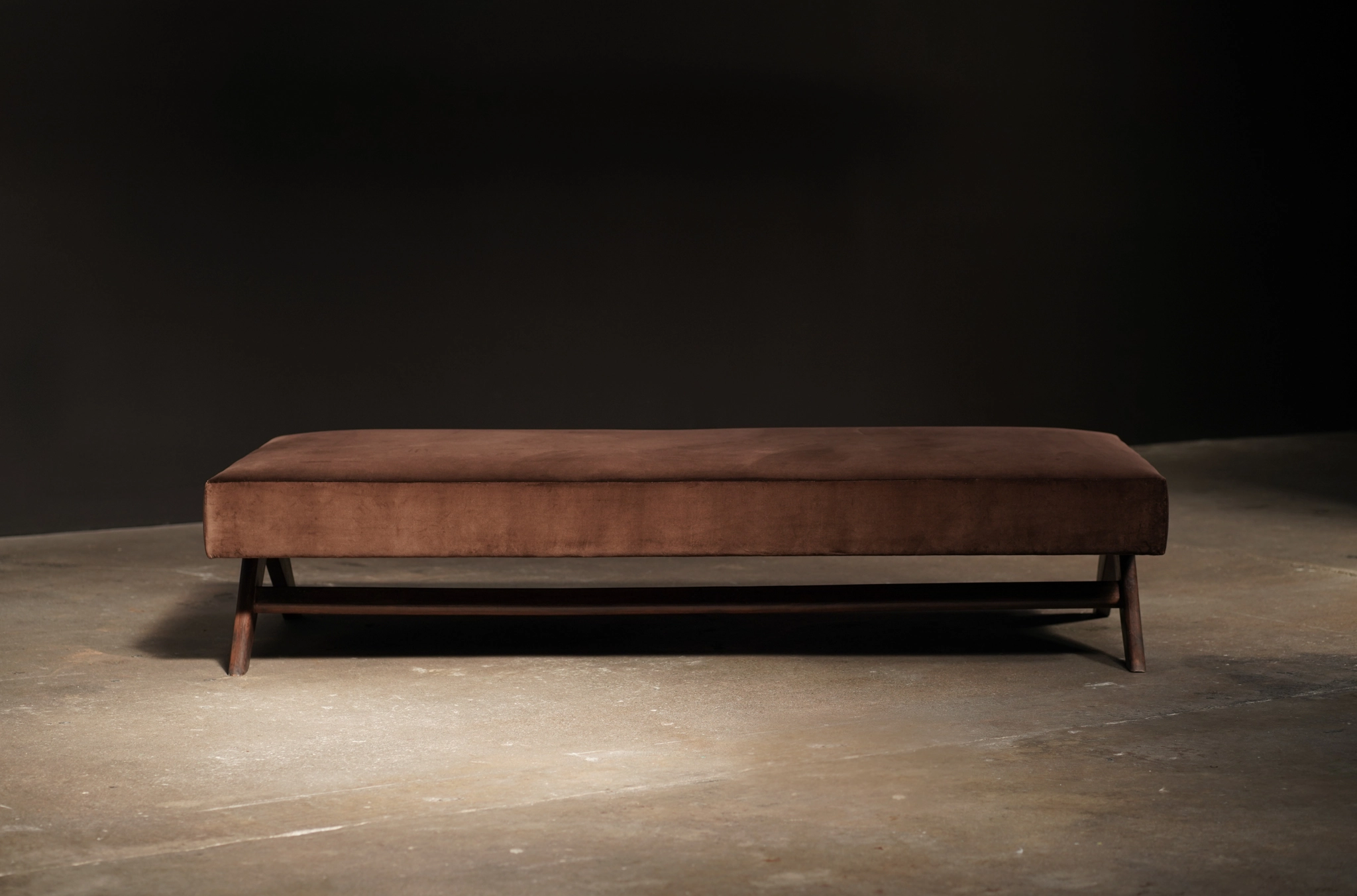
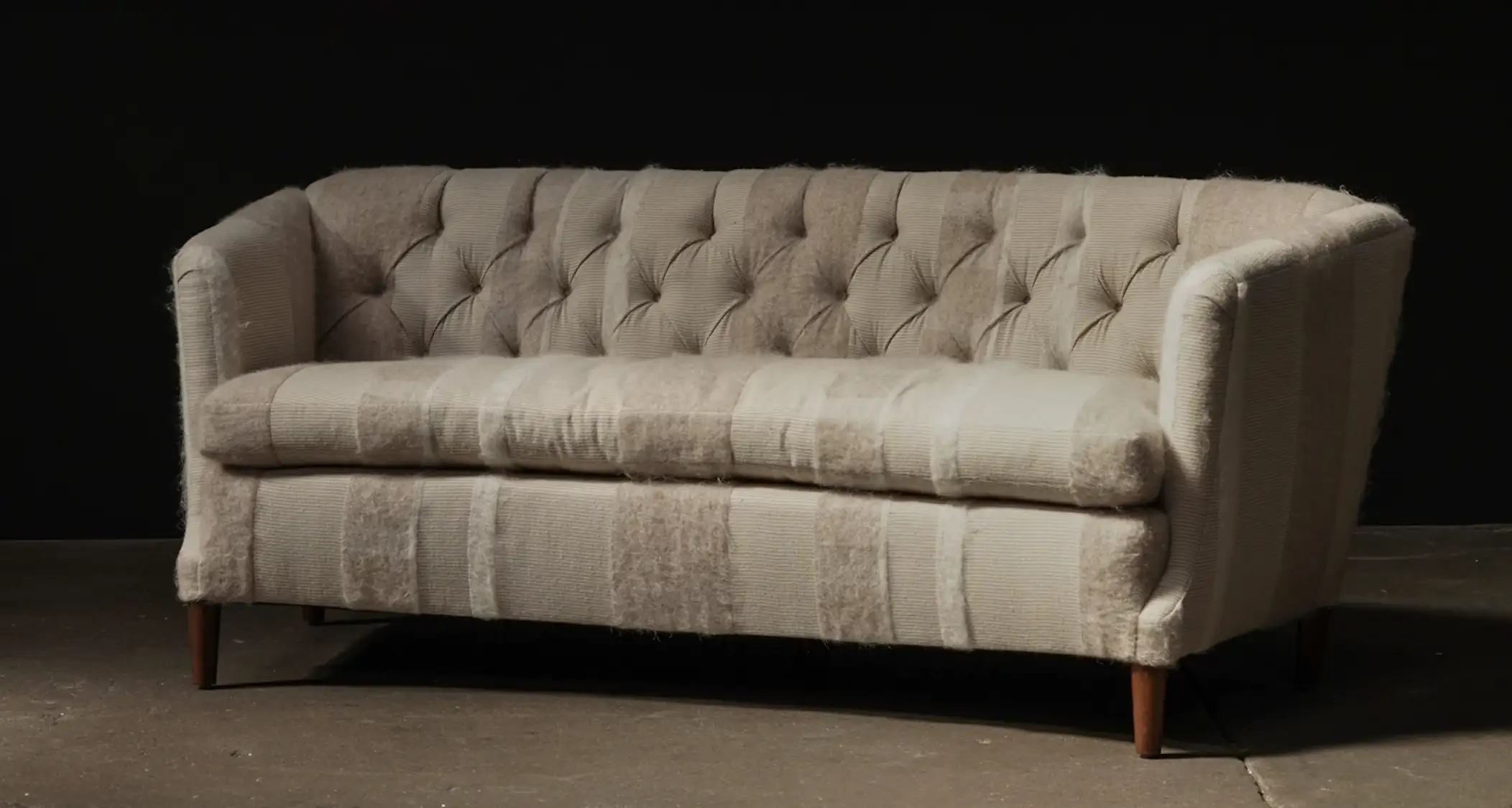
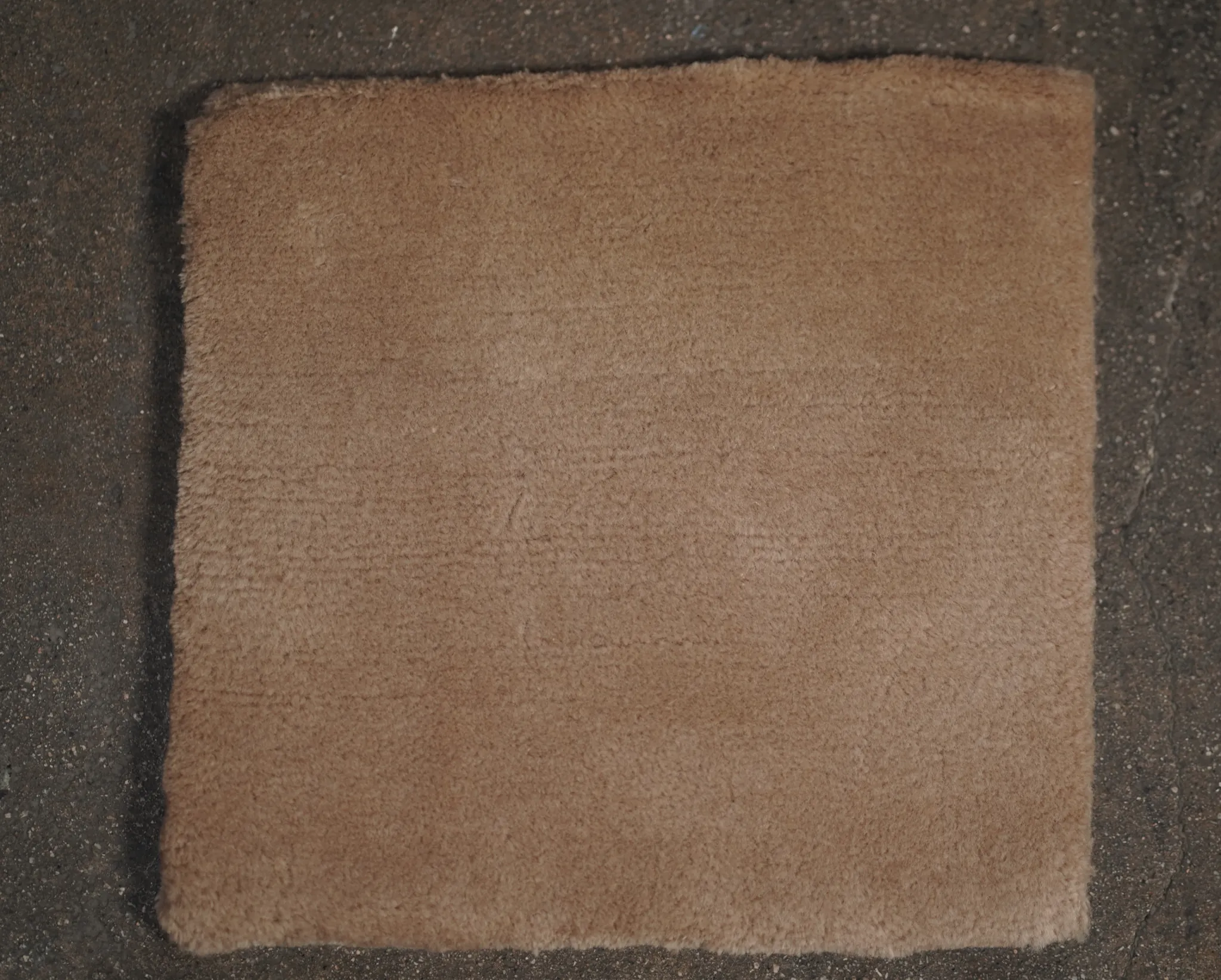
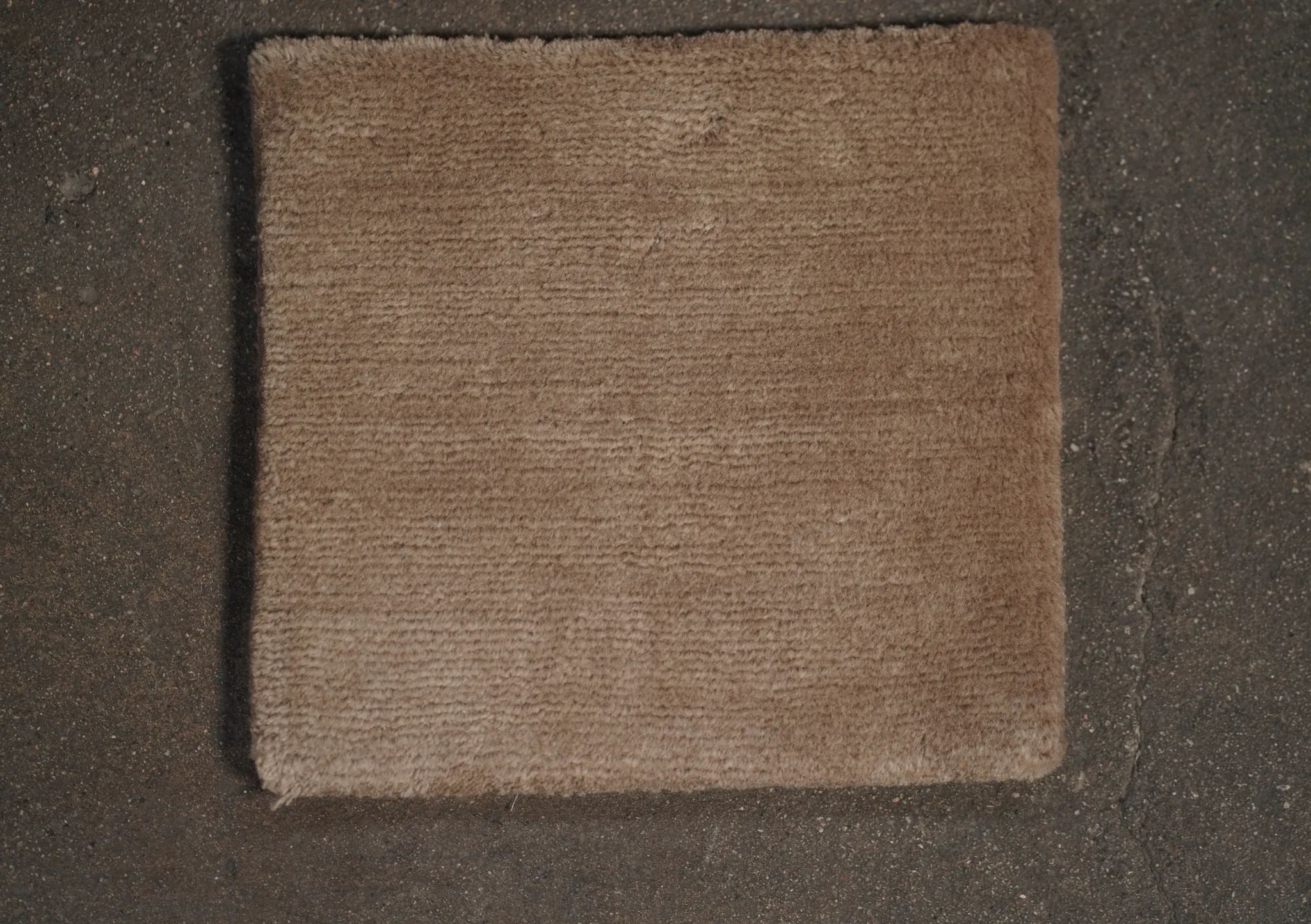
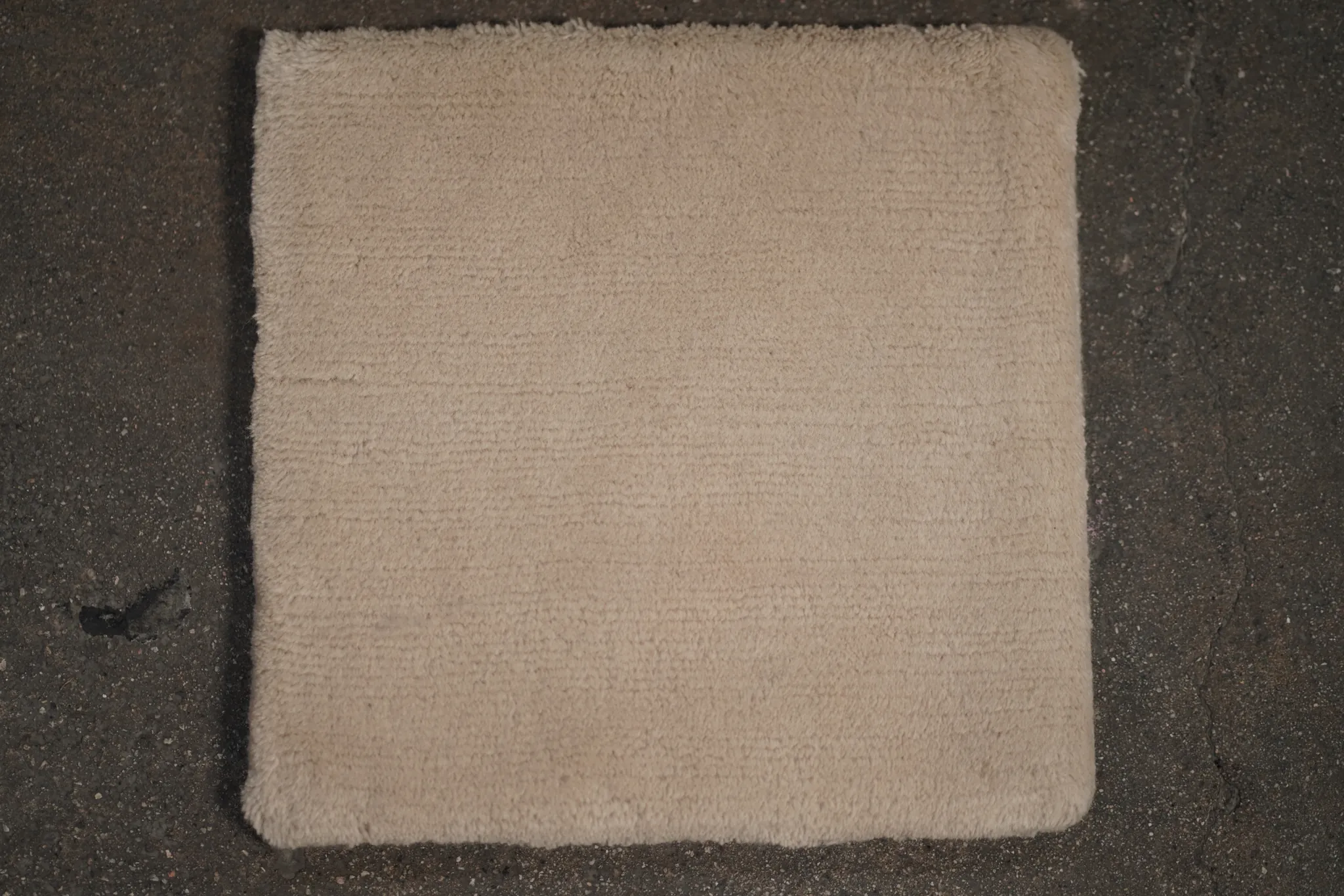
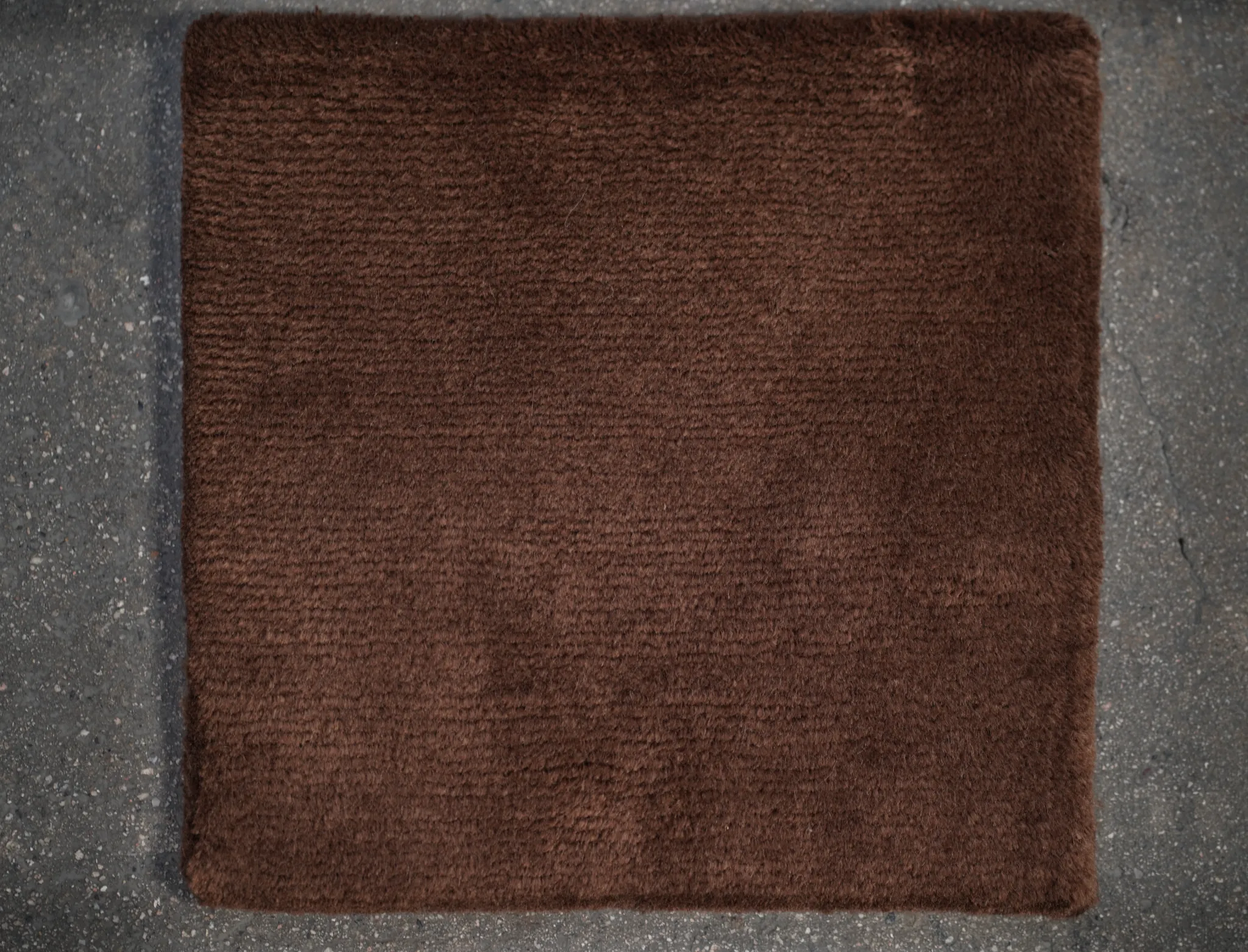
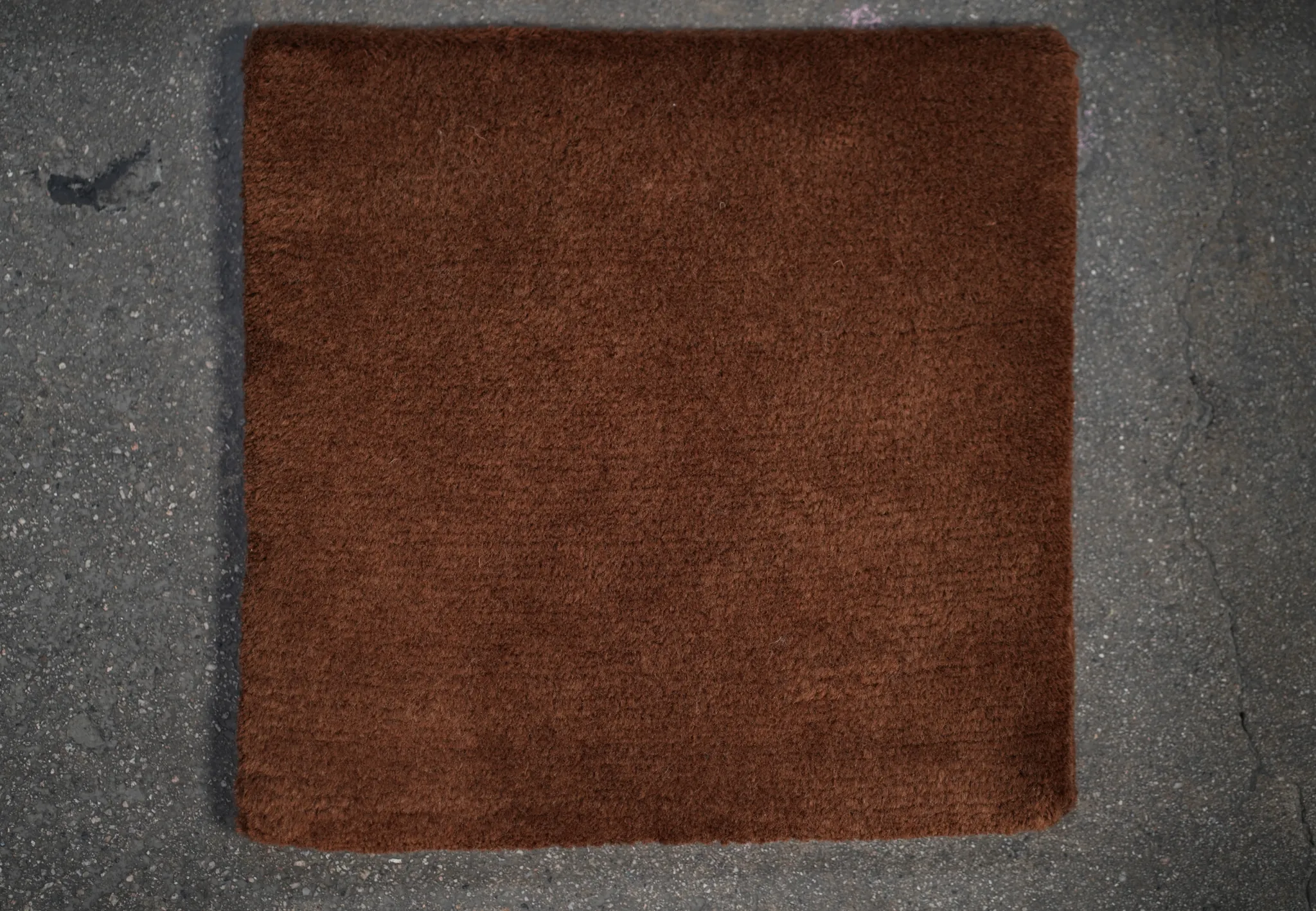
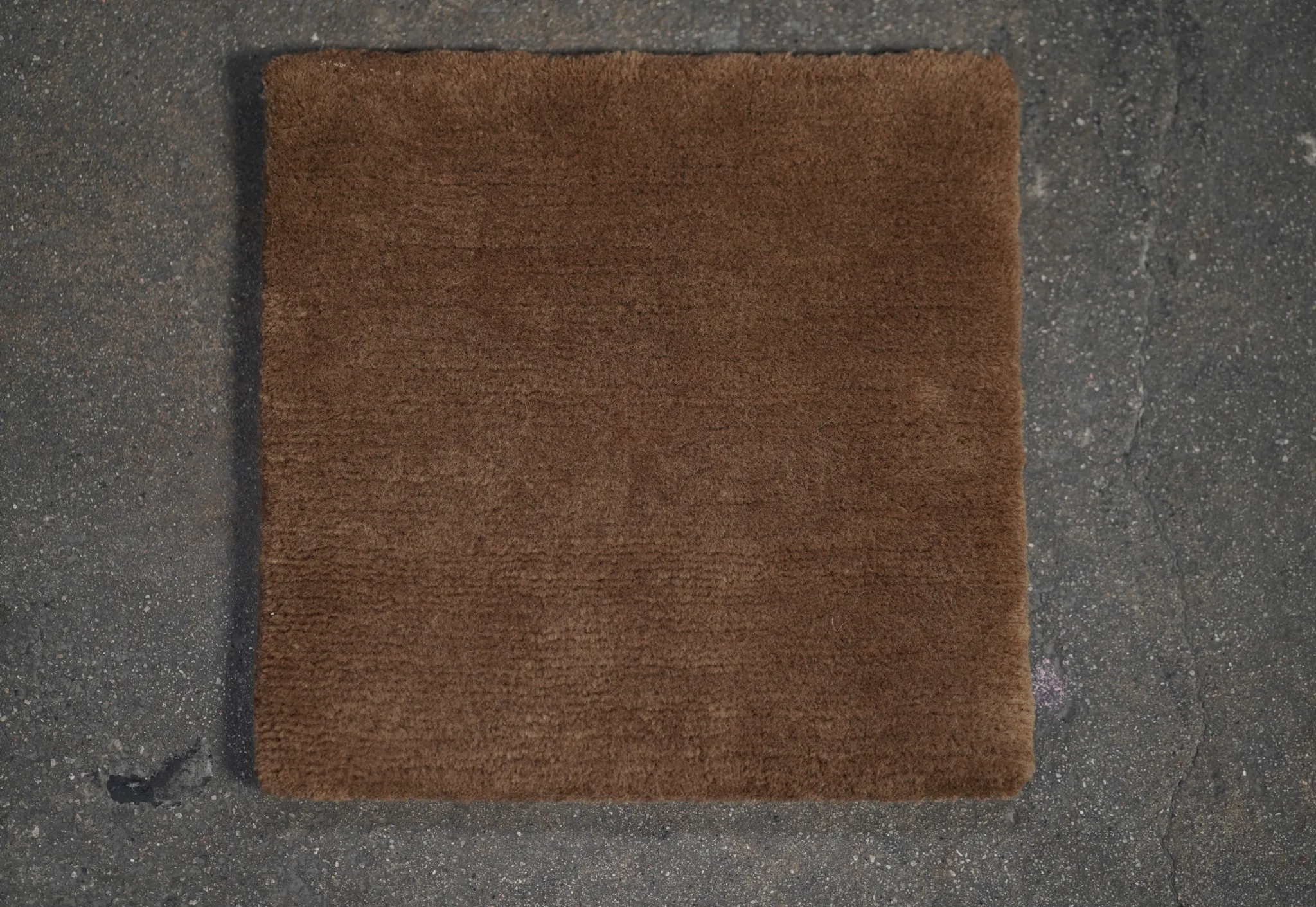
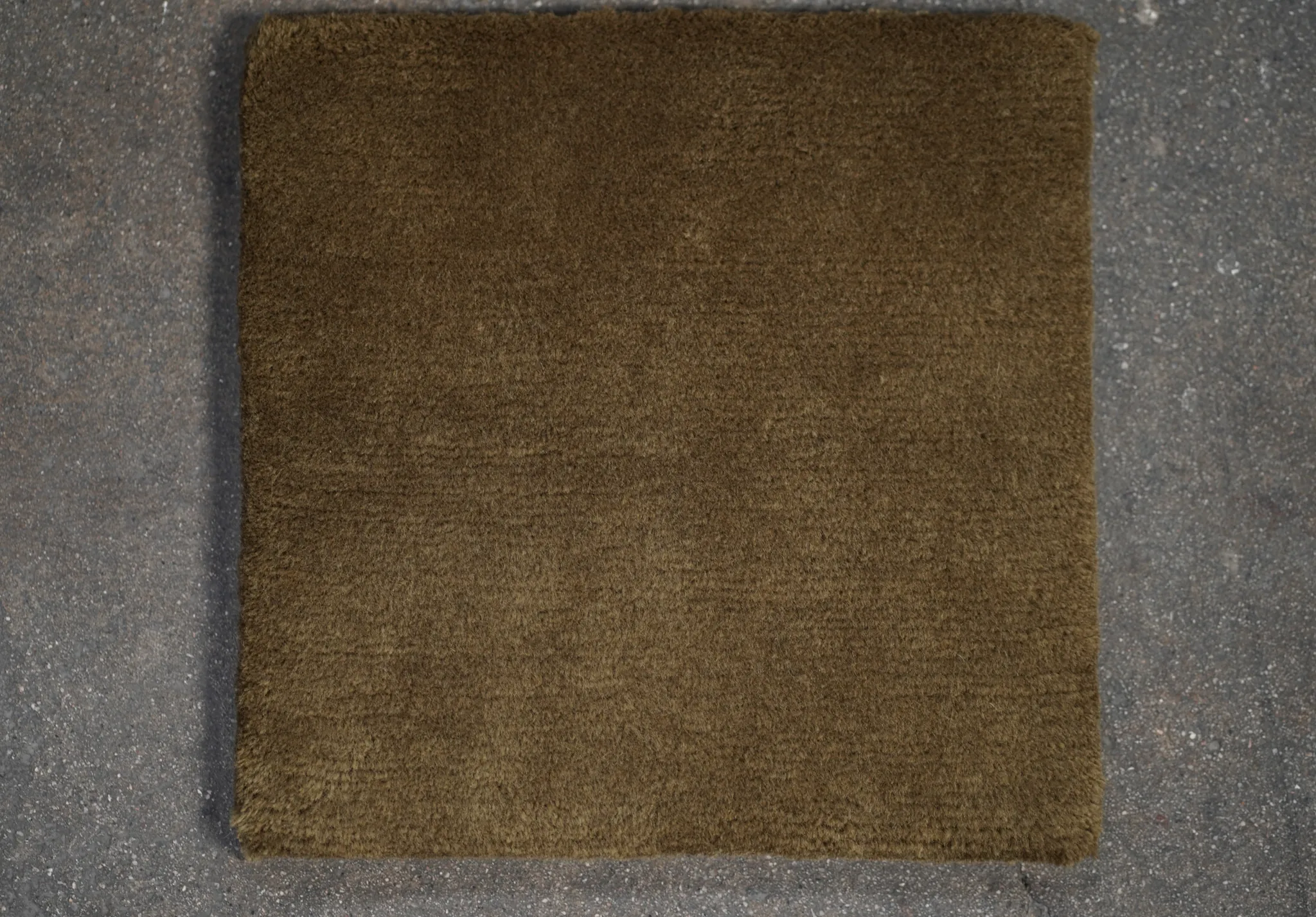
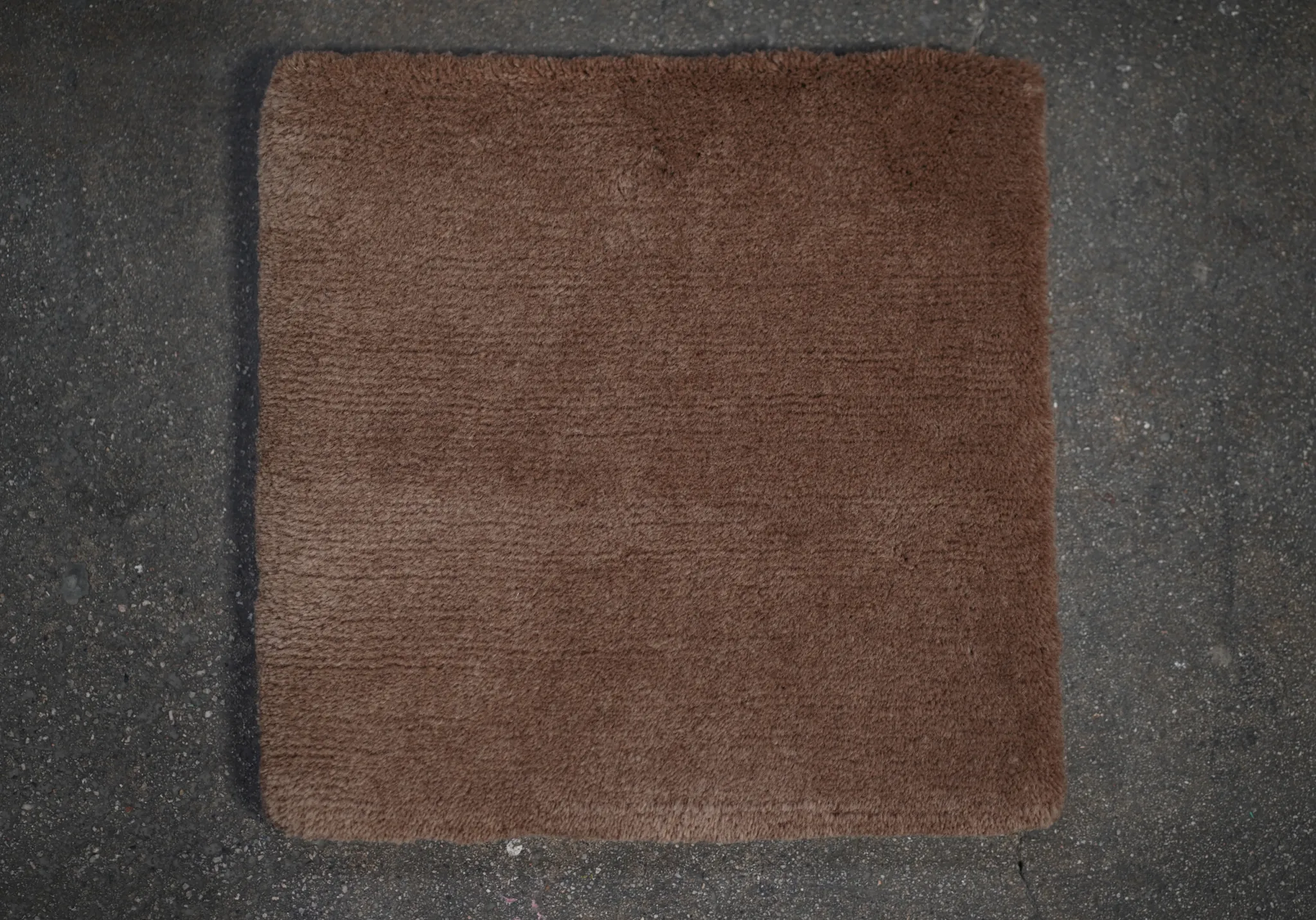
Low upholstered daybed by Pierre Jeanneret from the Chandigarh furniture program, circa 1957–1958. The broad rectangular platform is presented in contemporary brown velvet over a vintage teak frame, combining a soft continuous surface with an exposed, sharply articulated base.
Jeanneret’s furniture formed part of the larger architectural project of Chandigarh, the new city developed in post-independence India. Alongside desks, chairs and storage furniture, his daybeds addressed the quieter activities of rest and informal seating. Their generous horizontal surfaces were supported by a practical timber framework made with local craftsmen. The design gives an everyday furnishing the clarity of a small architectural structure, with its proportions, visible joints and open spaces establishing a close relationship between useful construction and sculptural form.
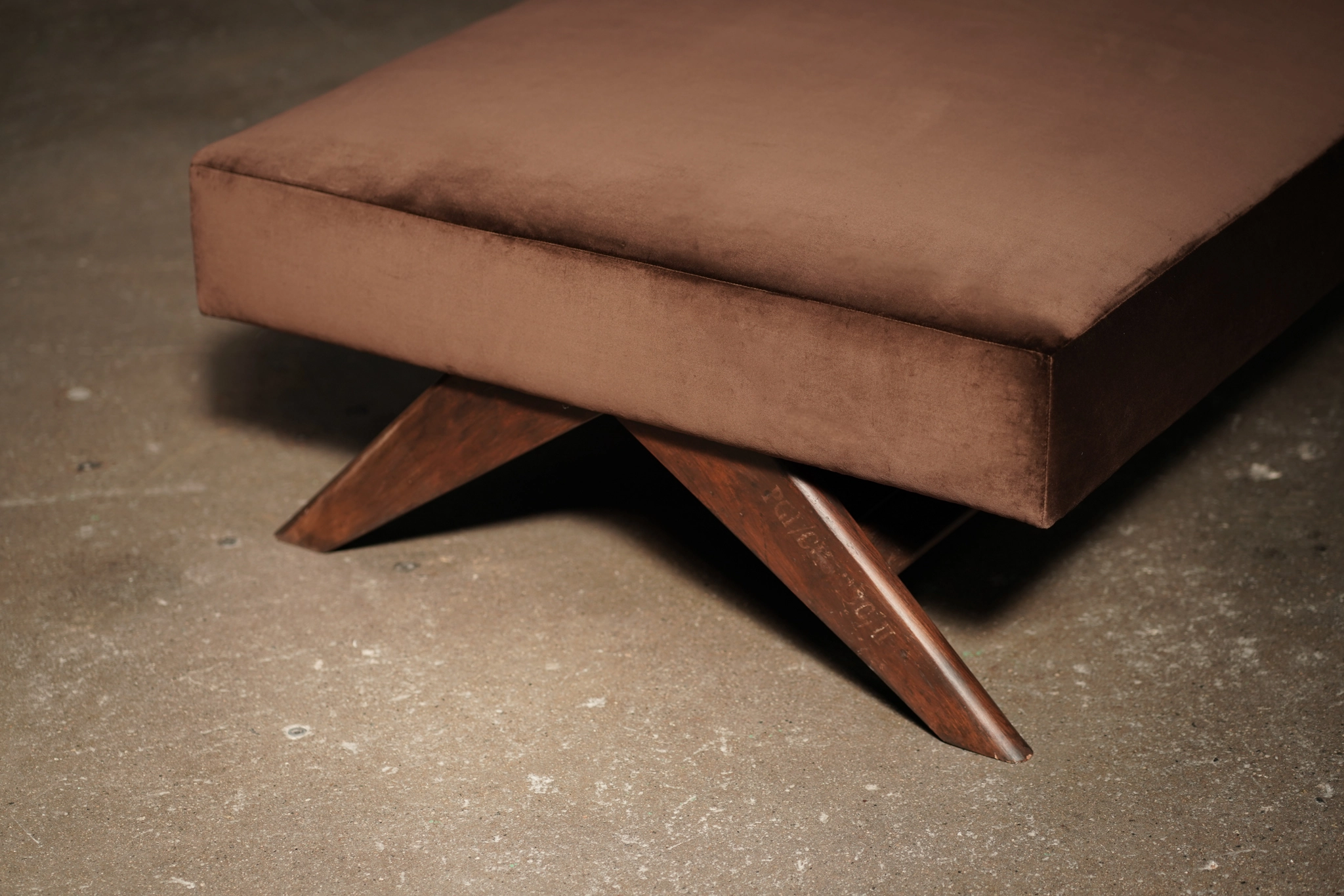
The low seat is carried on outward-angled timber supports at each end. Their compass geometry creates a wide, stable stance, while a long stretcher binds the base beneath the upholstered platform. The absence of a raised back gives the object a clear horizontal emphasis and allows the structure to be appreciated from both long sides.
The velvet follows the uninterrupted outline of the rectangular pad, leaving the timber rails and legs visible below. Its muted brown tone brings out the warmer reddish grain of the wood. At 17 inches high, the daybed has an especially low profile; the substantial depth gives the upholstered plane a generous scale without increasing the visual weight of the supporting frame.
Surviving pale painted inventory lettering is visible along one of the outward-angled teak legs. It includes the “PGI” designation, with further worn inventory characters continuing along the timber. PGI refers to the Postgraduate Institute of Medical Education and Research in Chandigarh, founded in 1962. The marking associates the frame with later institutional use at the institute, following the circa 1957–1958 design date. Its faded paint and the surrounding rubbed woodwork preserve evidence of the daybed’s working history beneath the contemporary velvet-covered platform.
The vintage teak retains variations in grain, color and surface wear, with softened edges and individual traces of use visible in the photographs. These details give the woodwork its material character and preserve the sense of a furnishing made for daily life in institutional or residential interiors. The present upholstery is a later treatment of the vintage structure.
A related daybed appears in Rago’s Modern Design catalogue, September 2024, lot 194.
Dimensions: approximately 78.5 inches wide, 37 inches deep, 17 inches high.
Provenance: private collection, Chandigarh, India, as recorded by Studio Balestra.
Accompanied by a Studio Balestra Certificate of Authenticity.