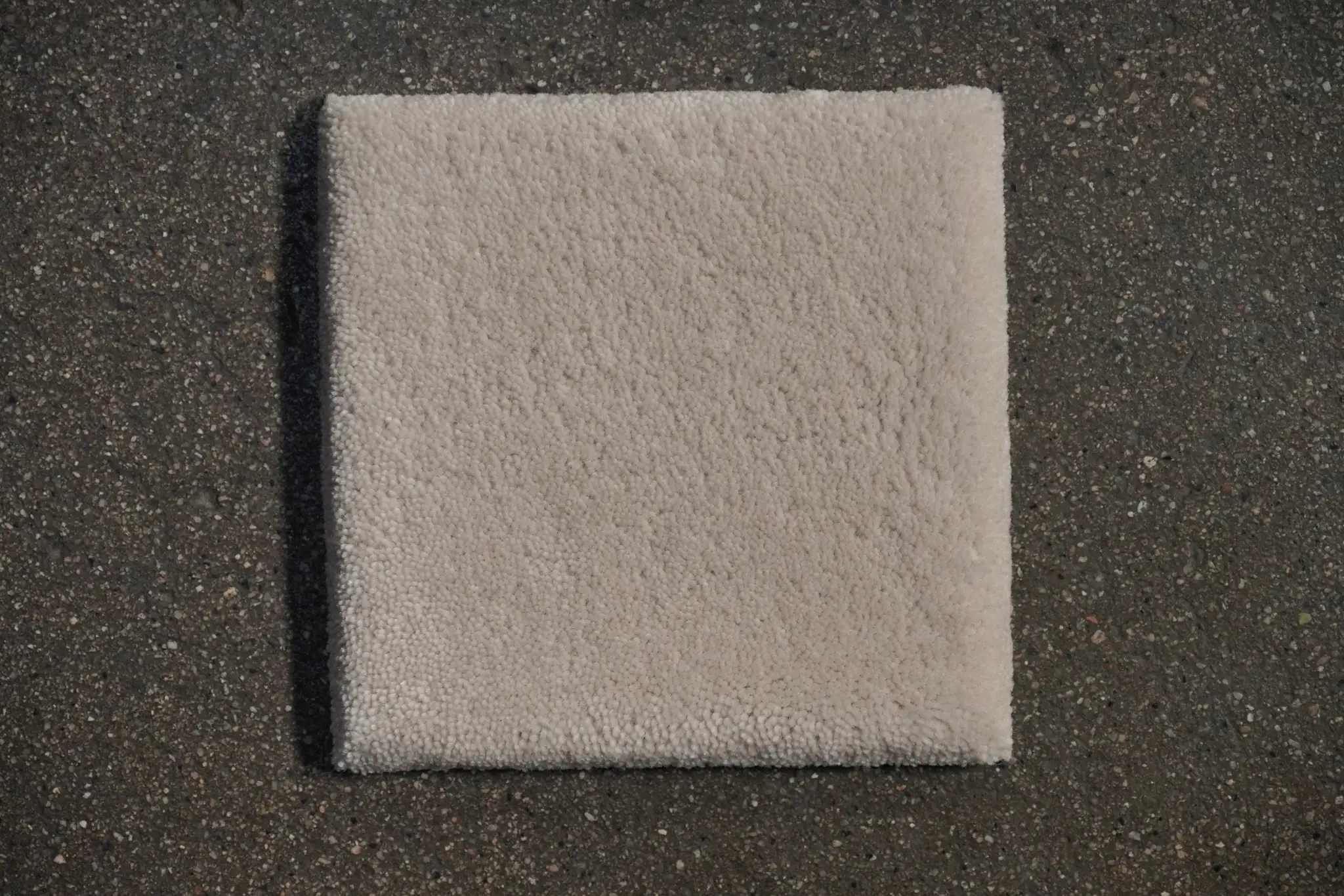
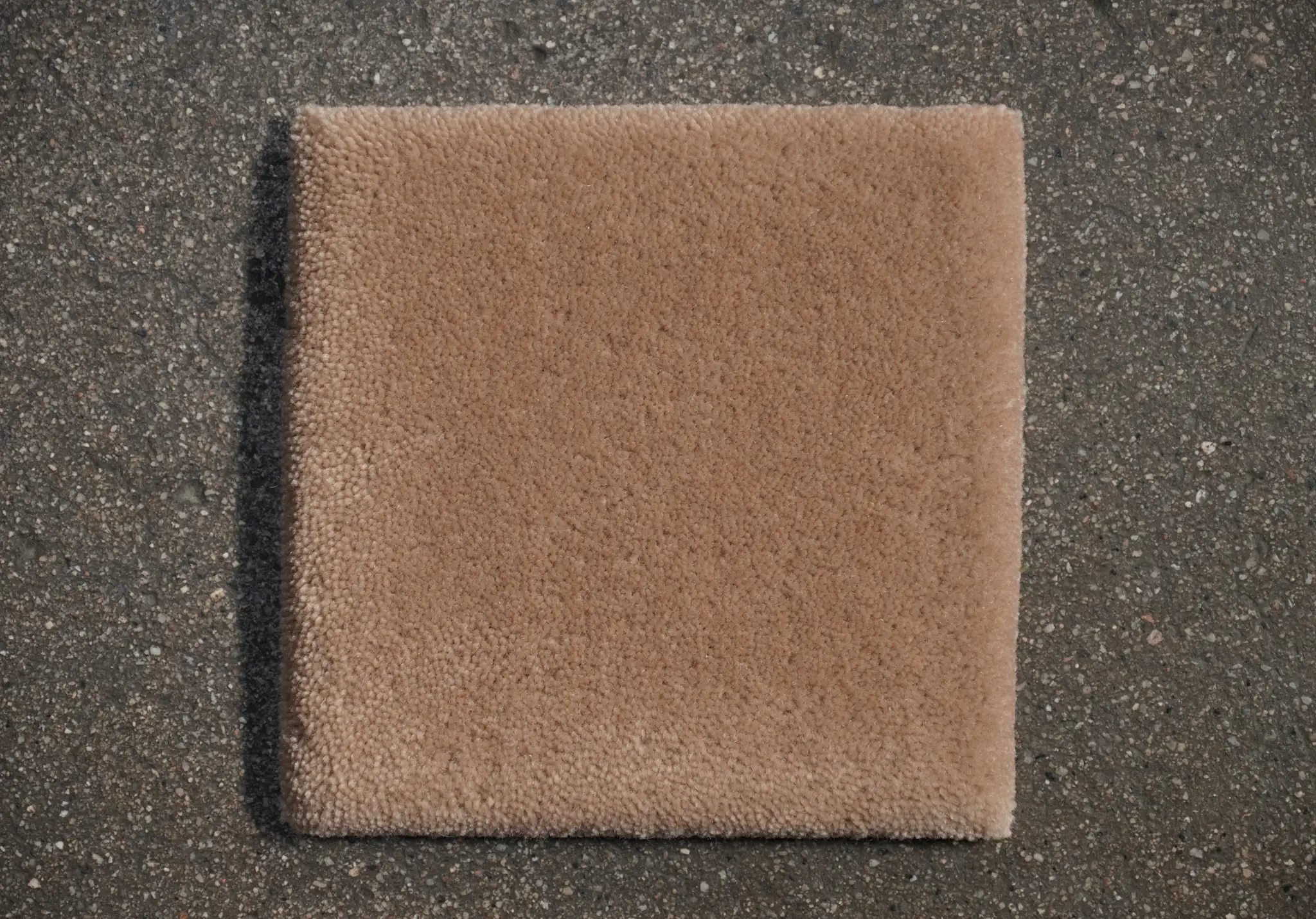
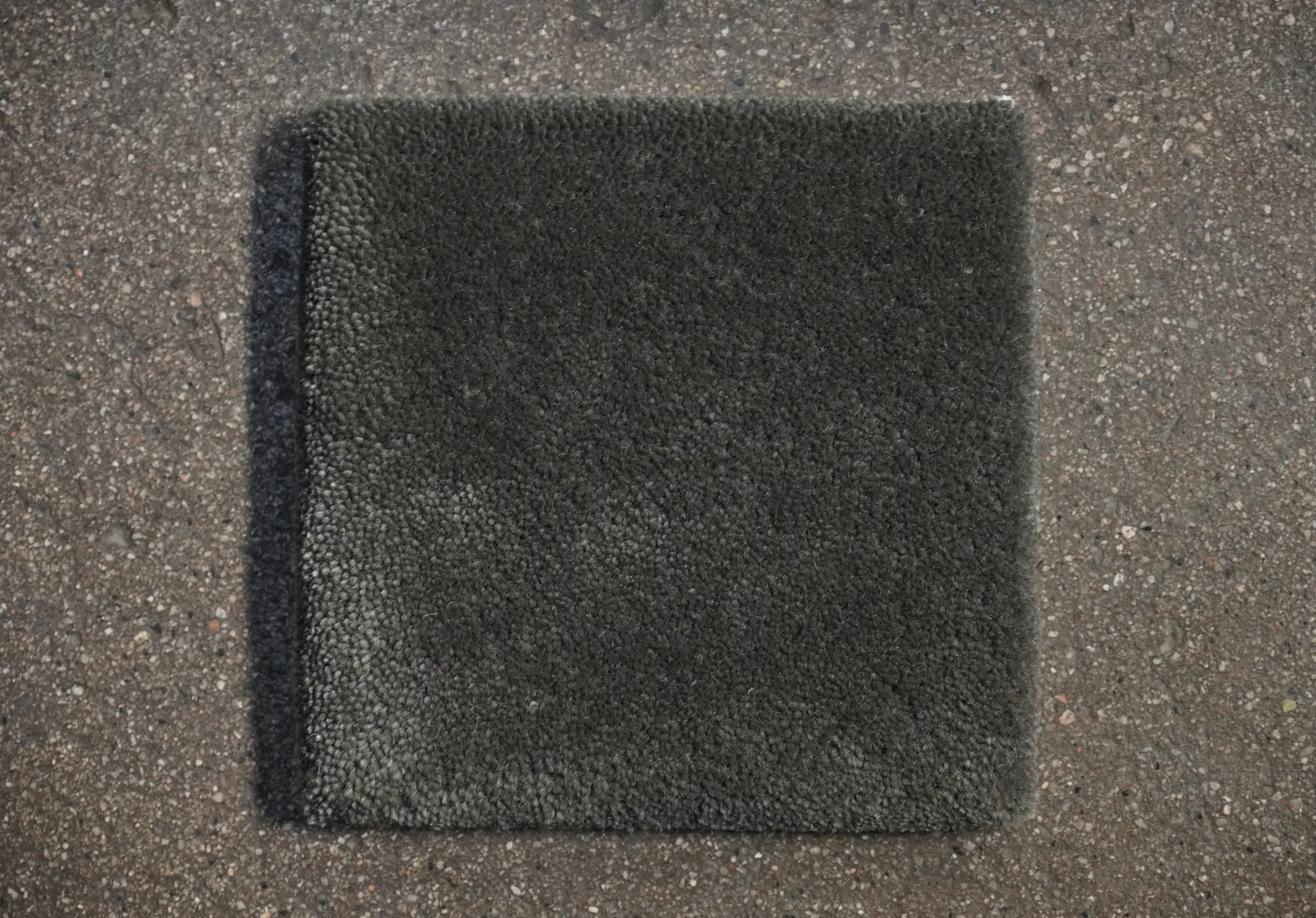
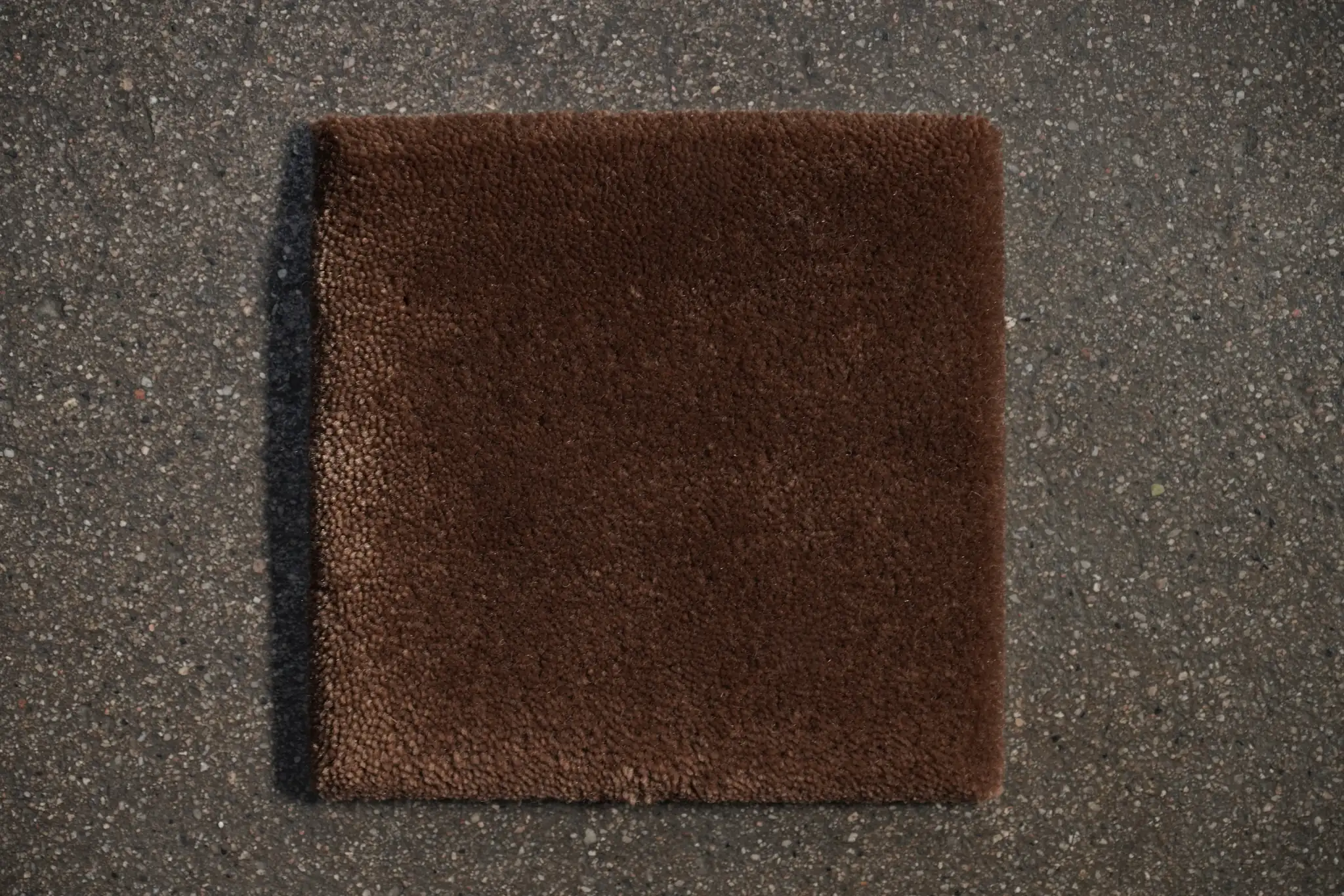
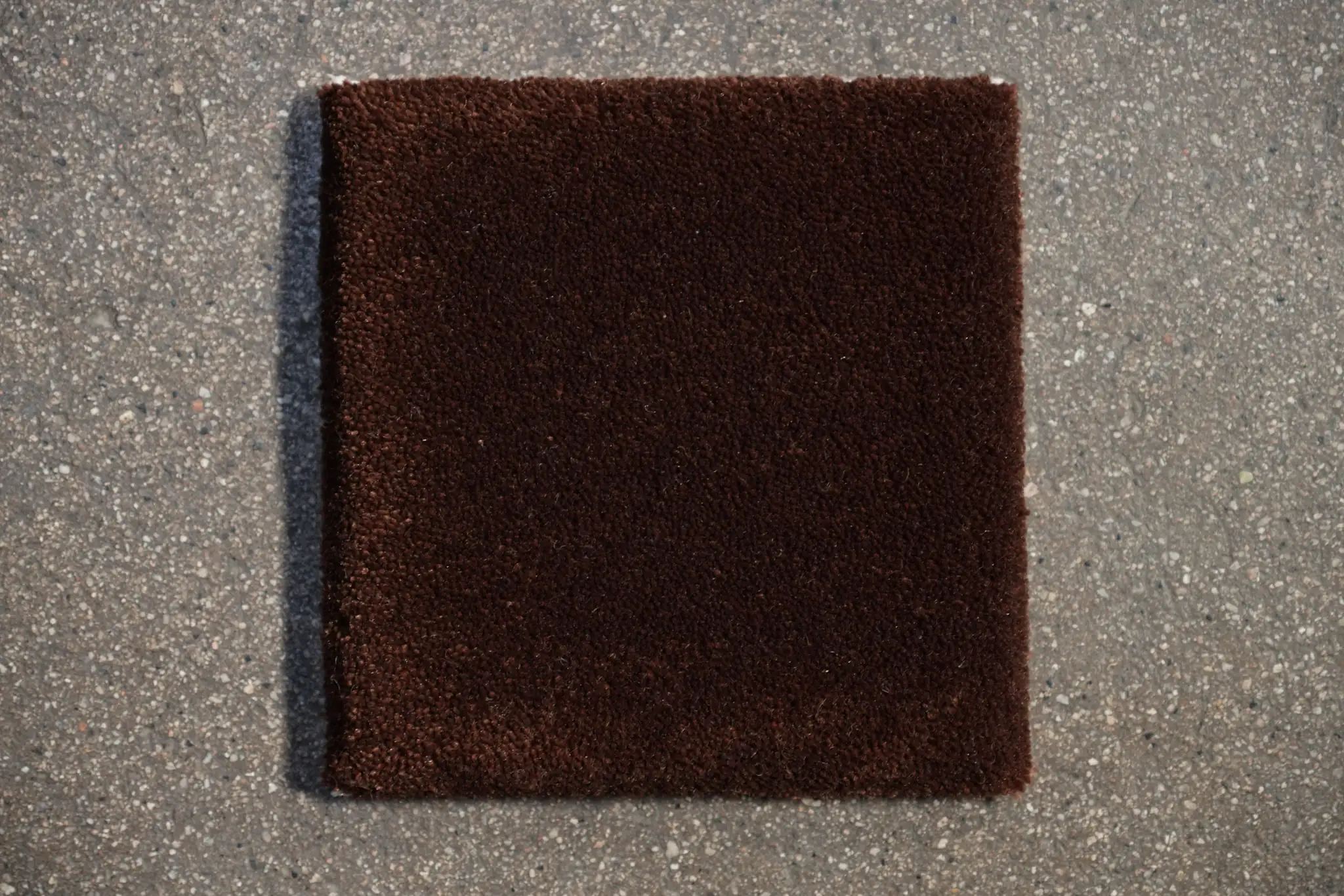
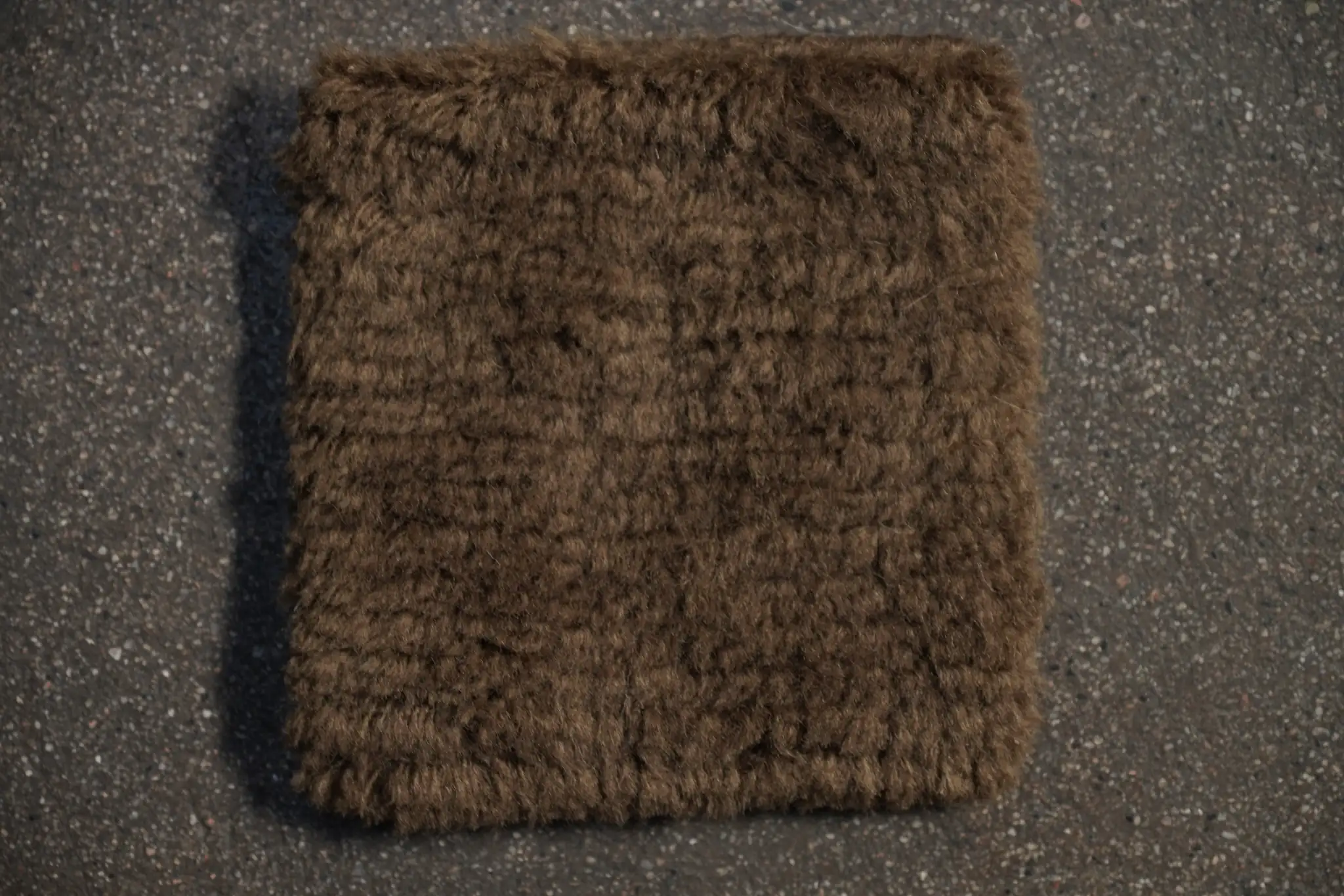
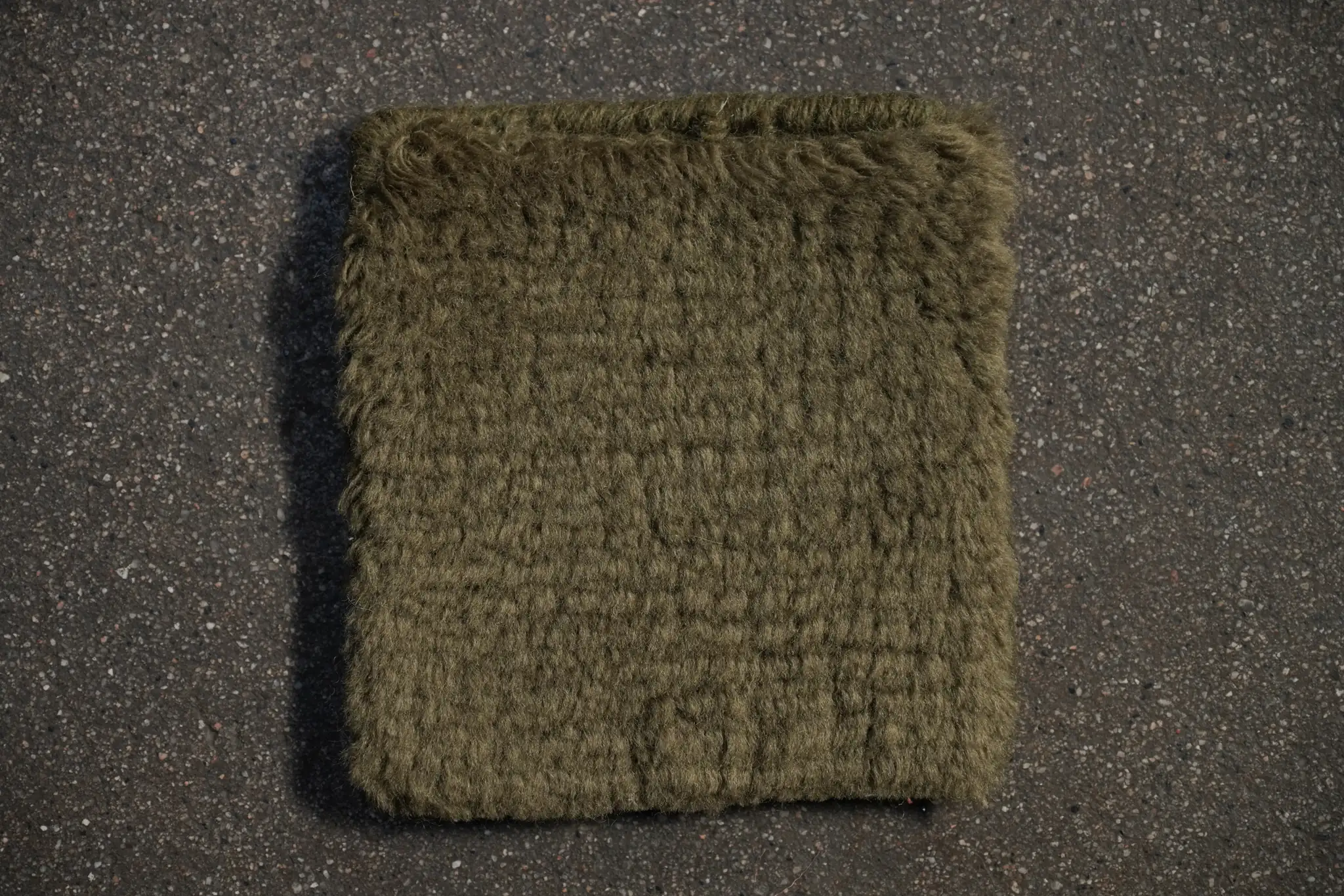
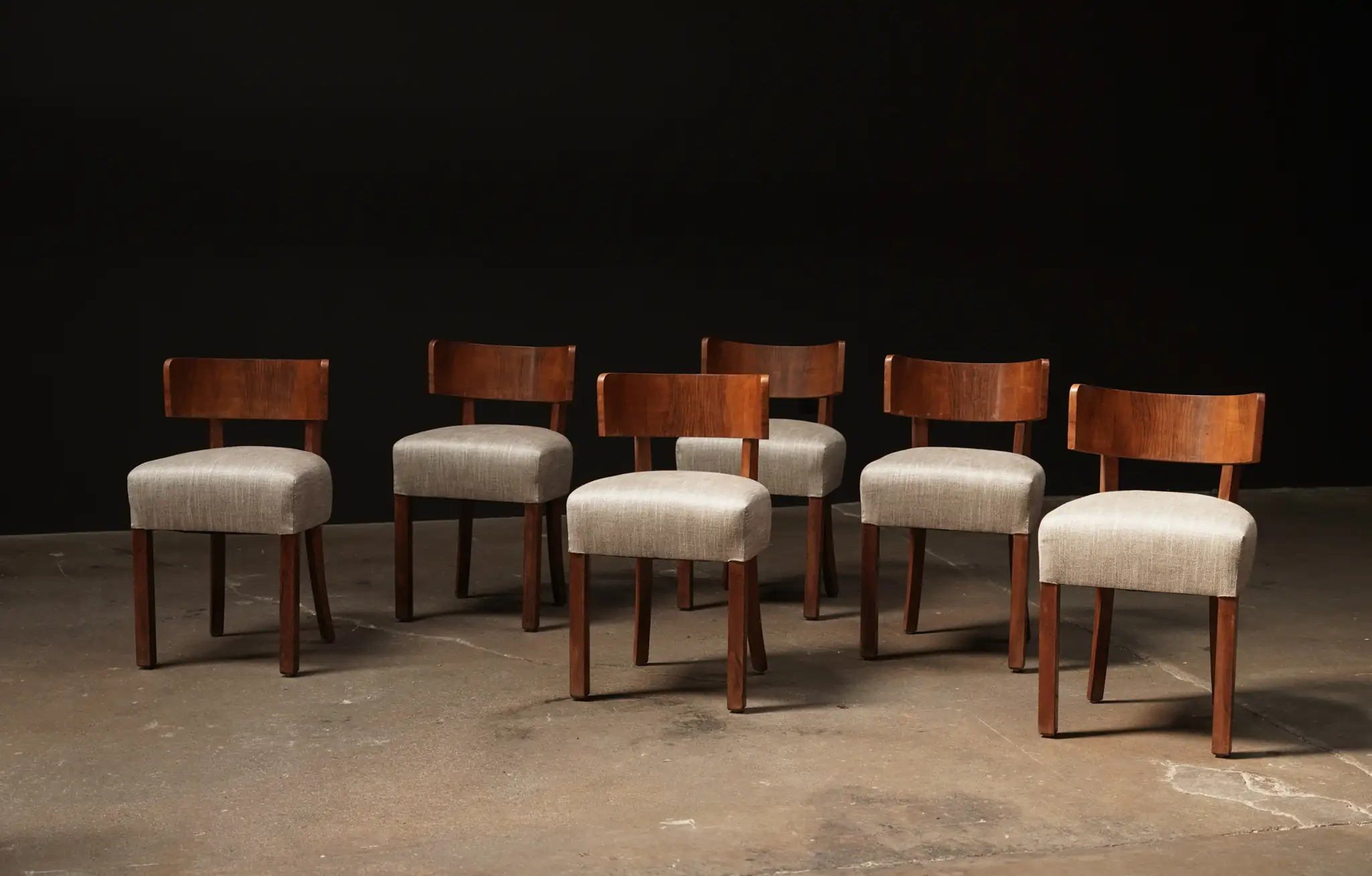
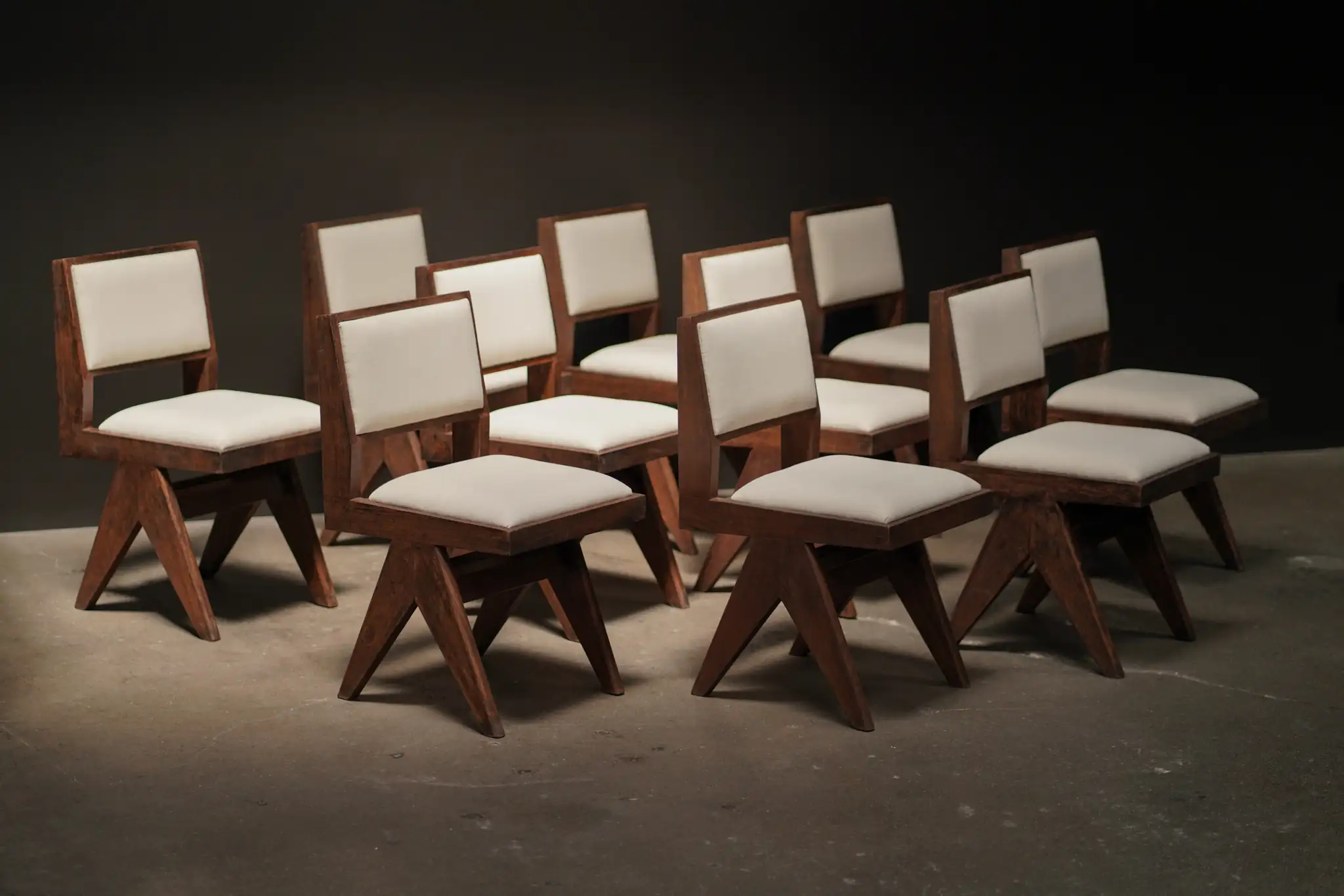
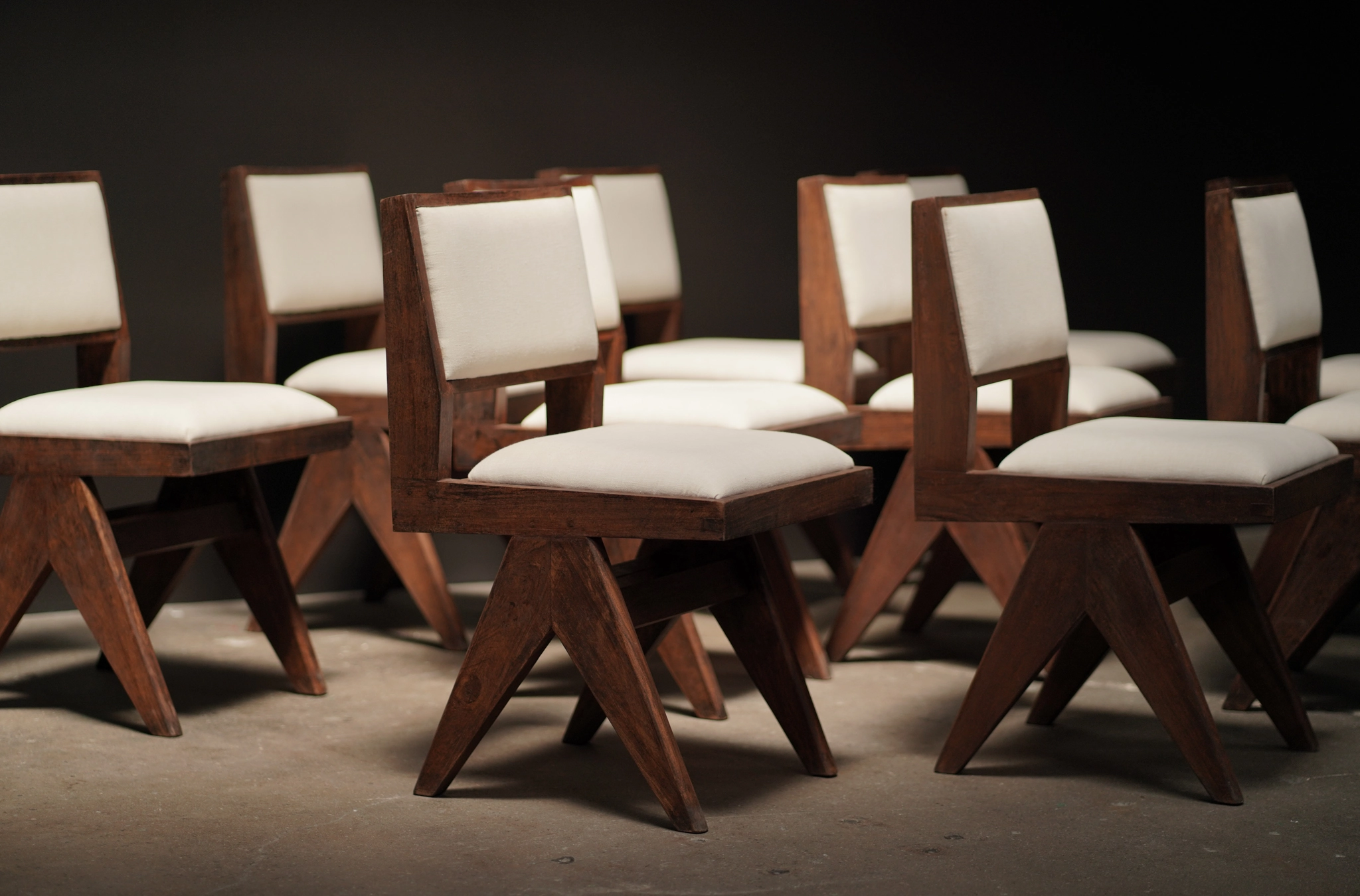
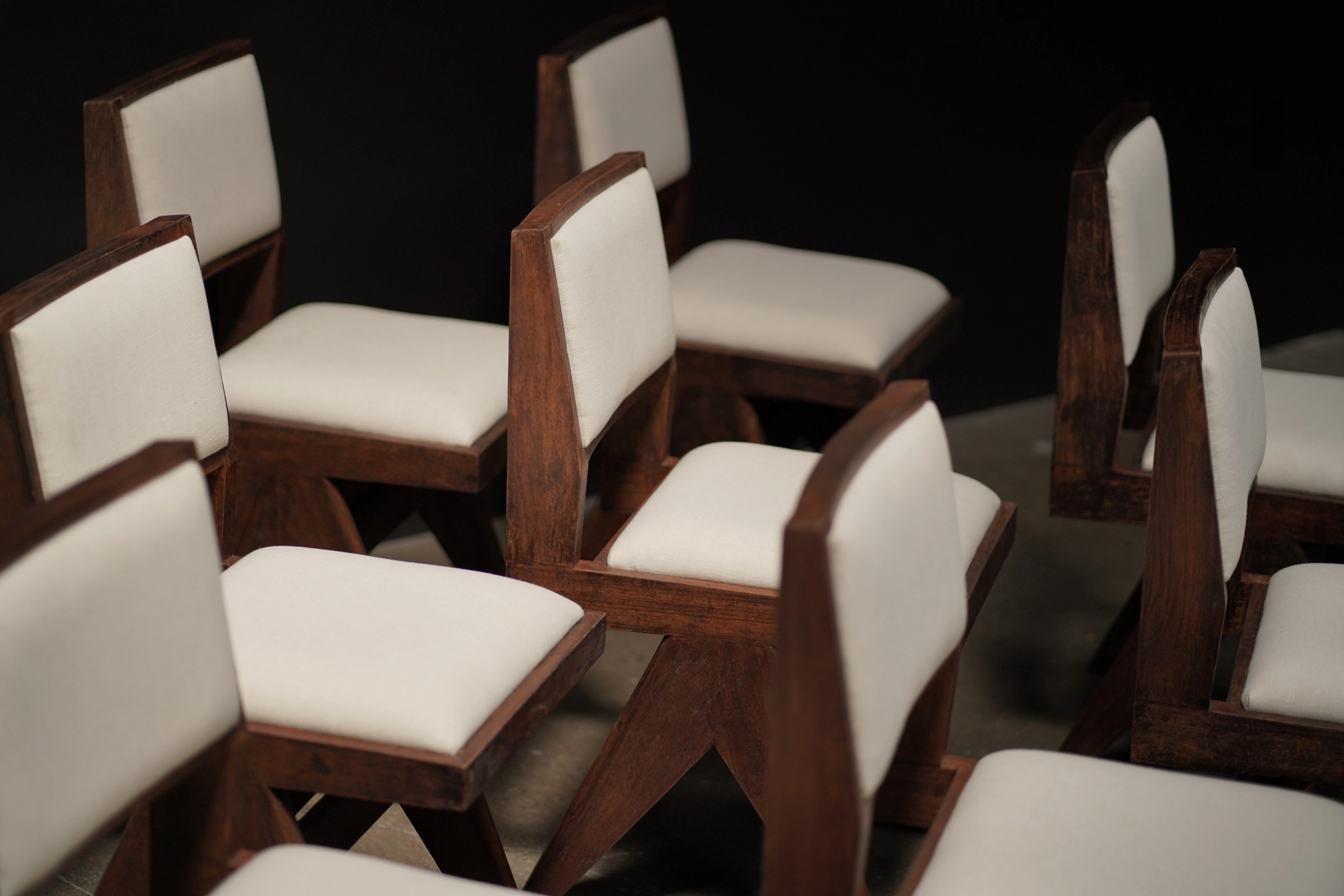
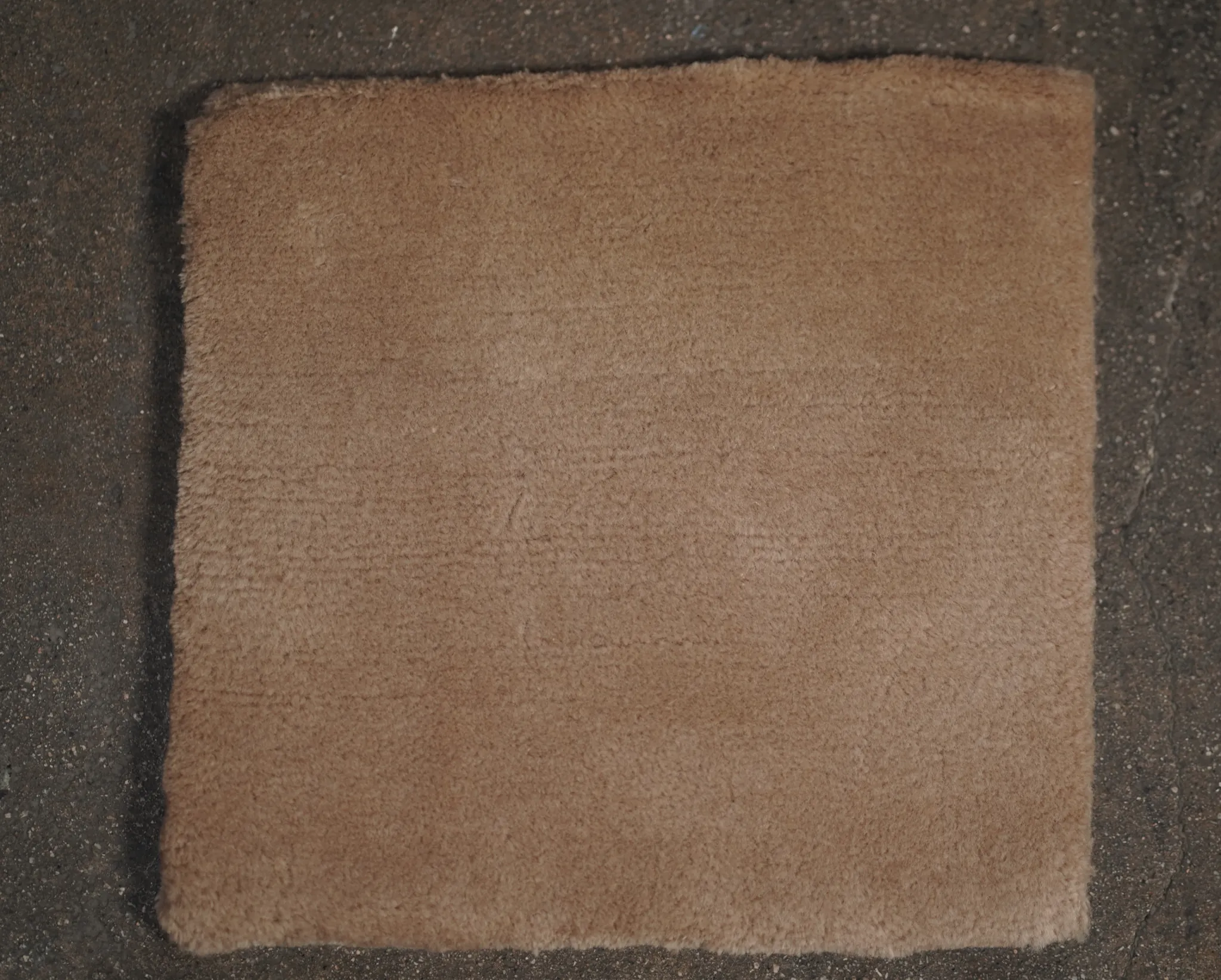
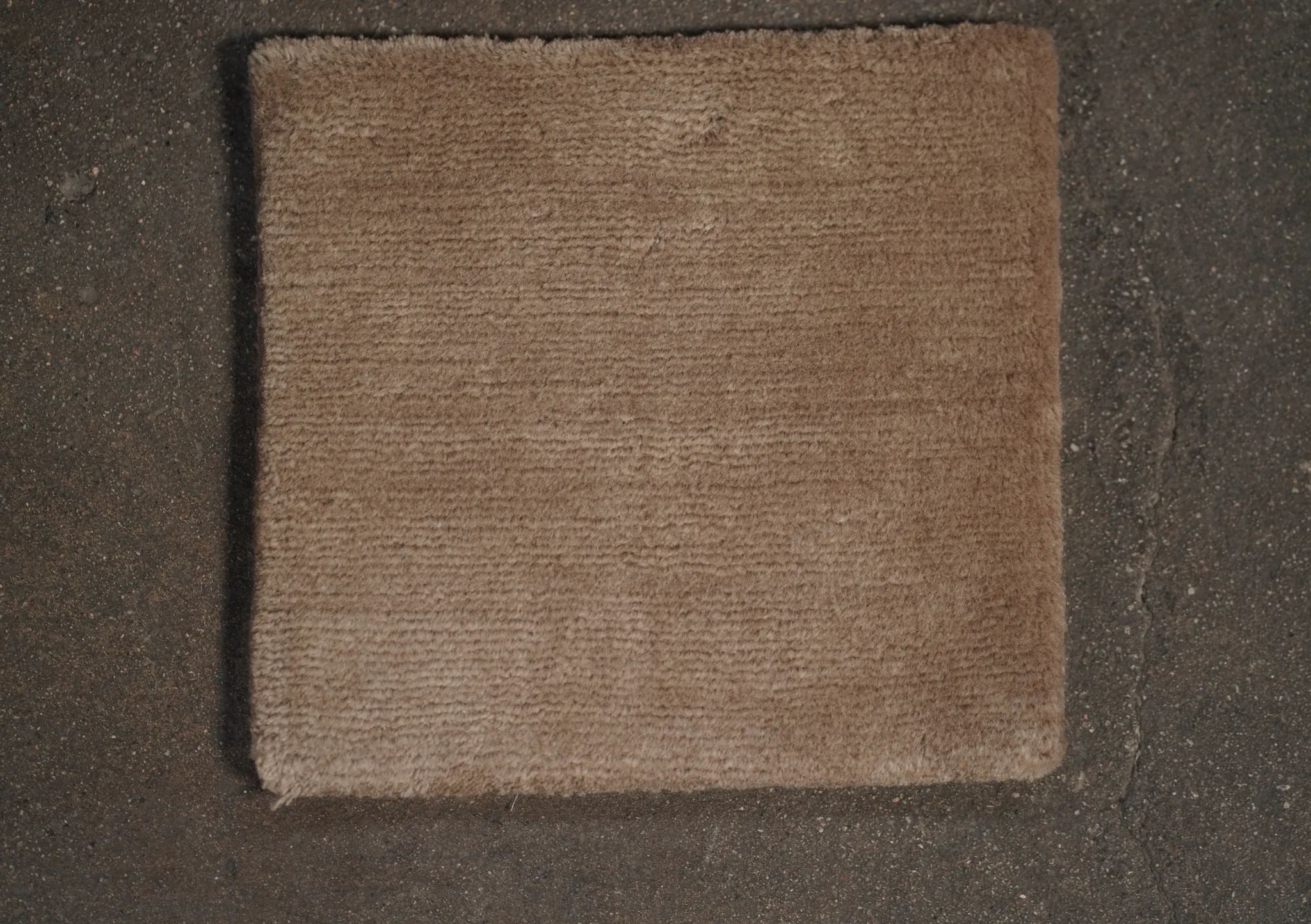
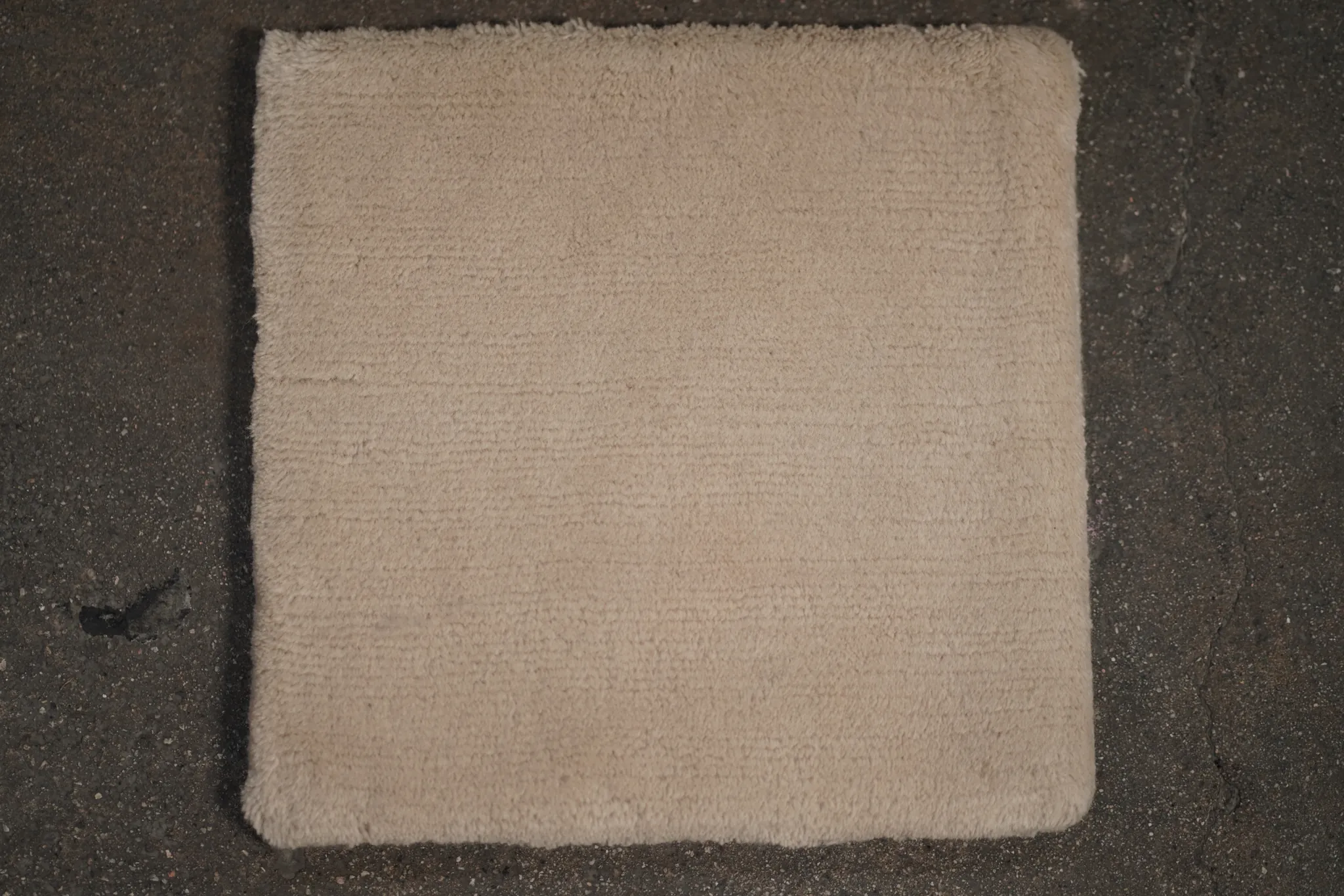
Upholstered teak dining chairs by Pierre Jeanneret from the Chandigarh furniture program, circa 1958–1959, presented in natural linen. Rectangular framed backs and compact padded seats are carried by broad, splayed compass supports.
Jeanneret developed furniture alongside the architecture of Chandigarh, the new city created in post-independence India. Seating was an essential part of its offices, educational establishments and residential interiors. His designs brought modernist composition into direct contact with local woodworking: substantial timber members, economical joints and repeated forms gave ordinary furnishings a distinct architectural presence. The resulting furniture was made to be used, and its character emerges from the way a relatively small number of structural elements organize the body, the supporting frame and the spaces between them.
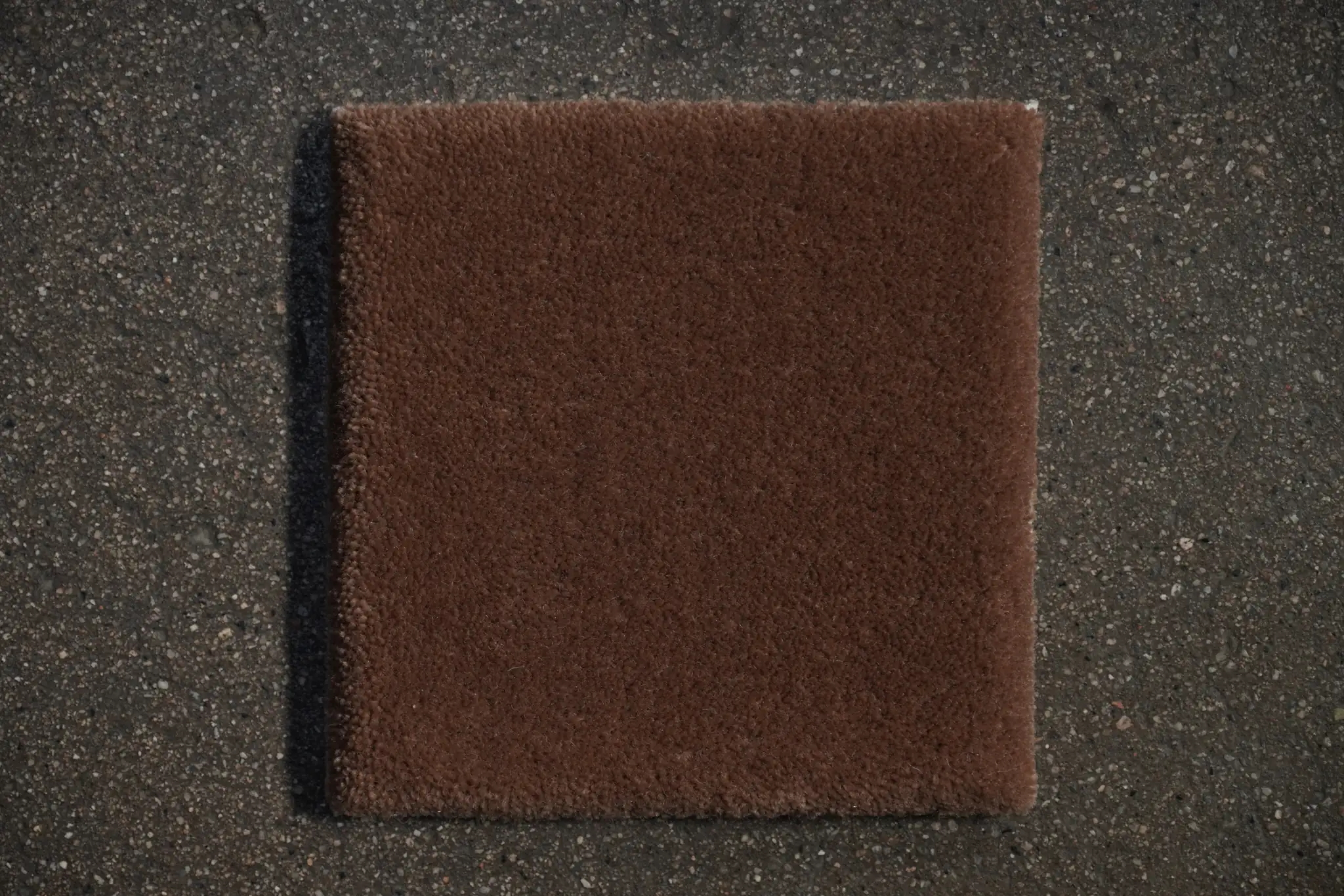
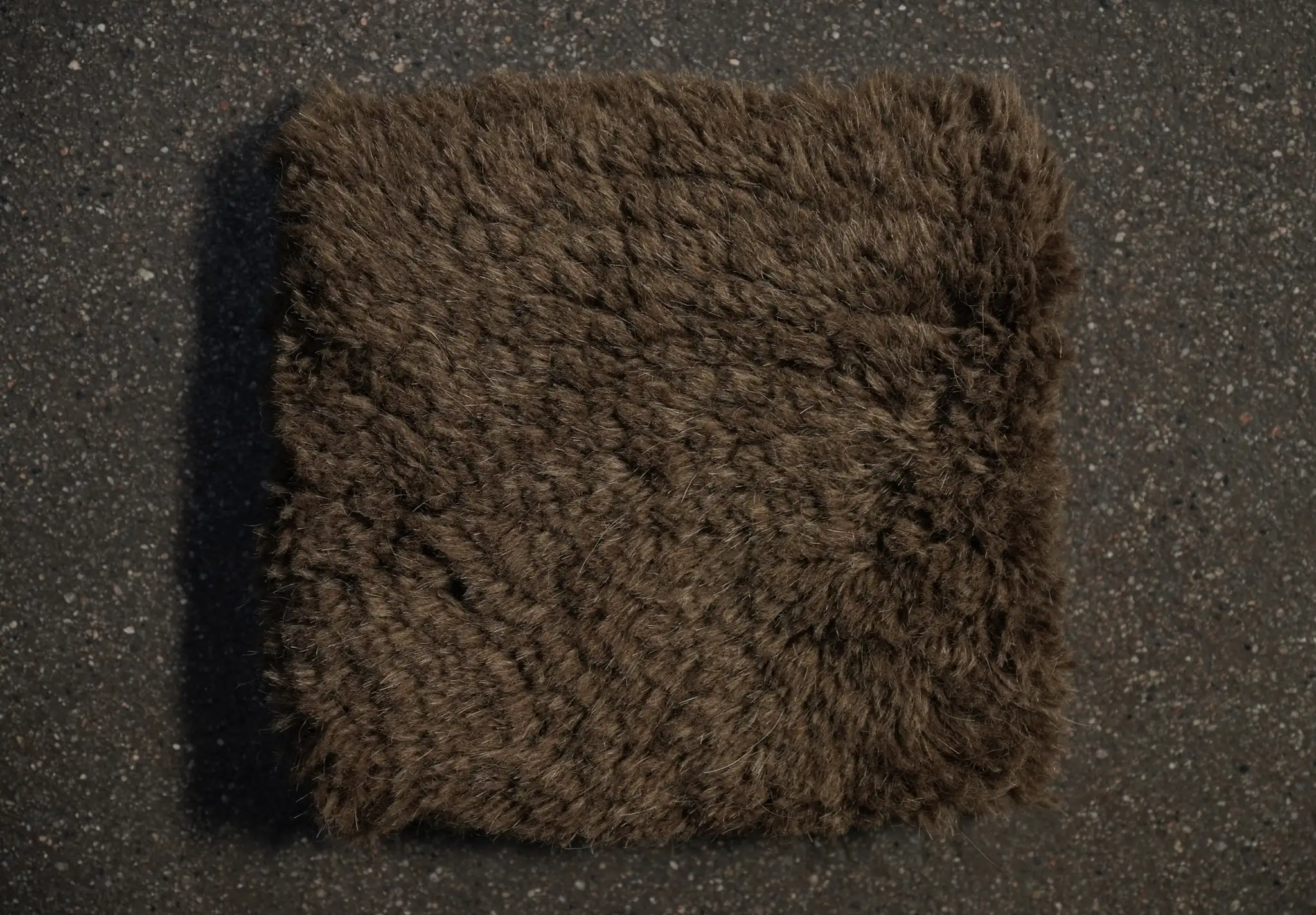
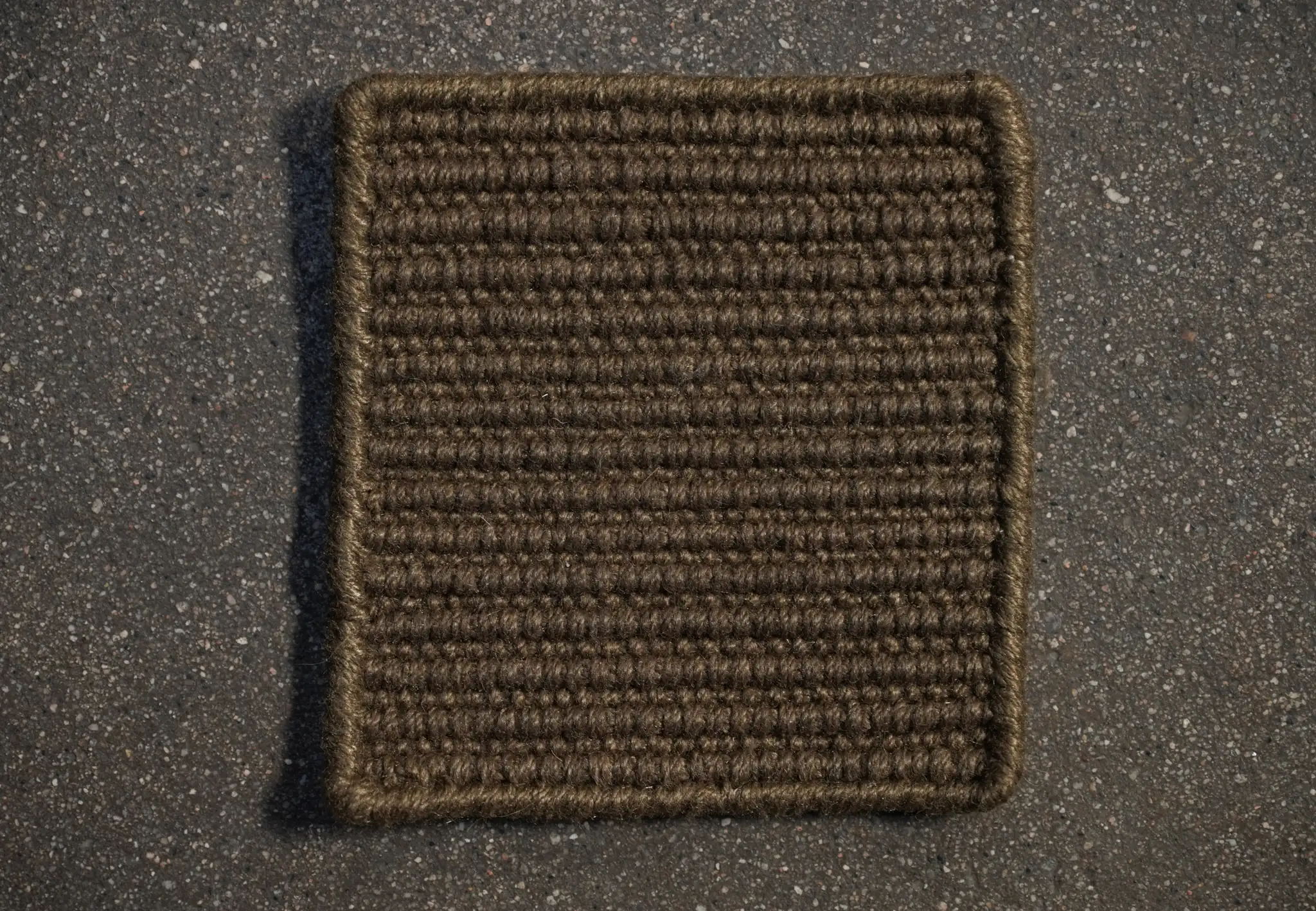
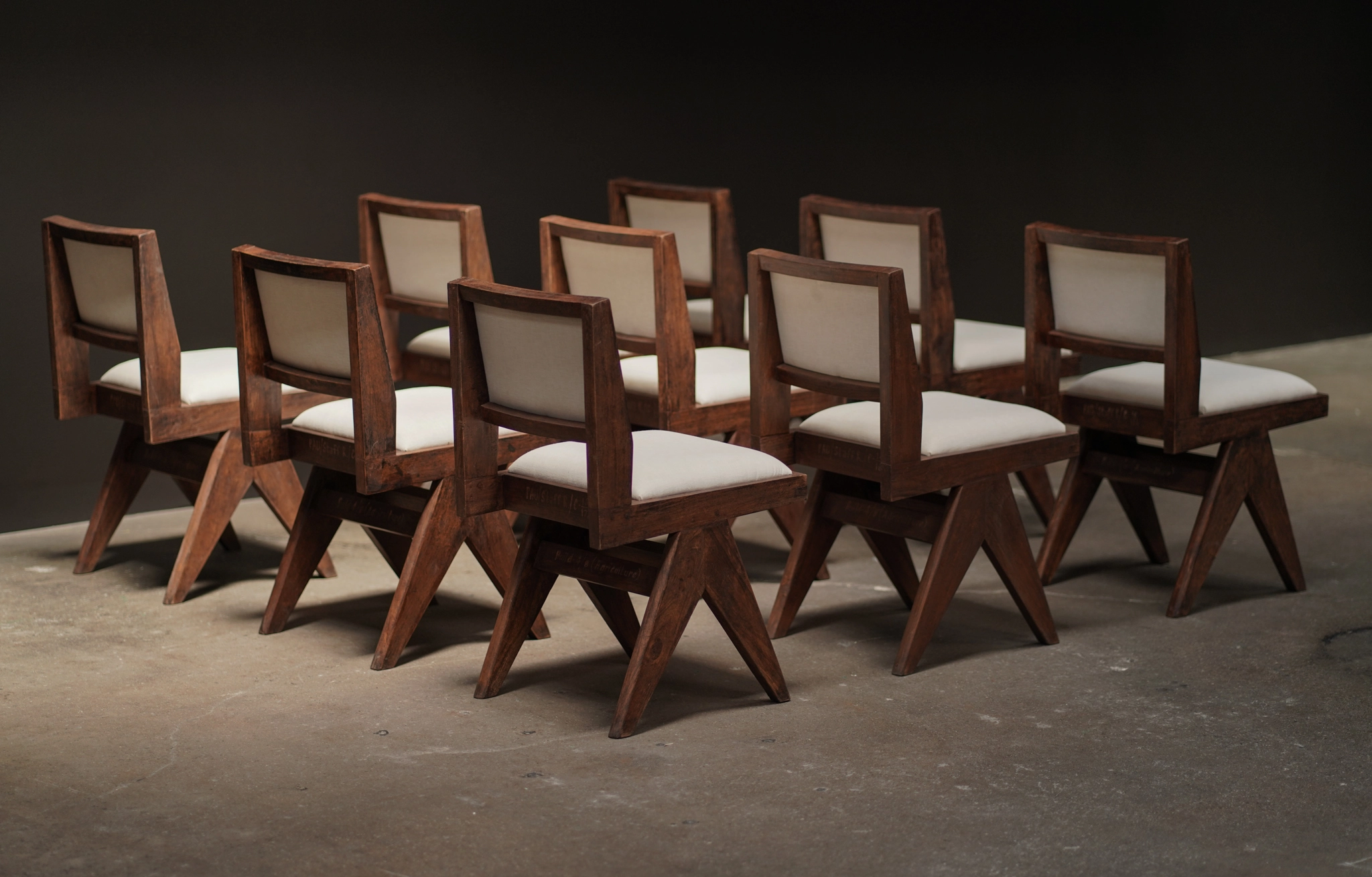
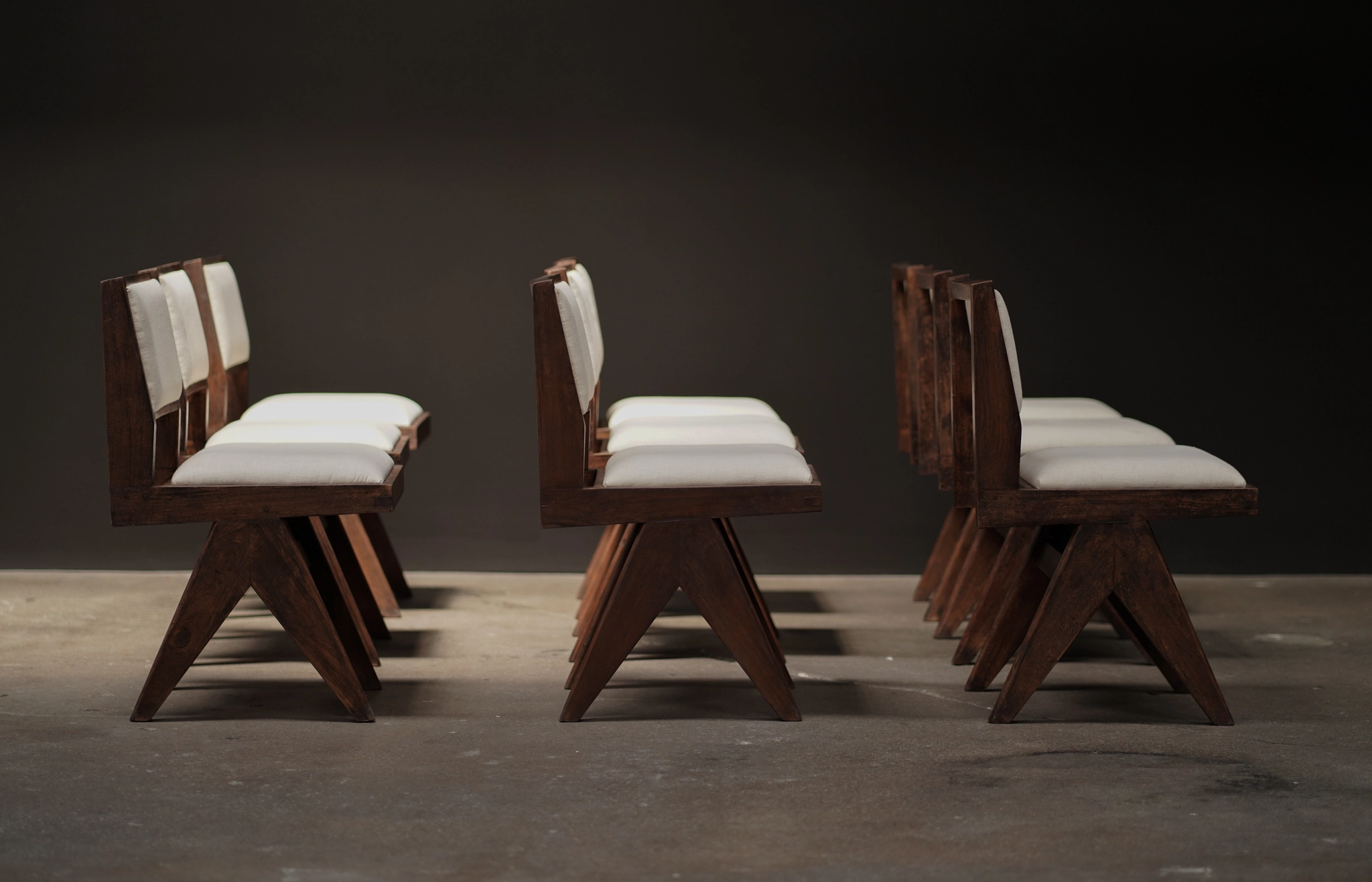
The back uprights descend to the rear seat rail, leaving a small open interval below the upholstered back. In profile, the supporting members form an A-shaped geometry beneath the seat, creating a strong diagonal counterpoint to the upright back and horizontal seating plane. The linen introduces a light, softly textured surface within the reddish-brown timber frame.
Surviving lettering on a photographed rear rail begins “PAU/Staff R.” and continues with inventory characters, including “16” above a line and “173” below. PAU is associated with Punjab Agricultural University in Ludhiana, Punjab; the staff designation preserves a connection with its institutional furnishings. The inscription records a chapter of use on the vintage frame itself and remains visible within the chair’s open rear construction.
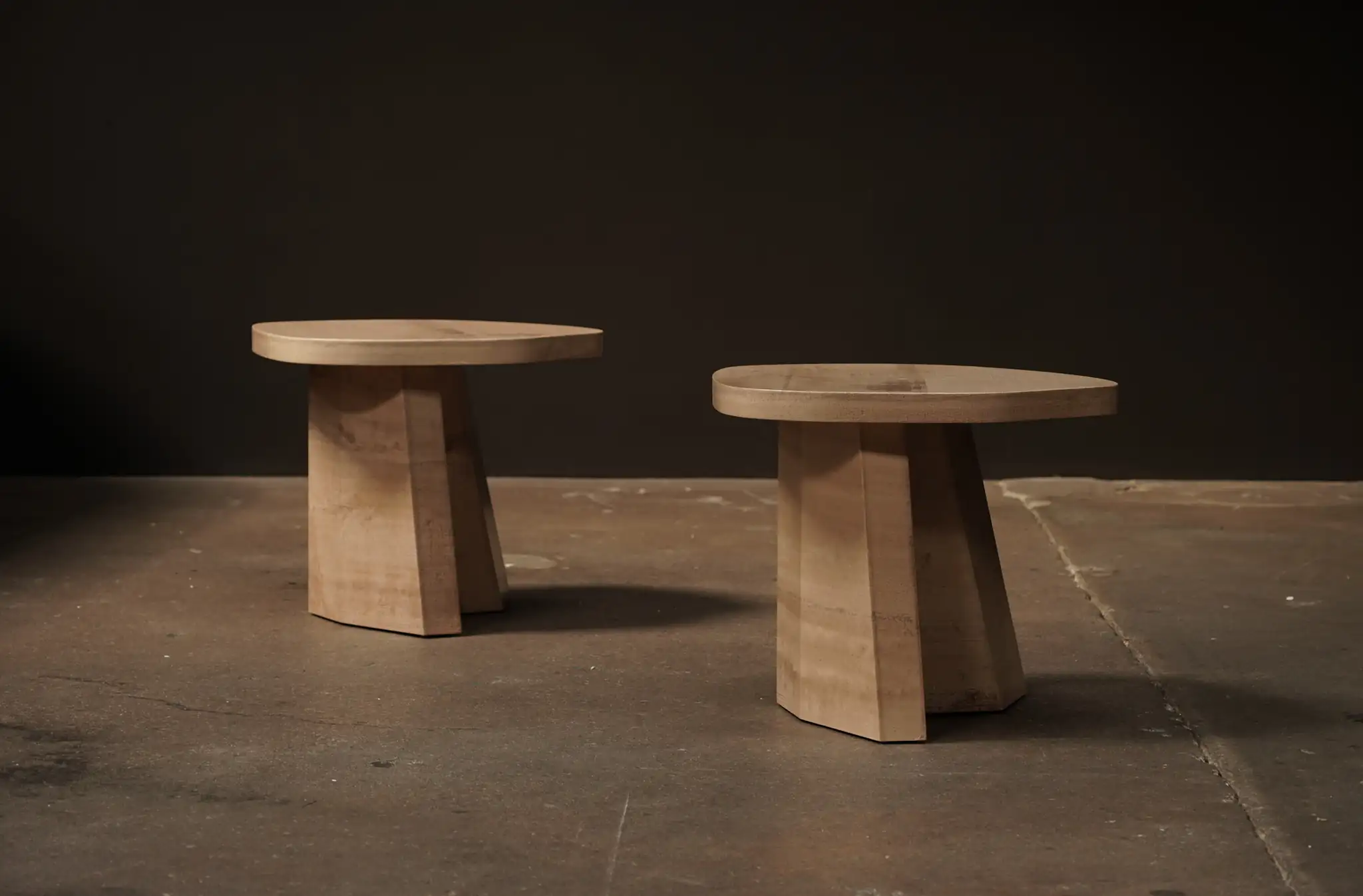
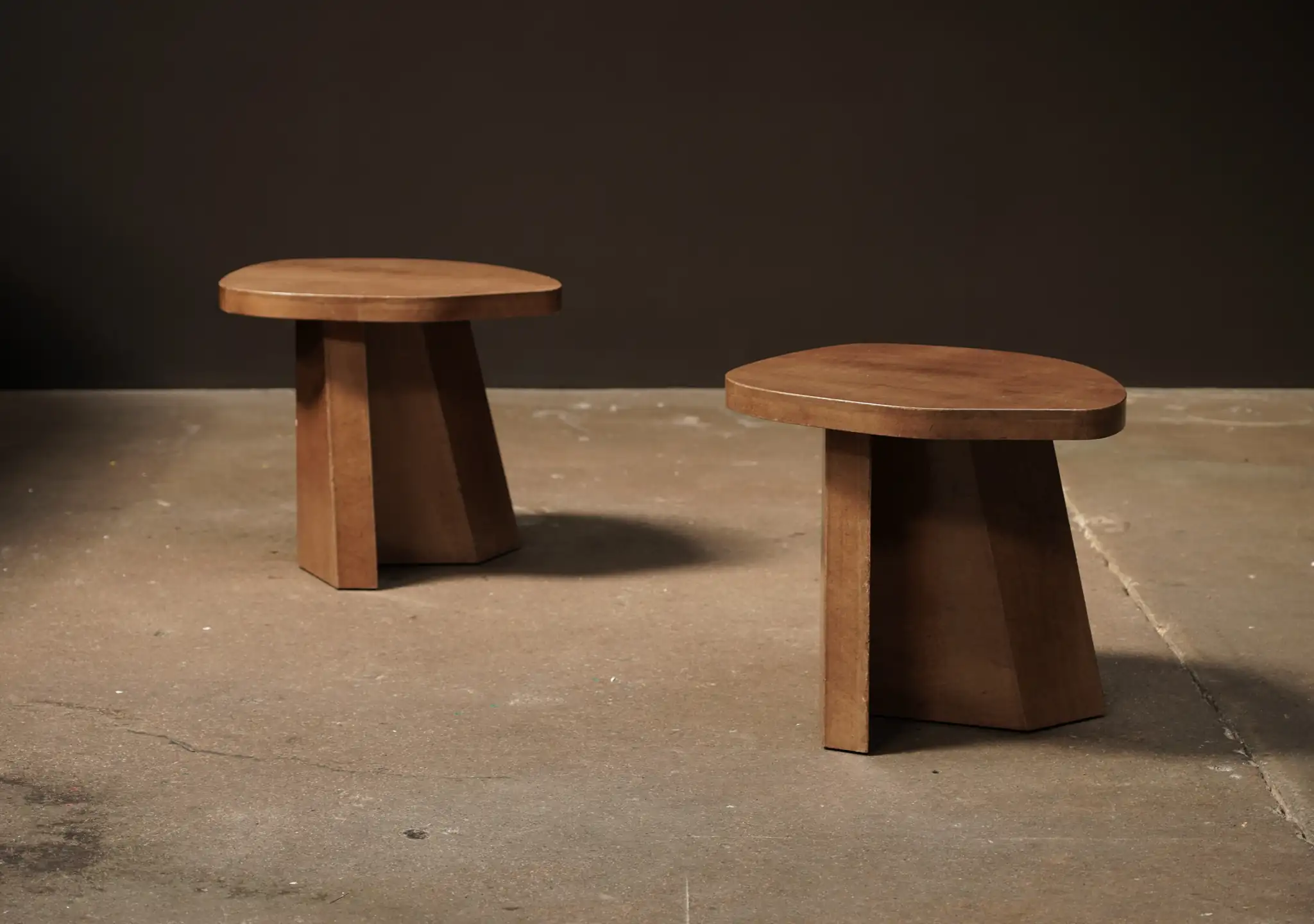
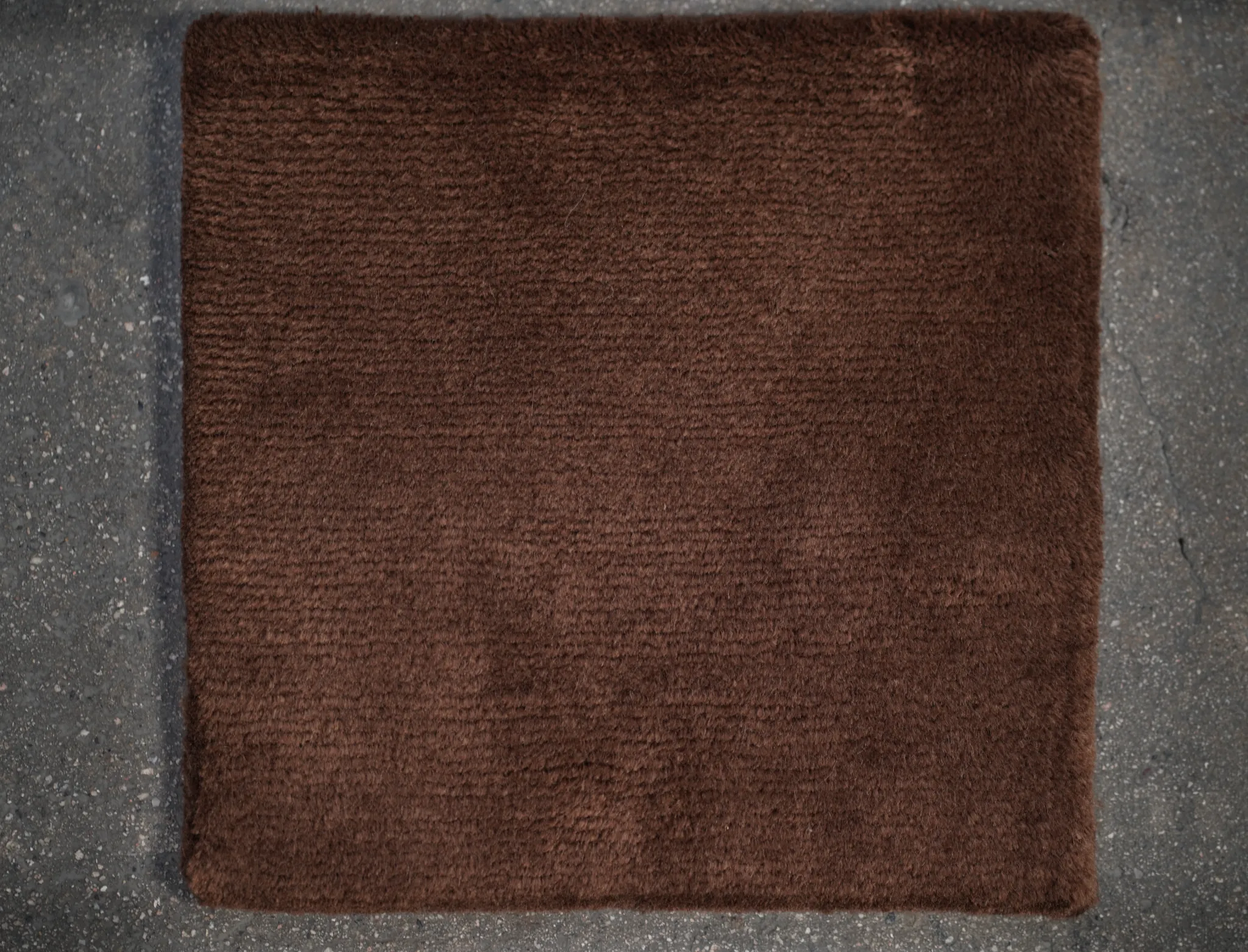
The vintage teak retains variations in grain, color and surface wear, with softened edges and individual traces of use visible in the photographs. These details give the woodwork its material character and preserve the sense of a furnishing made for daily life in institutional or residential interiors. The timber has been refinished. The present upholstery is a later treatment of the vintage structure.
A related upholstered dining-chair form is documented by Wright, Important Design, June 2021, lot 170.
Dimensions: approximately 16.5 inches wide, 19.75 inches deep, 31 inches high. Seat height: 18.5 inches.
Provenance: private collection, Chandigarh, India, as recorded by Studio Balestra.
Accompanied by a Studio Balestra Certificate of Authenticity.