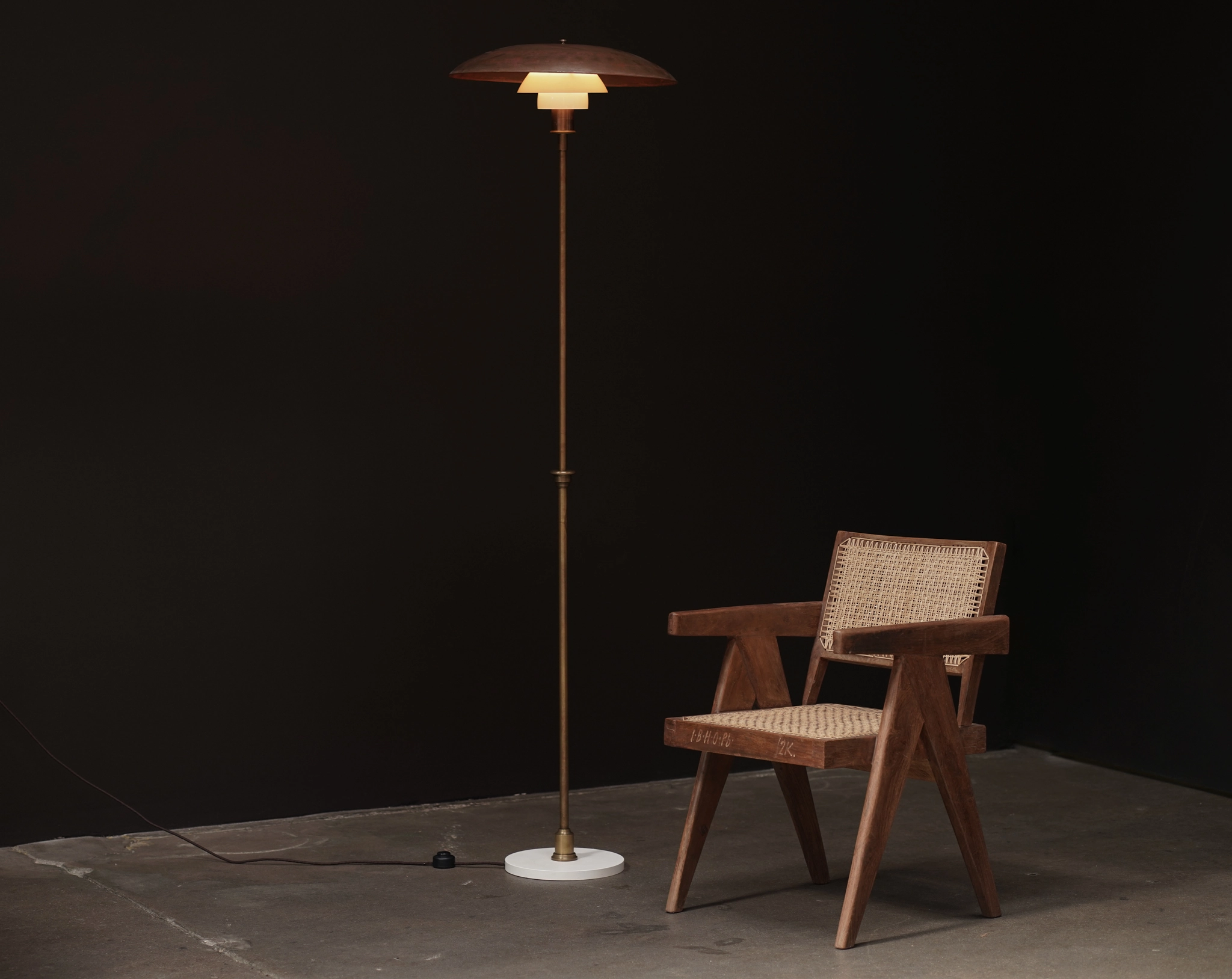
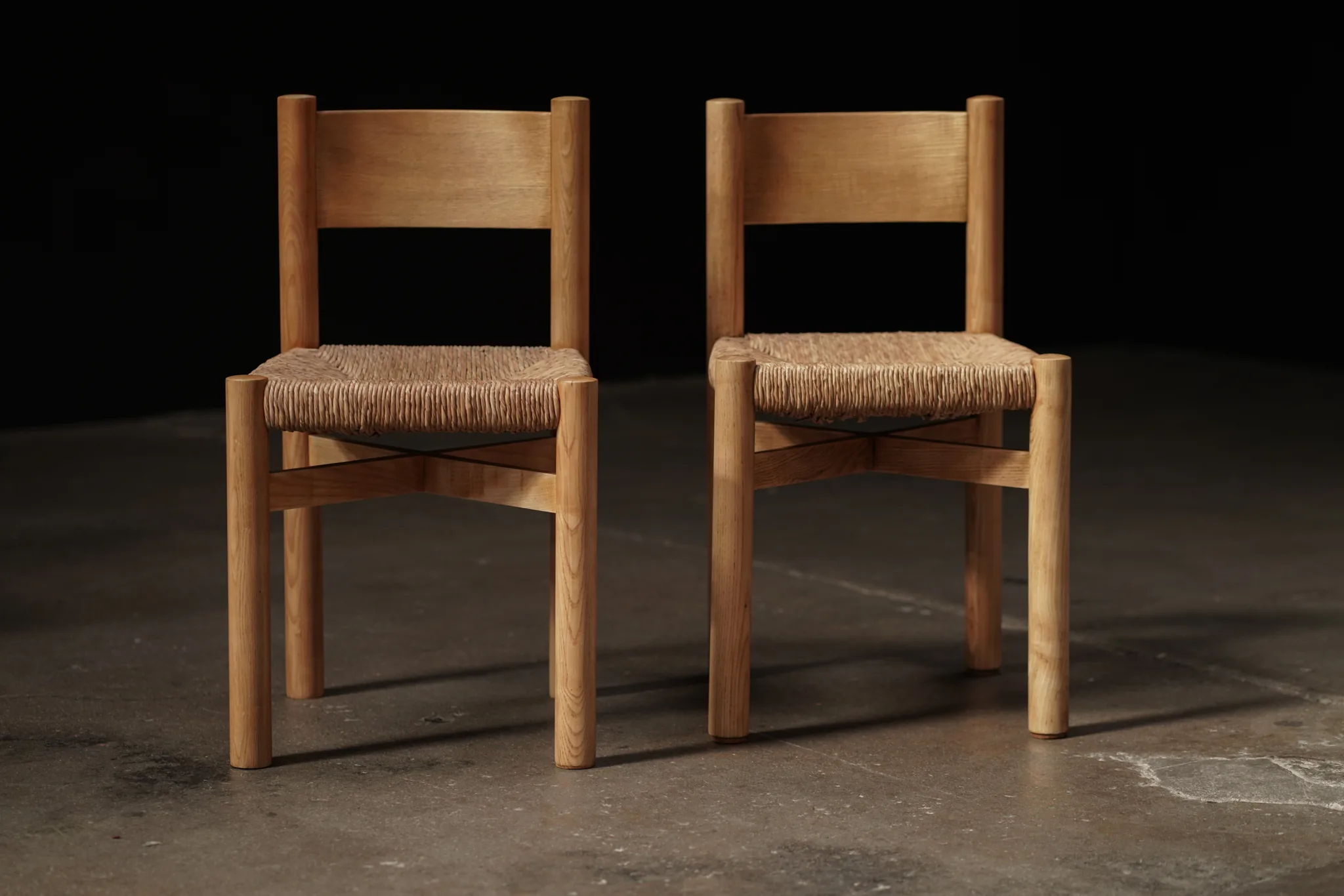
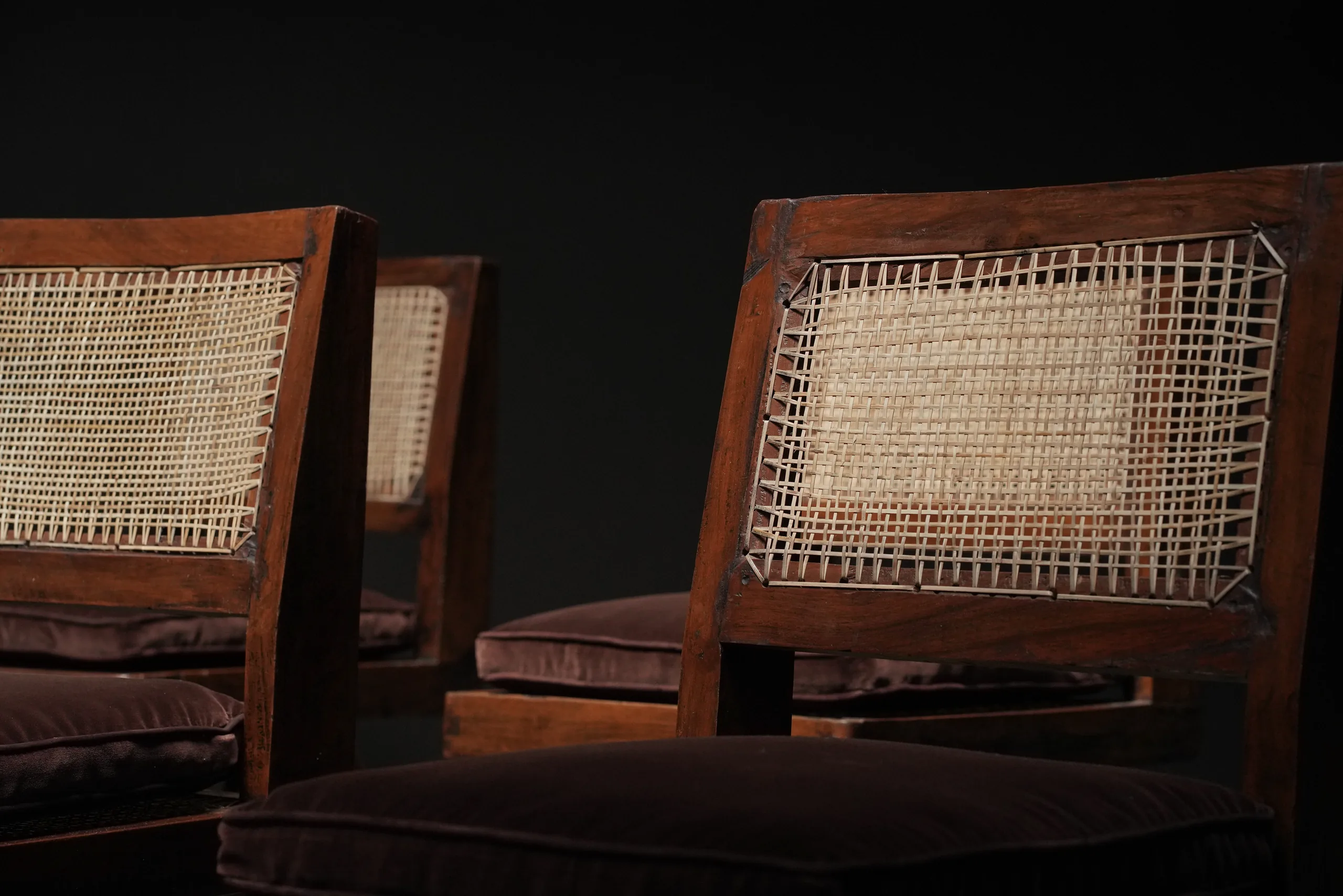
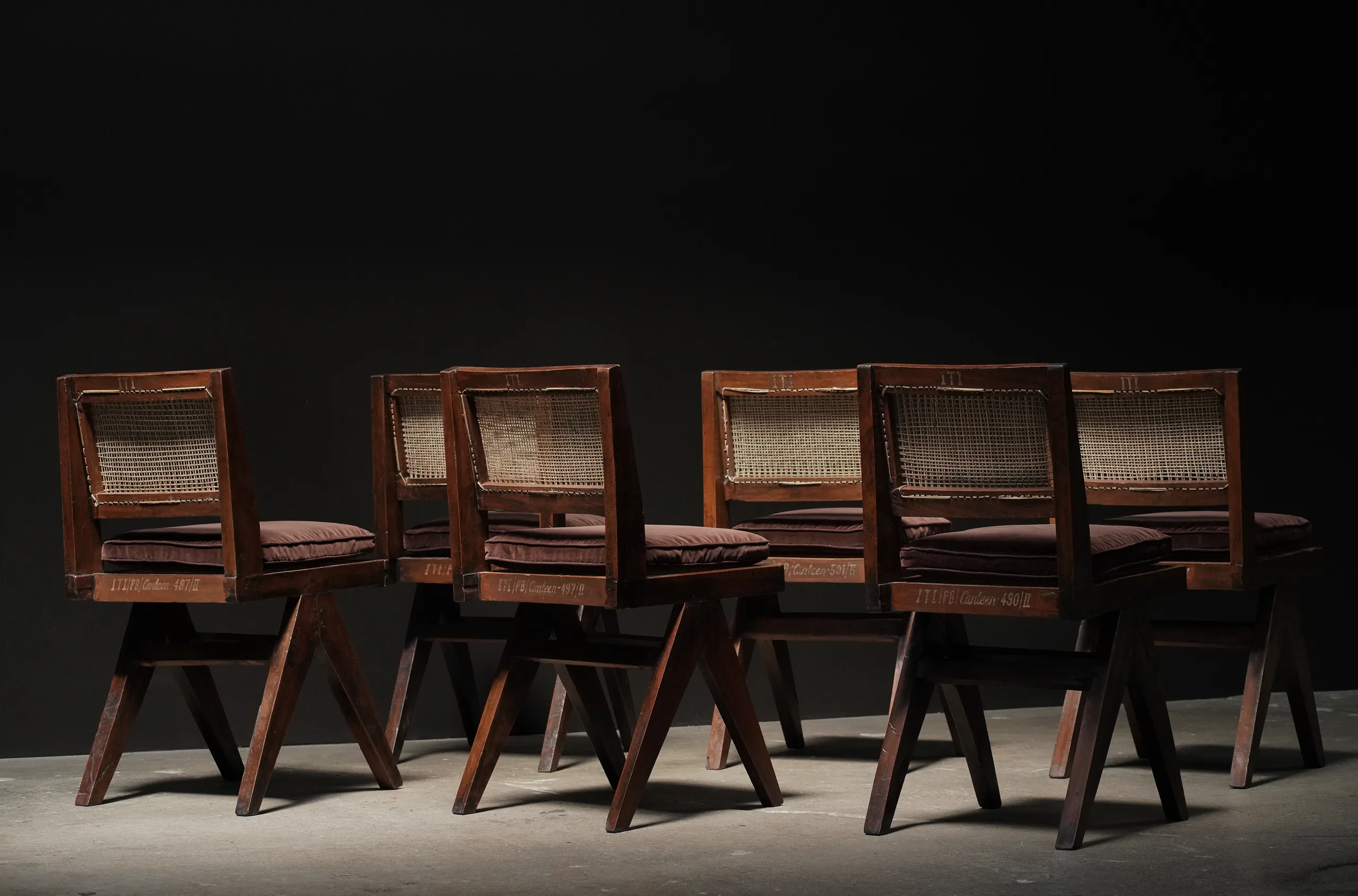
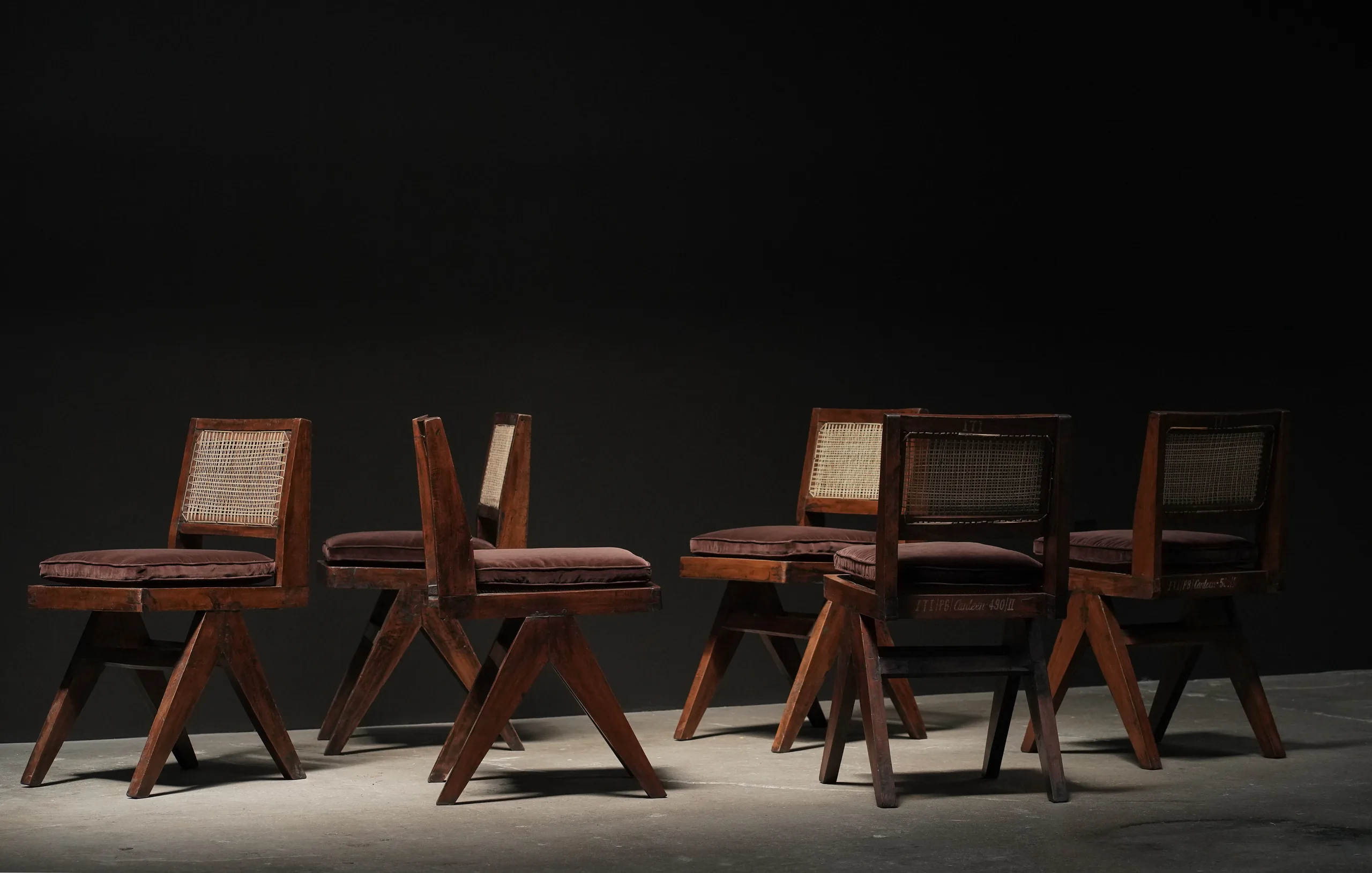
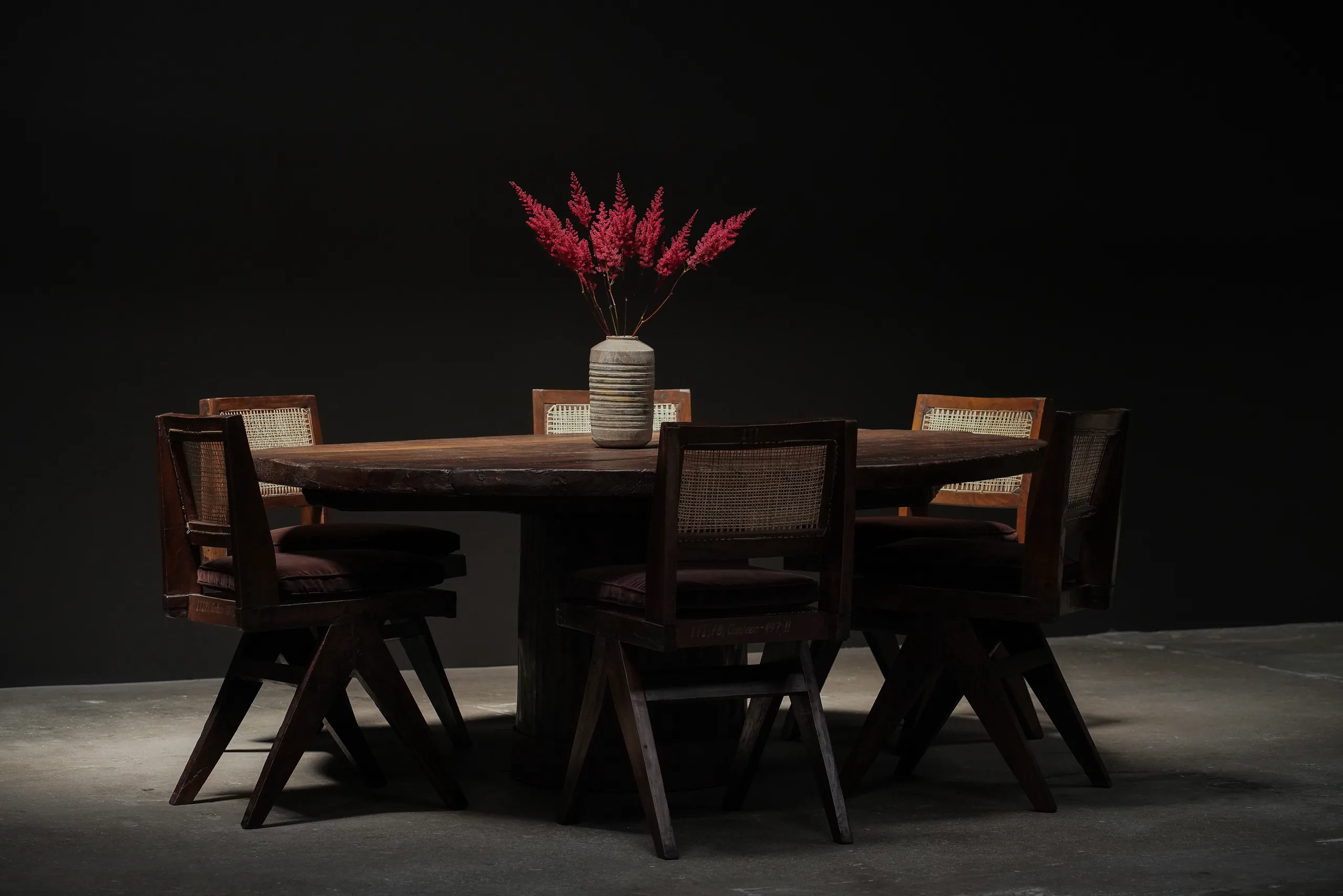
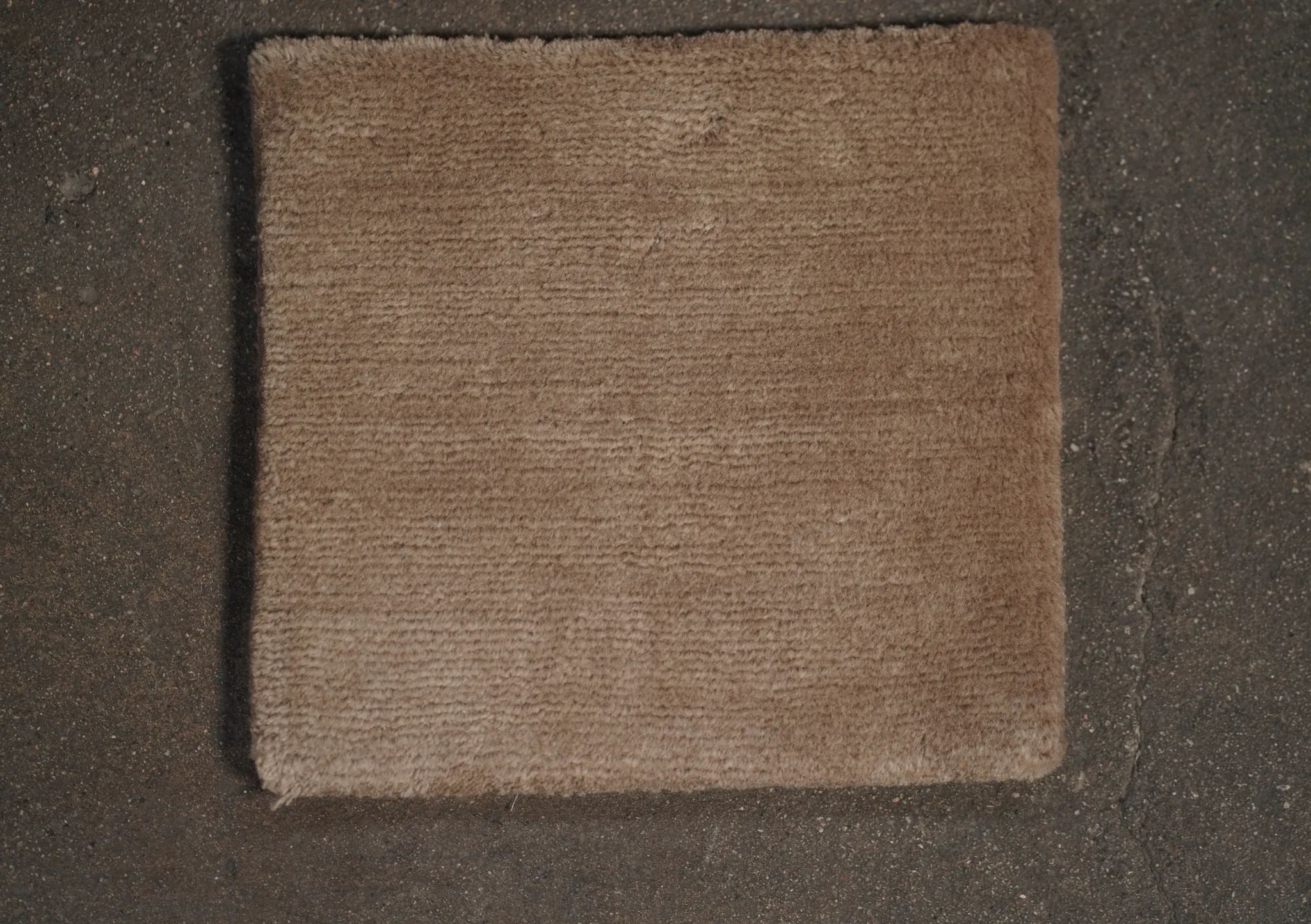
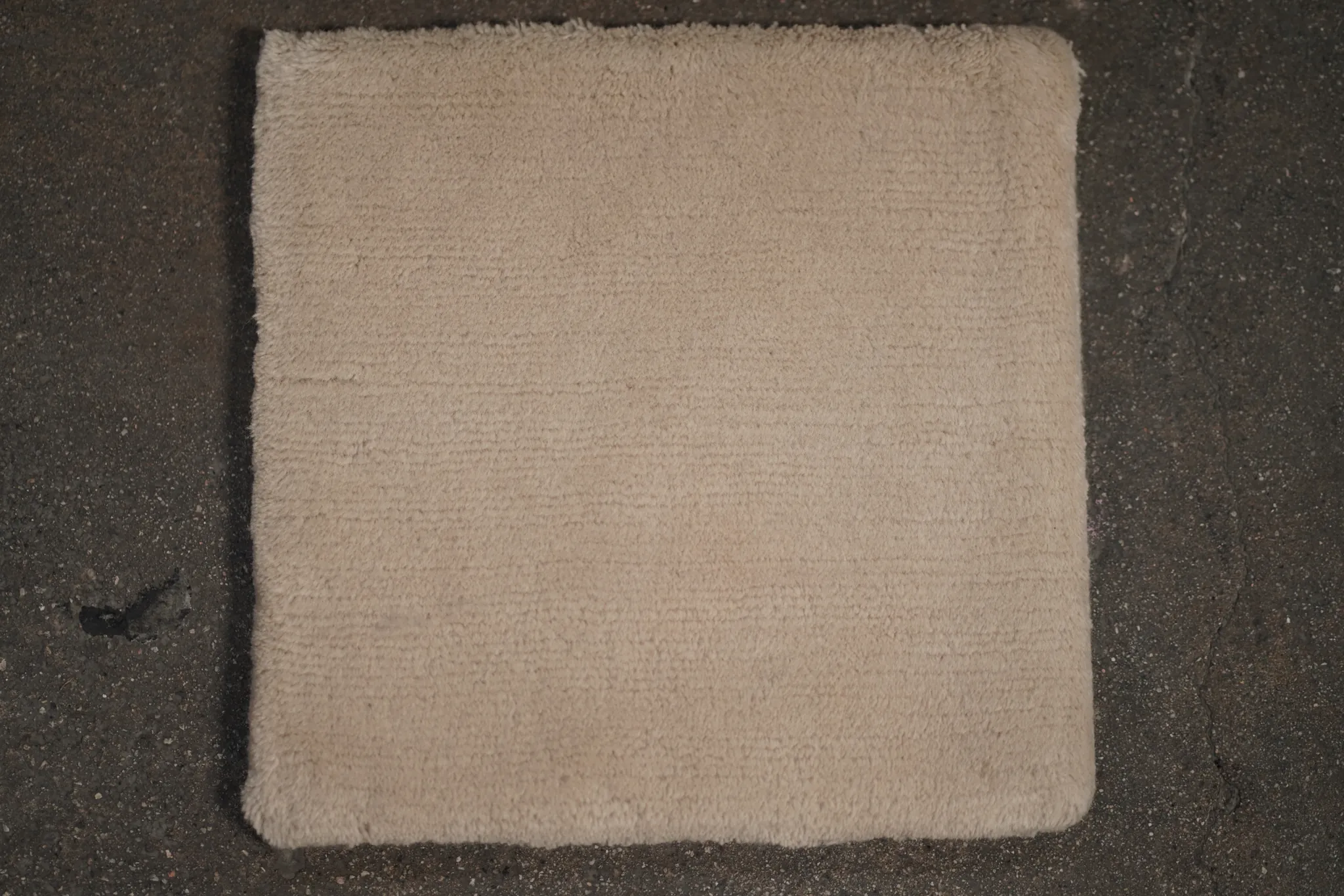
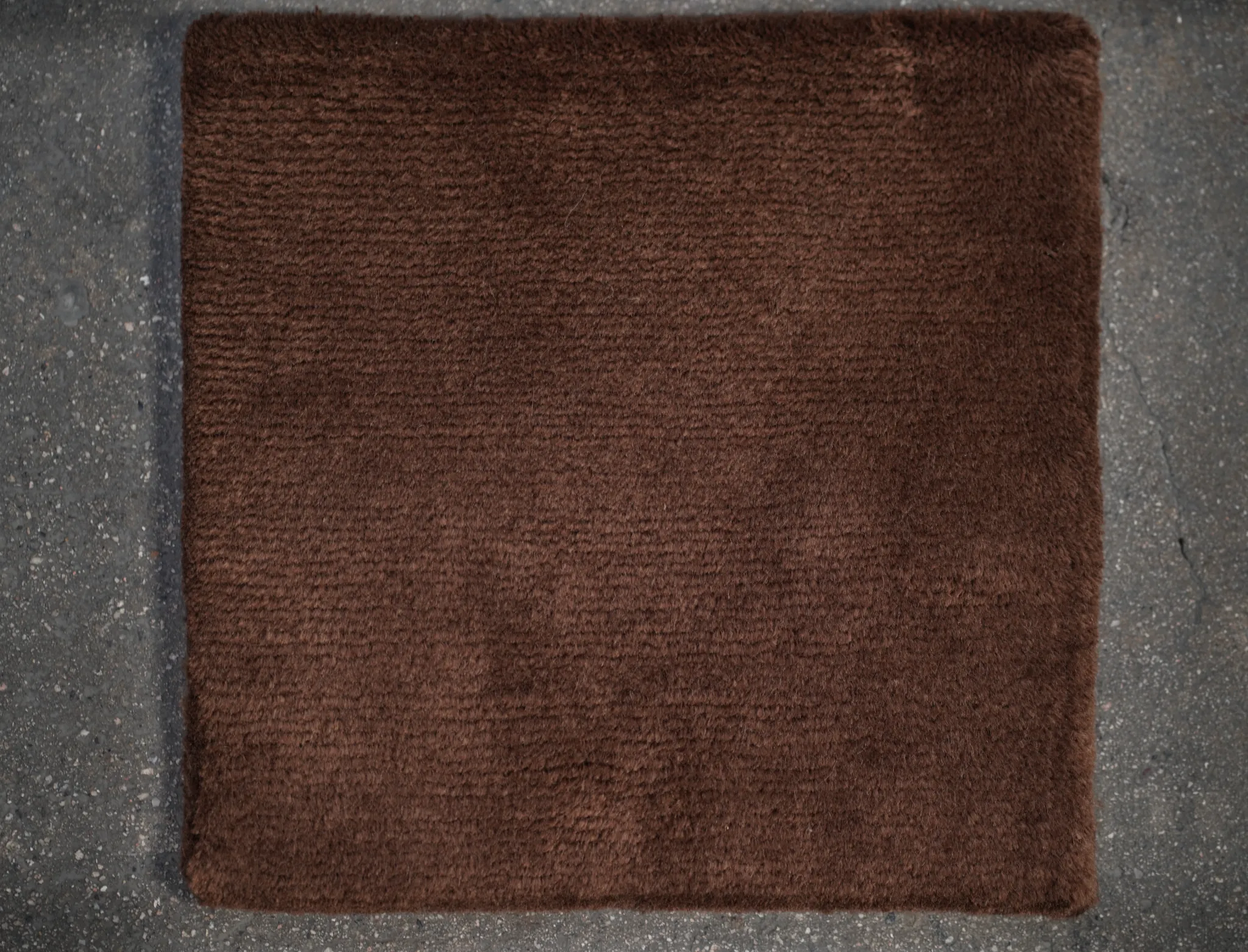
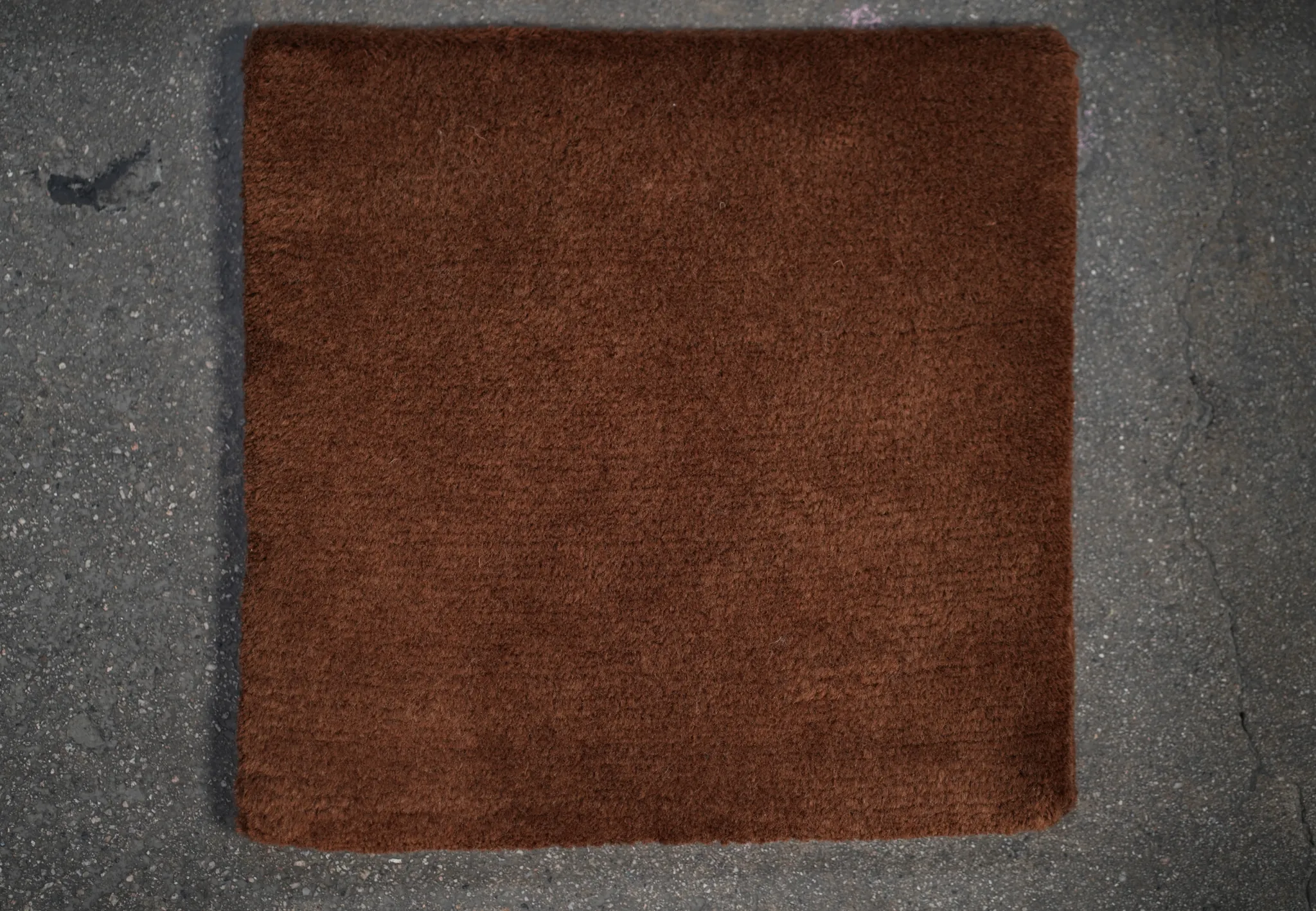
Set of six teak and cane dining chairs by Pierre Jeanneret from the Chandigarh furniture program, circa mid-twentieth century. Compact rectangular woven backs and seats are carried on broad compass supports, with later removable brown cushions above the seating planes.
Jeanneret developed furniture alongside the architecture of Chandigarh, the new city created in post-independence India. Seating was an essential part of its offices, educational establishments and residential interiors. His designs brought modernist composition into direct contact with local woodworking: substantial timber members, economical joints and repeated forms gave ordinary furnishings a distinct architectural presence. The resulting furniture was made to be used, and its character emerges from the way a relatively small number of structural elements organize the body, the supporting frame and the spaces between them.
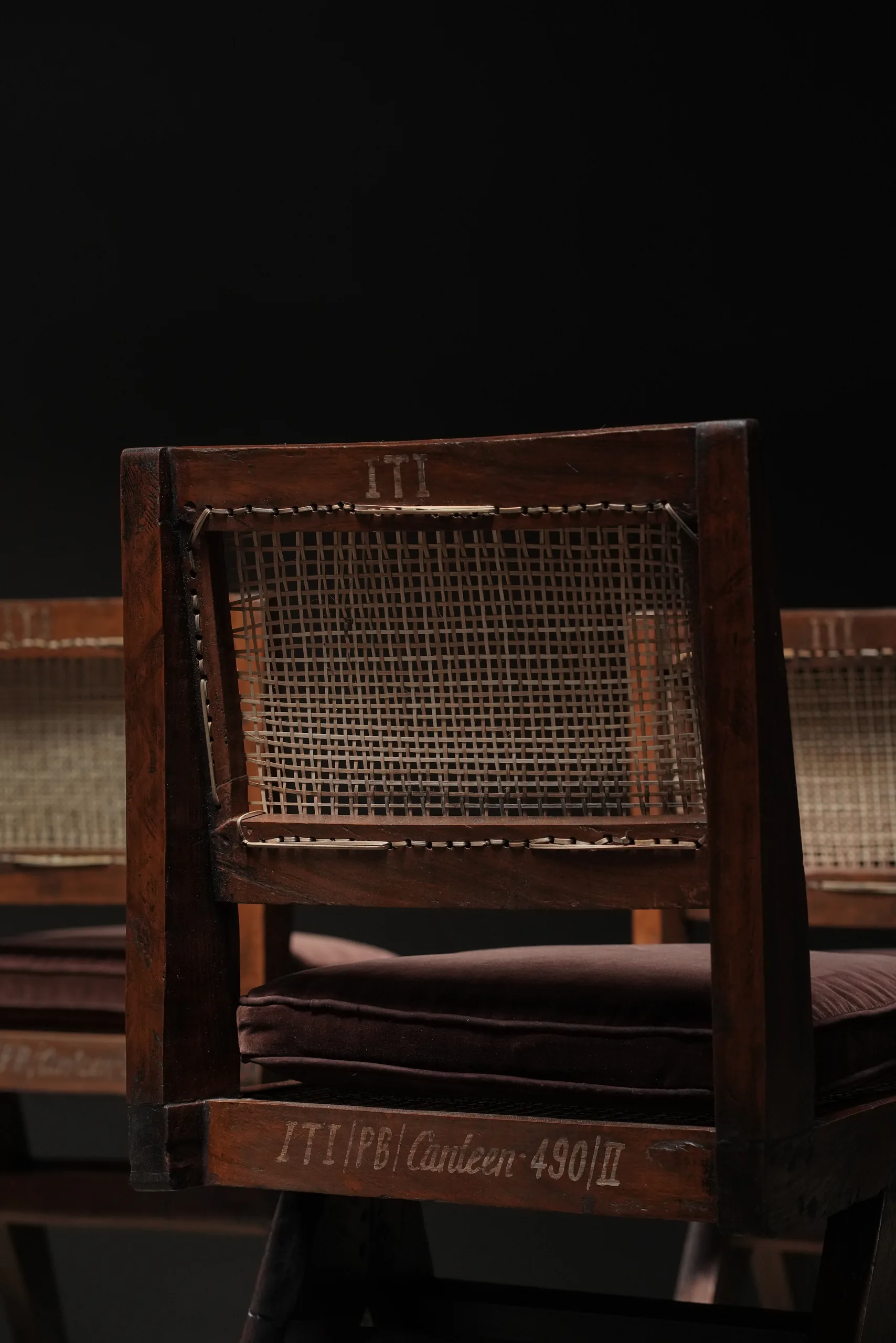
The back uprights descend to the rear seat rails, leaving an open interval beneath each woven panel. The cane grid lightens the substantial teak outline, while the splayed legs create a clear A-shaped profile in side view. The loose cushions sit within the seat frames without concealing the supporting geometry.
A photographed rear rail reads “ITI/PB/Canteen-490/II,” and “ITI” also appears on the upper back rail. ITI is consistent with an Industrial Training Institute designation, PB with Punjab, and “Canteen” explicitly identifies a communal dining inventory. The lettering gives the marked chair a particular educational-use history and remains visible within the open rear construction.
The vintage teak retains variations in grain, color and surface wear, with softened edges and individual traces of use visible in the photographs. These details give the woodwork its material character and preserve the sense of a furnishing made for daily life in institutional or residential interiors. The present cane weaving is renewed.
Dimensions: approximately 16.25 inches wide, 19.25 inches deep, 32.5 inches high. Seat height: 20.25 inches.
Provenance: private collection, Chandigarh, India, as recorded by Studio Balestra.
Accompanied by a Studio Balestra Certificate of Authenticity.