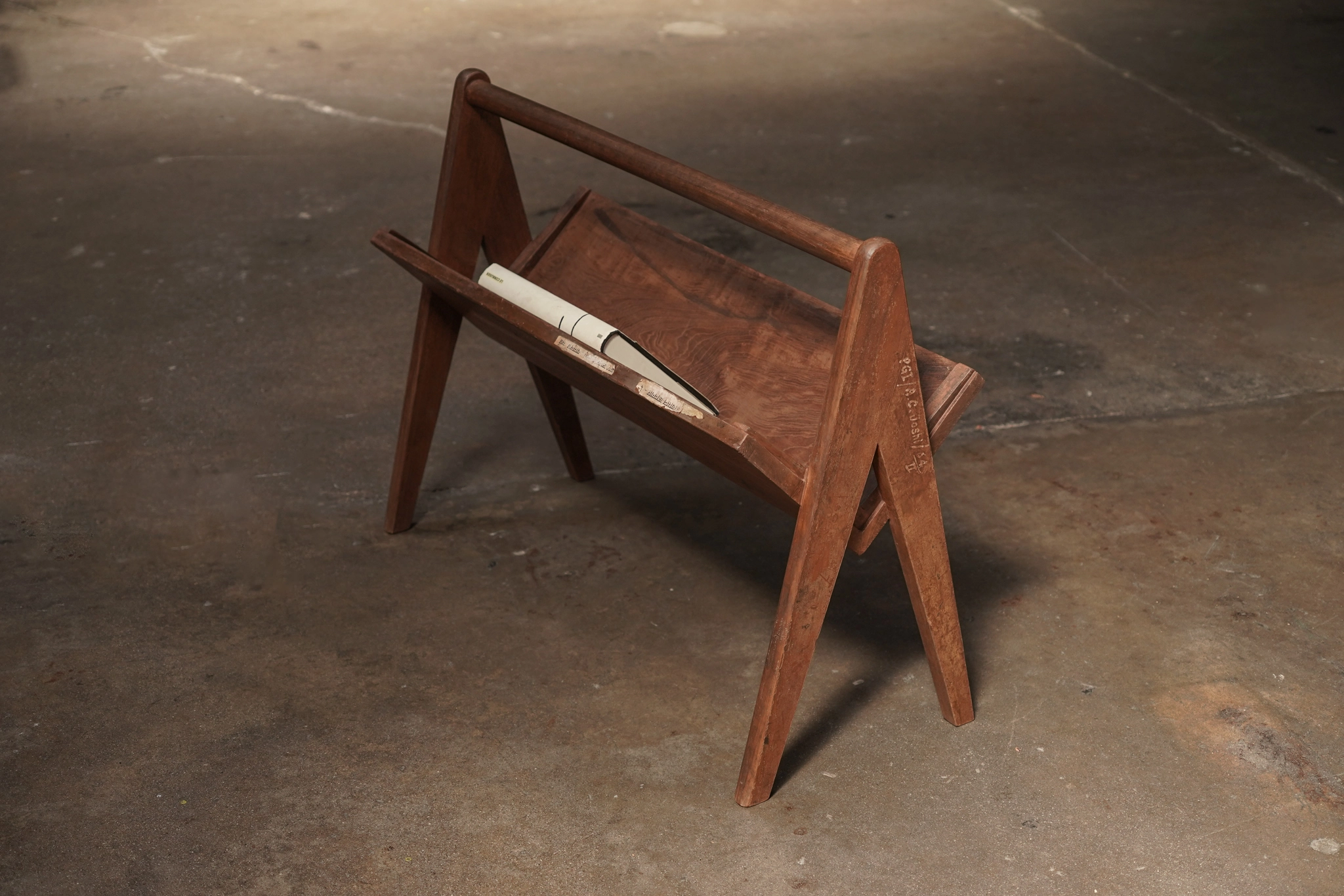
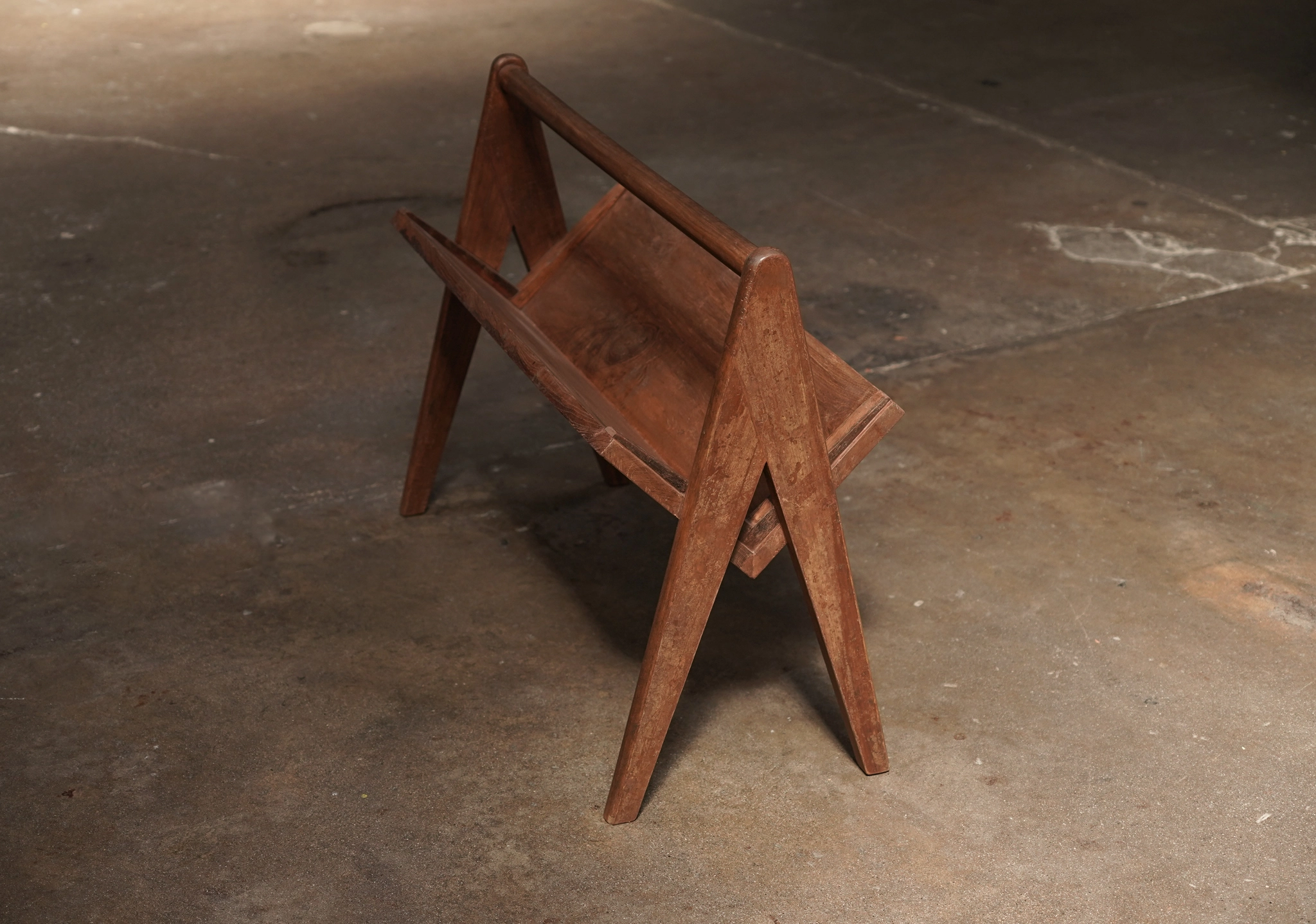
Portable teak magazine rack by Pierre Jeanneret, model PJ-R-07-A, from the Chandigarh furniture program, circa 1960–1961. Two inclined panels create a V-shaped cradle between open compass-form end supports, with a horizontal carrying bar linking the ends above.
The furniture developed by Jeanneret for Chandigarh extended to the practical organization of the city’s institutions and residences. Storage was treated with the same architectural clarity as seating and tables: timber frames, repeated compartments and straightforward fittings made the function of each piece visible. Made in the context of post-independence India’s new city, these furnishings brought modernist ideas into a vocabulary of local woodworking and everyday materials. Their identity lies in the relationship between the enclosing case, its openings and the objects it was intended to hold.
The sloping panels hold printed material within a long, open channel. At each end, angled timber members spread toward the floor, leaving triangular openings around the central body. The round carrying bar provides a contrasting cylindrical element within the otherwise flat-sided construction and makes the object’s portable function visible.
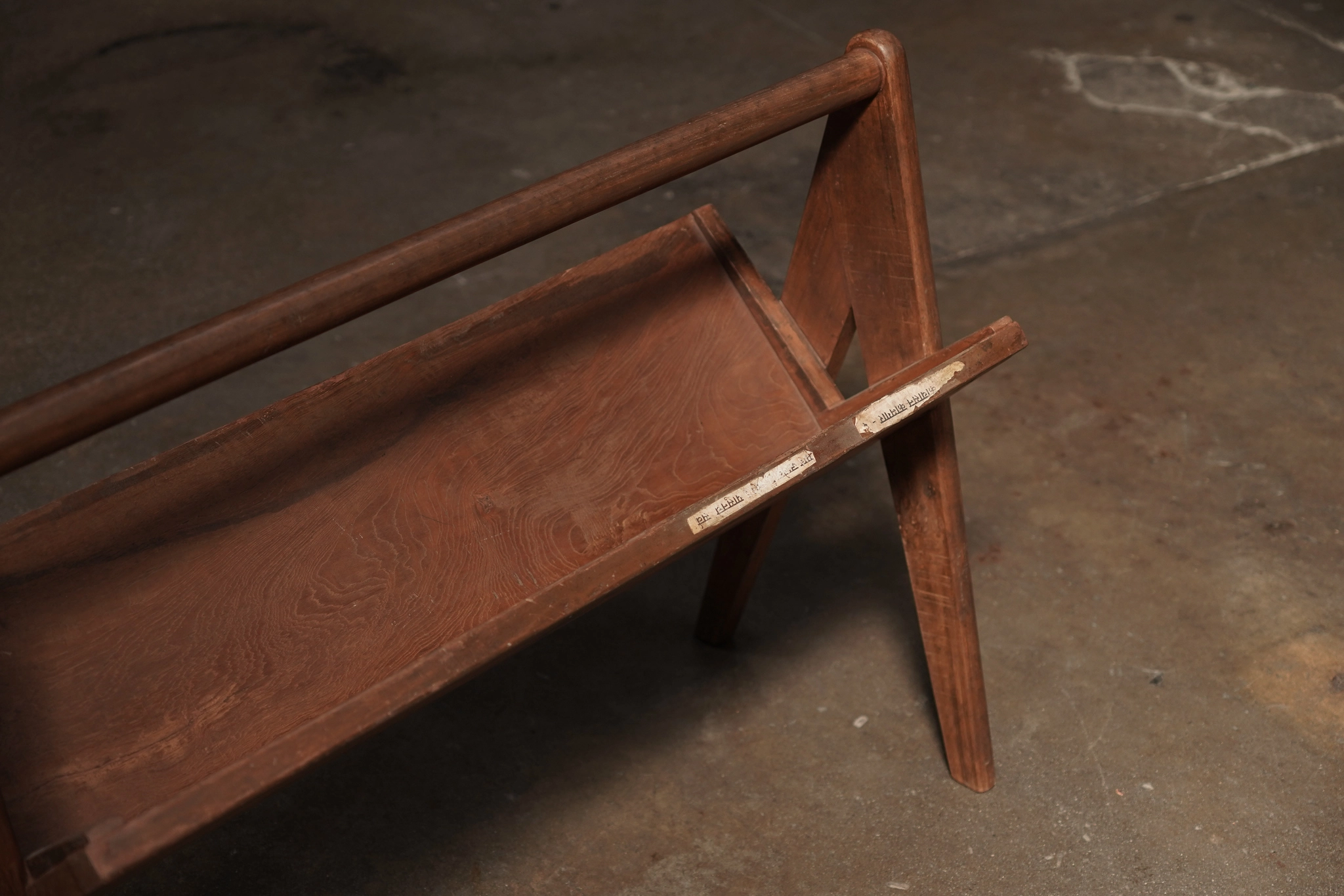
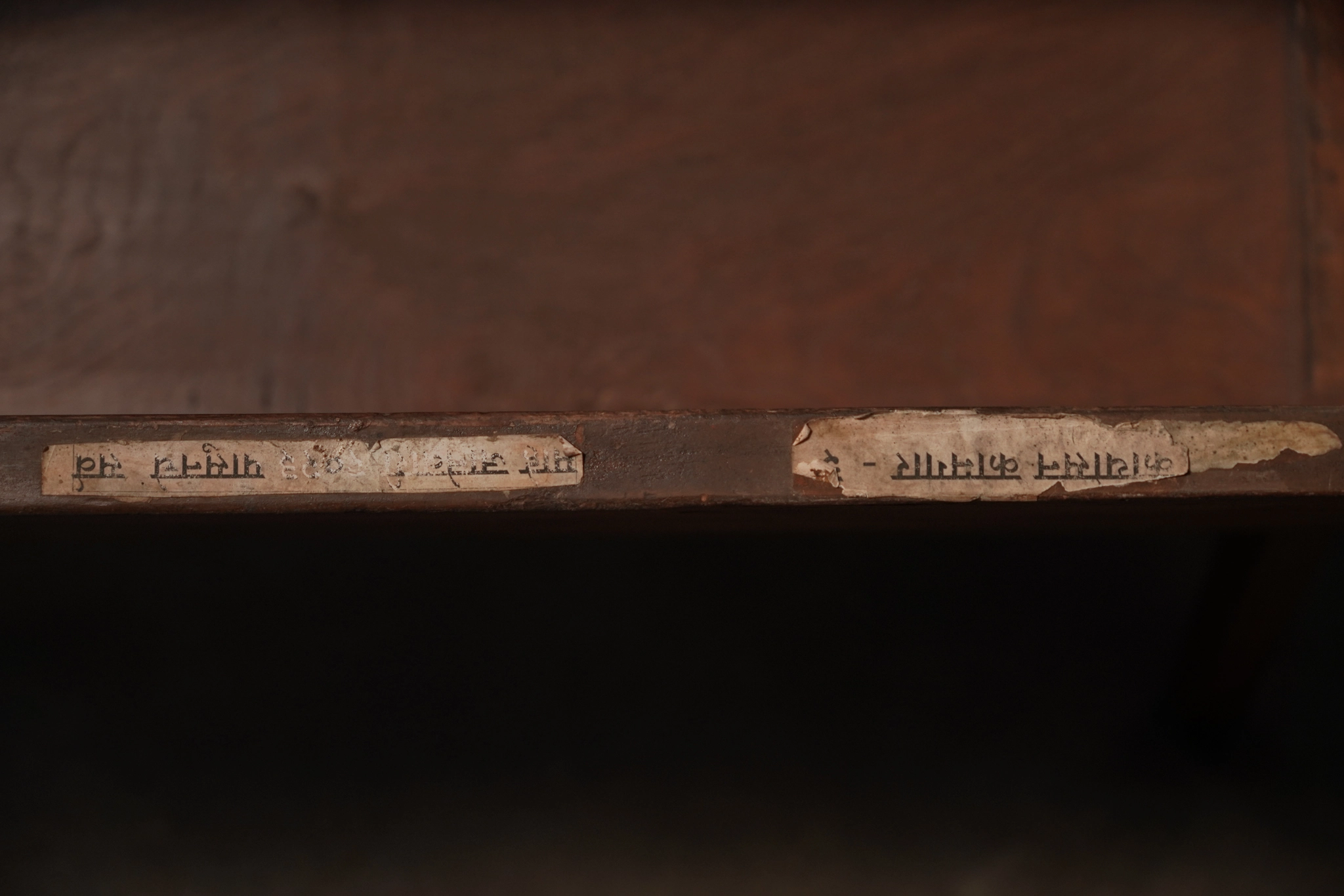
Remnants of paper labels survive along the upper edges, adding traces of the rack’s use for magazines and other printed material. The exposed end frames, recessed cradle and long bar establish a clear hierarchy of parts. Warm brown teak, rubbed edges and variations in grain give the object depth while preserving the practical directness of the design.
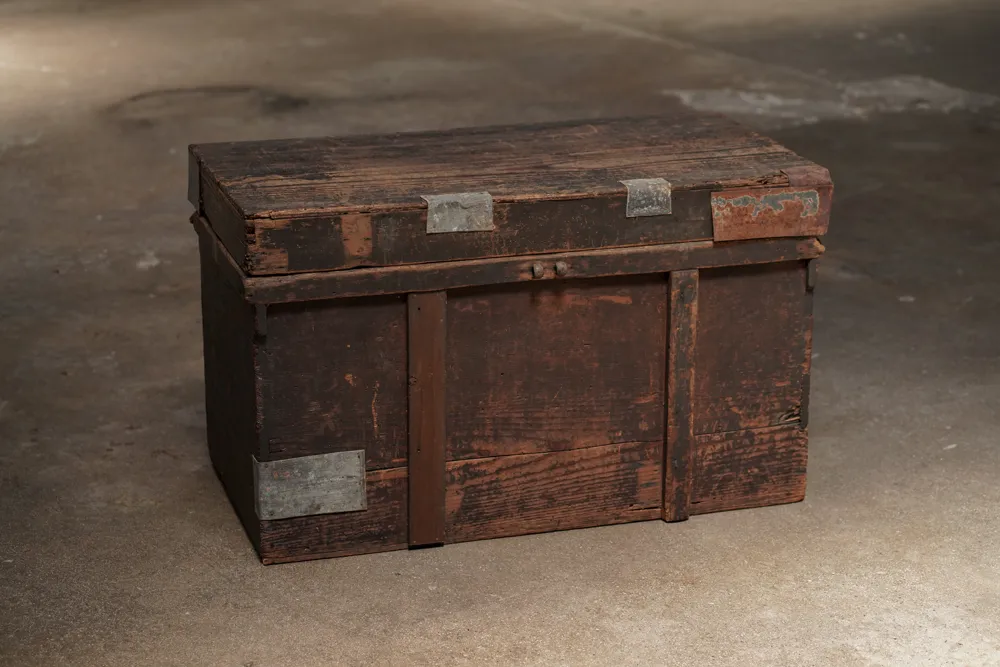
The vintage teak retains variations in grain, color and surface wear, with softened edges and individual traces of use visible in the photographs. These details give the woodwork its material character and preserve the sense of a furnishing made for daily life in institutional or residential interiors. The timber has been refinished.
A related portable magazine rack, model PJ-R-07-A, was catalogued by Sotheby’s in 2022, with the design dated circa 1960–1961.
Dimensions: approximately 37.5 inches wide, 14.5 inches deep, 27 inches high.
Provenance: private collection, Chandigarh, India, as recorded by Studio Balestra.
Accompanied by a Studio Balestra Certificate of Authenticity.