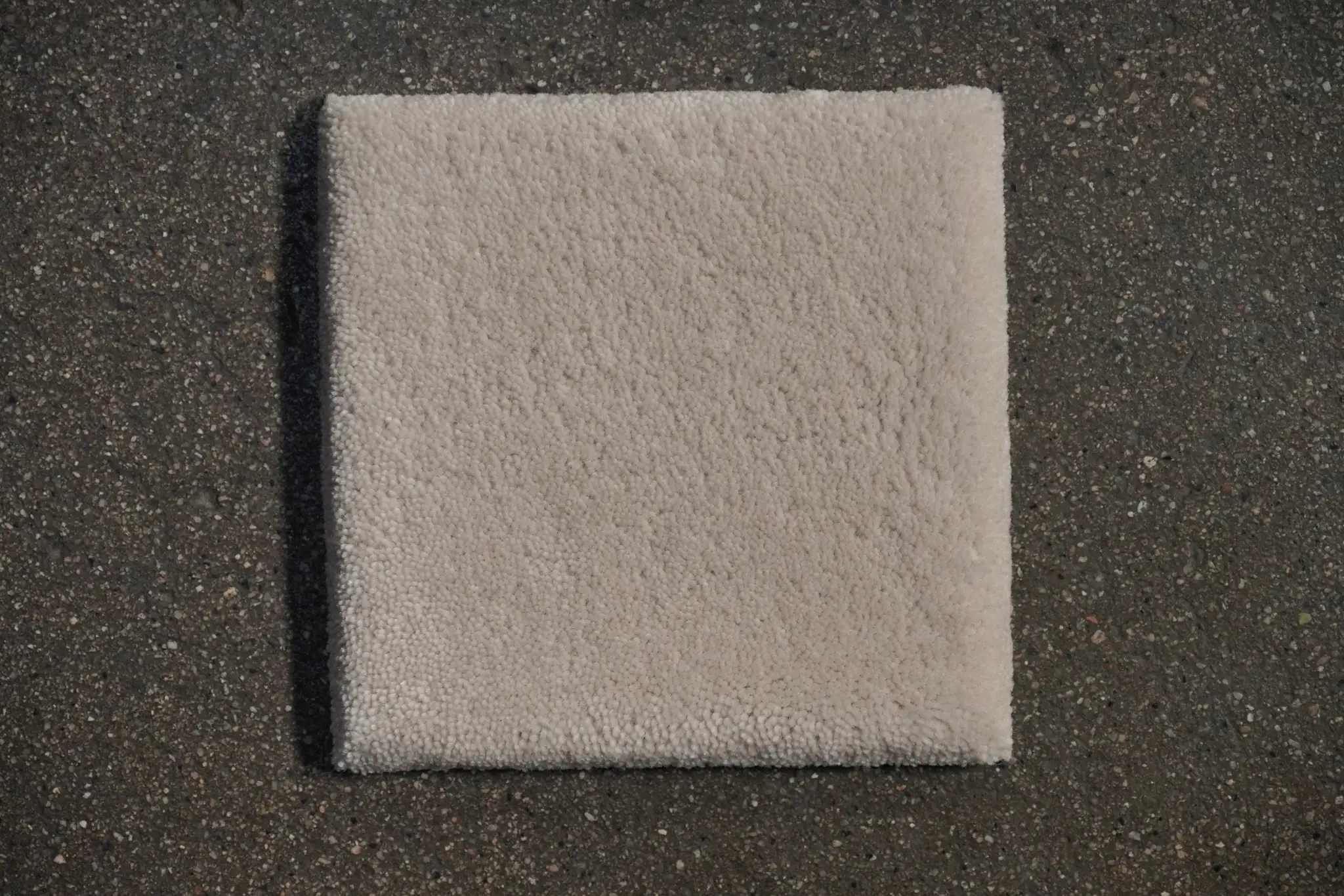
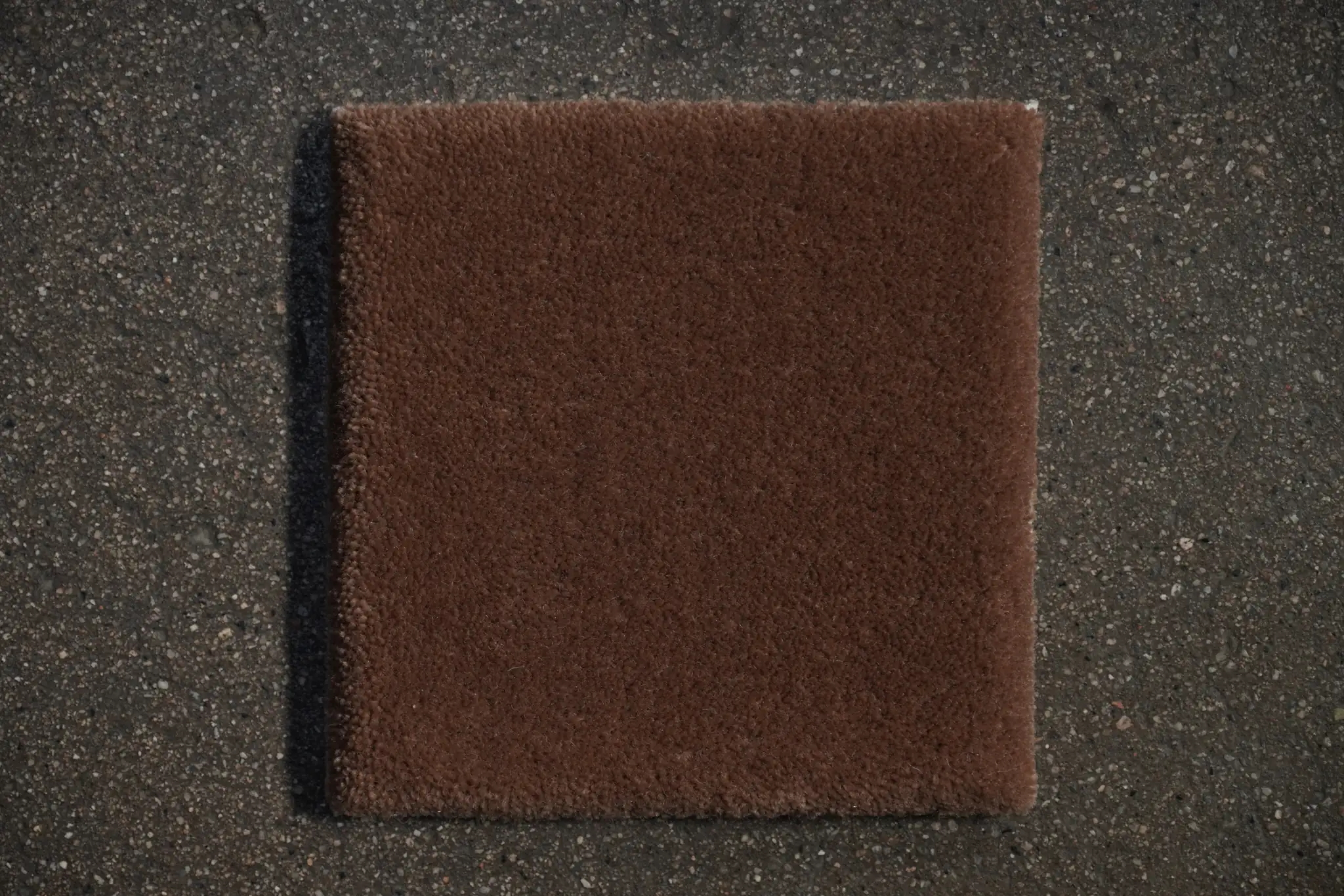
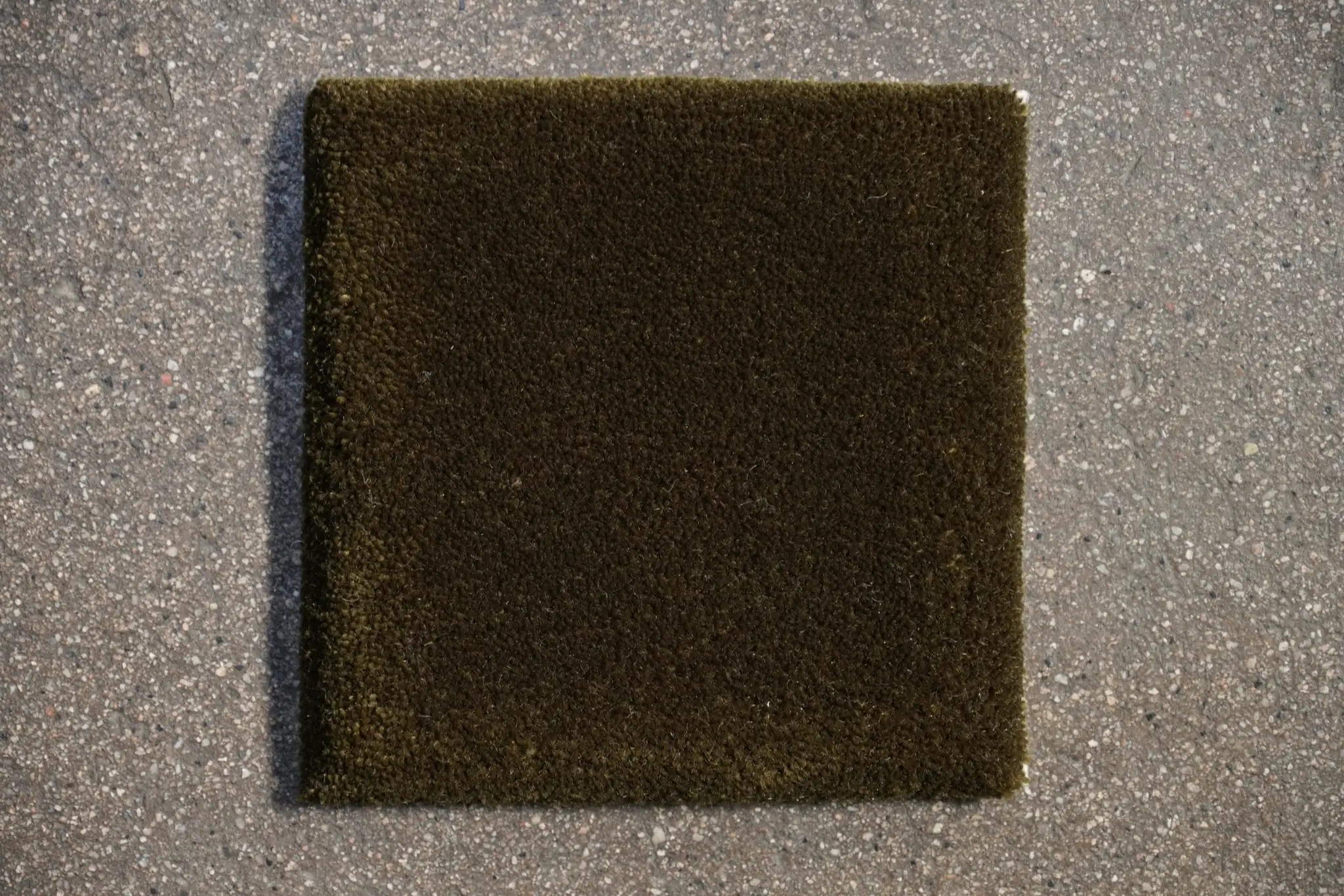
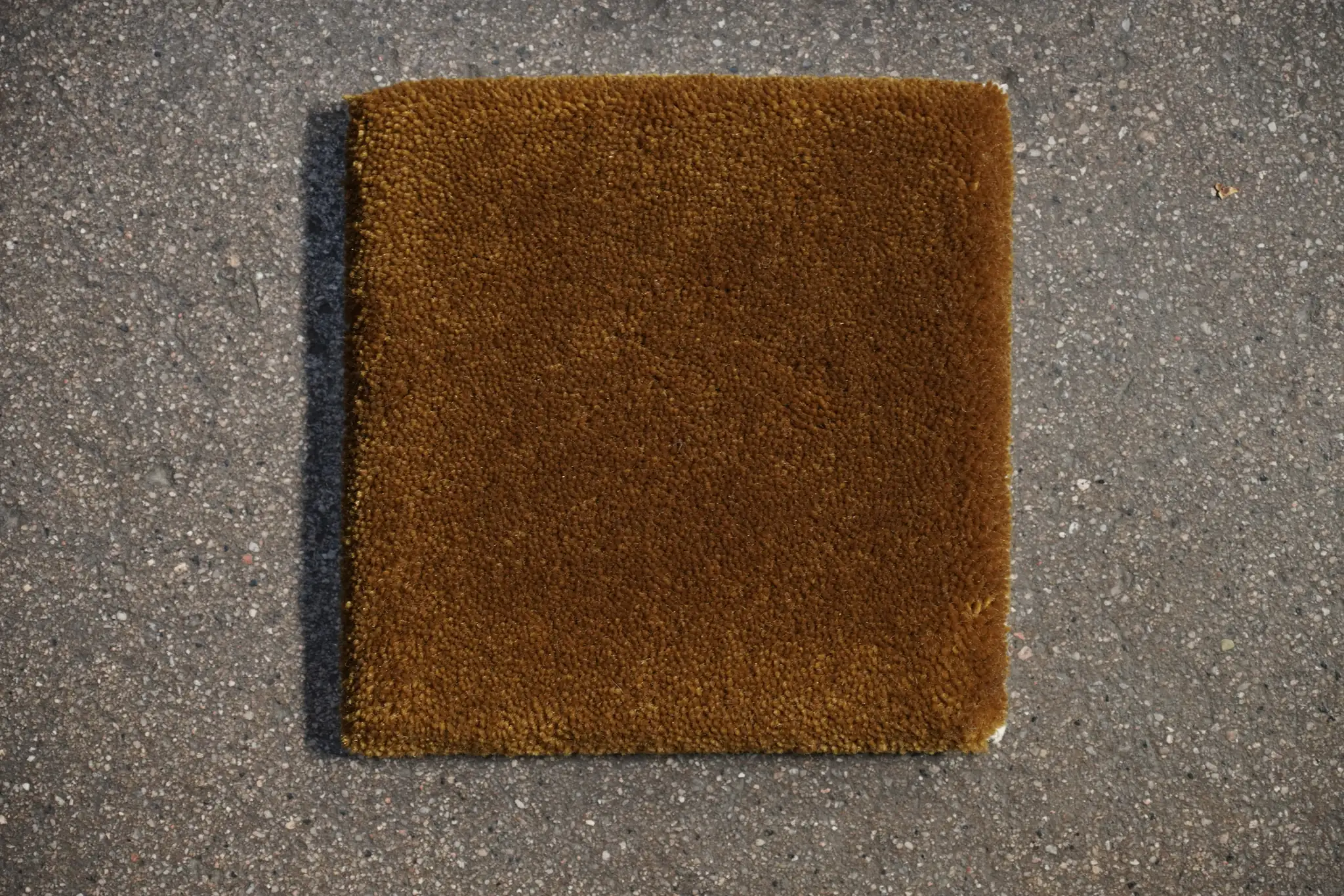
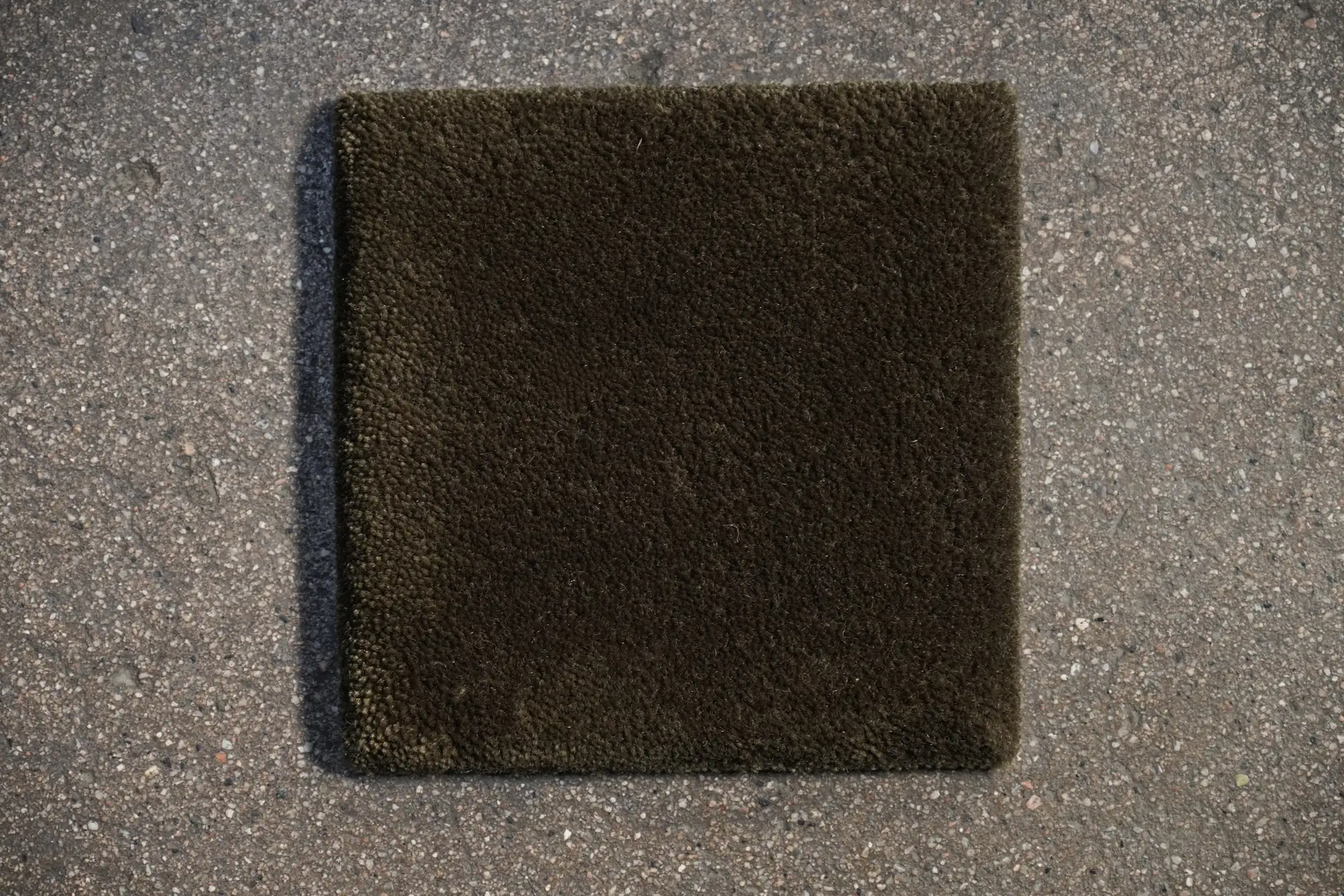
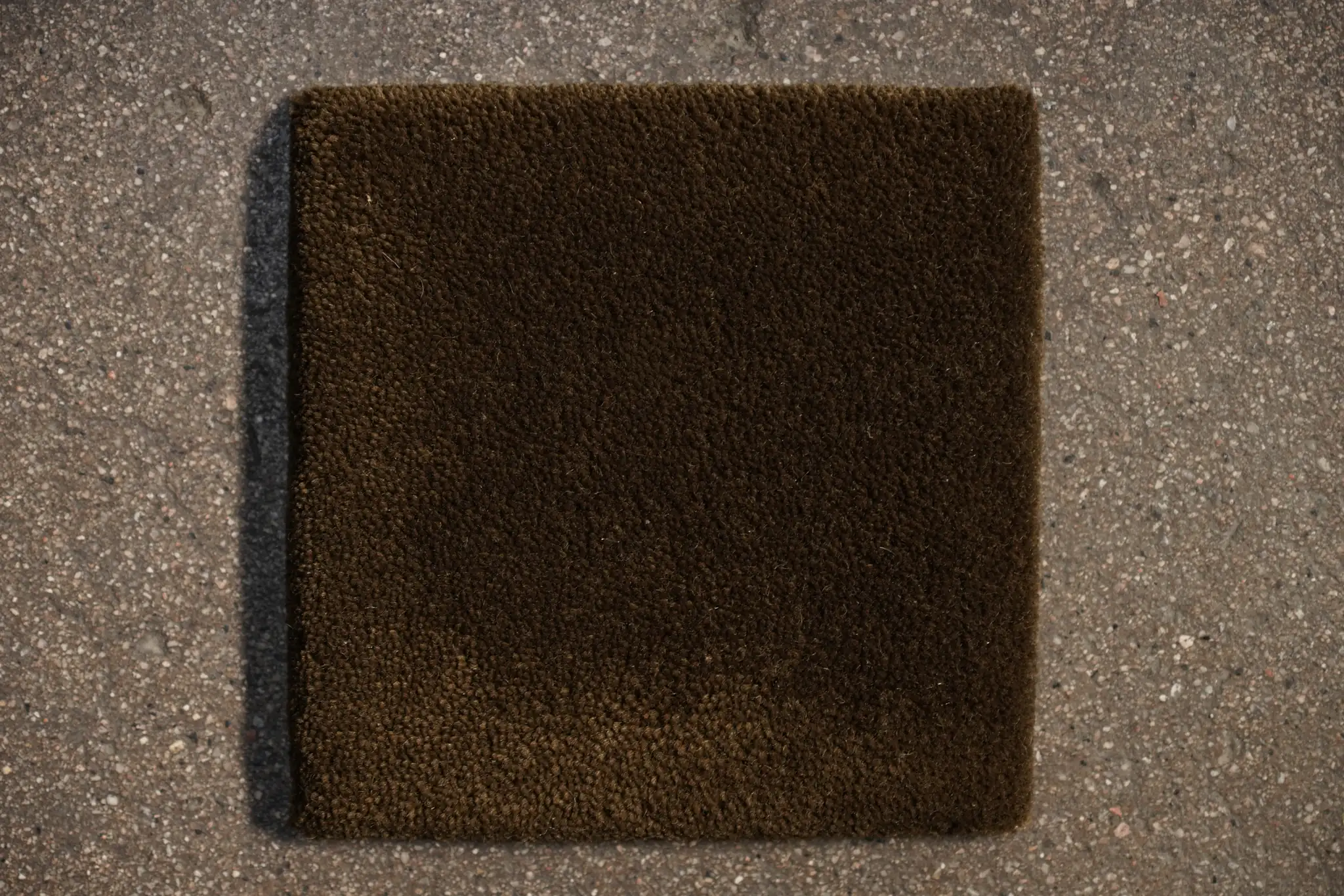
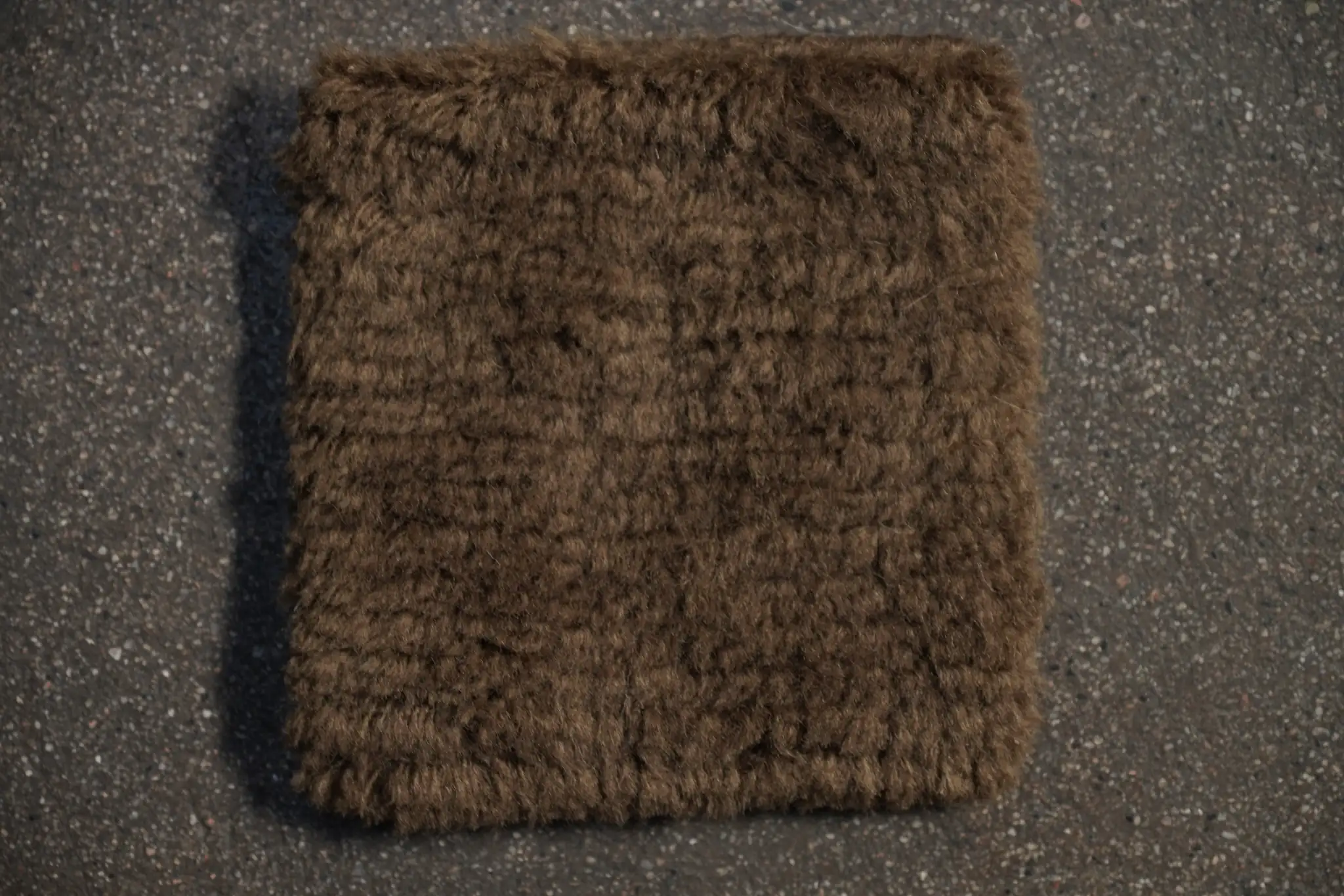
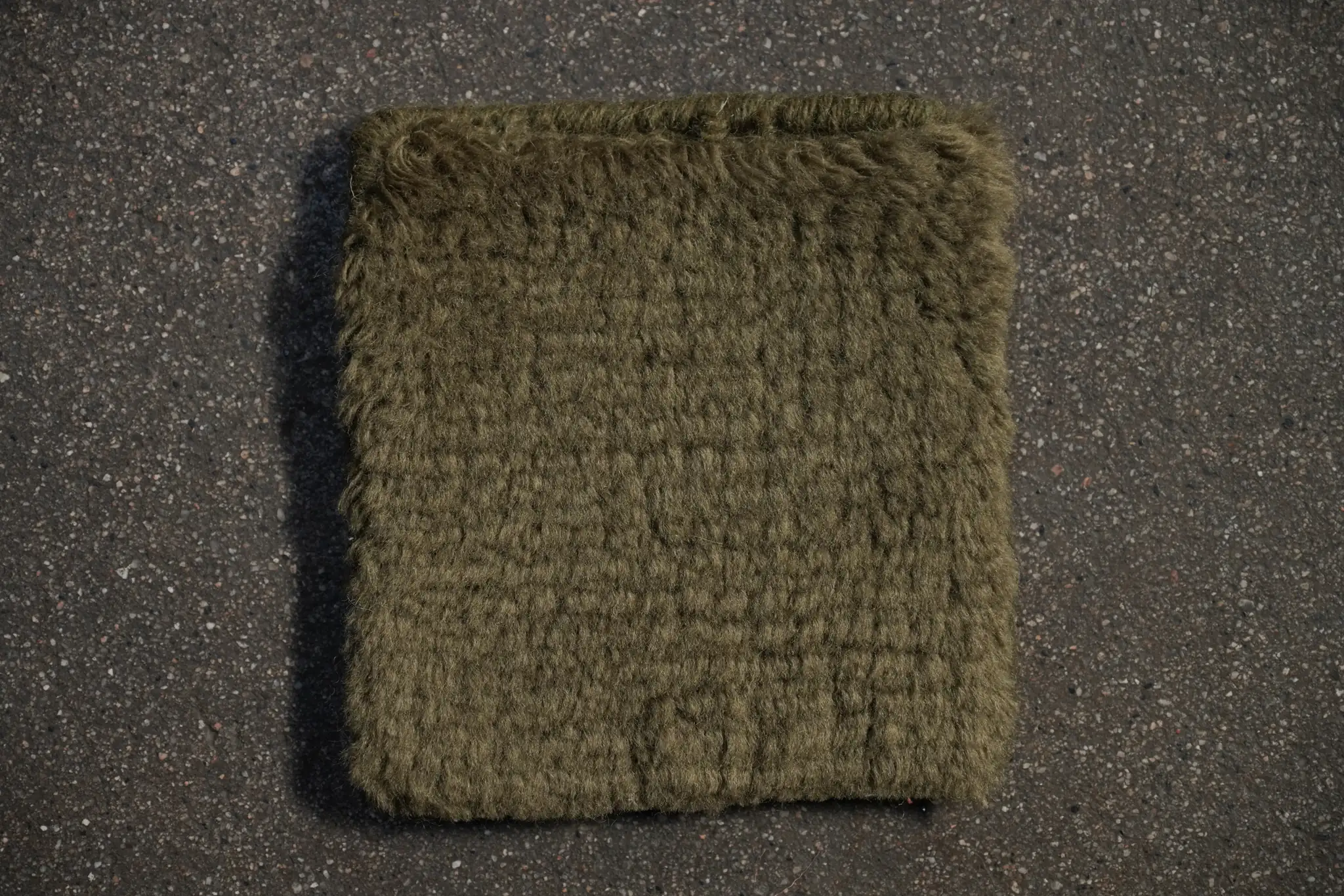
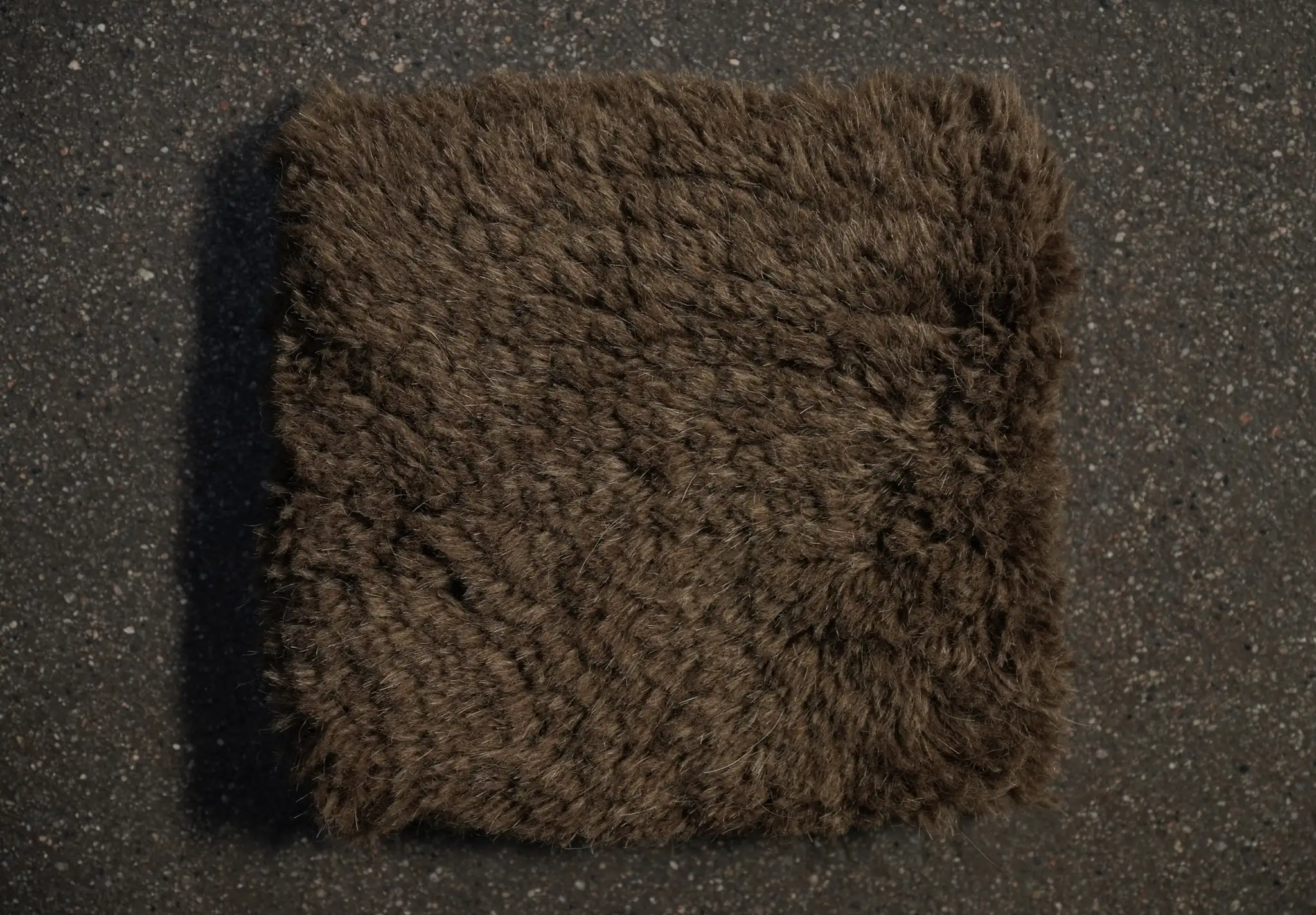
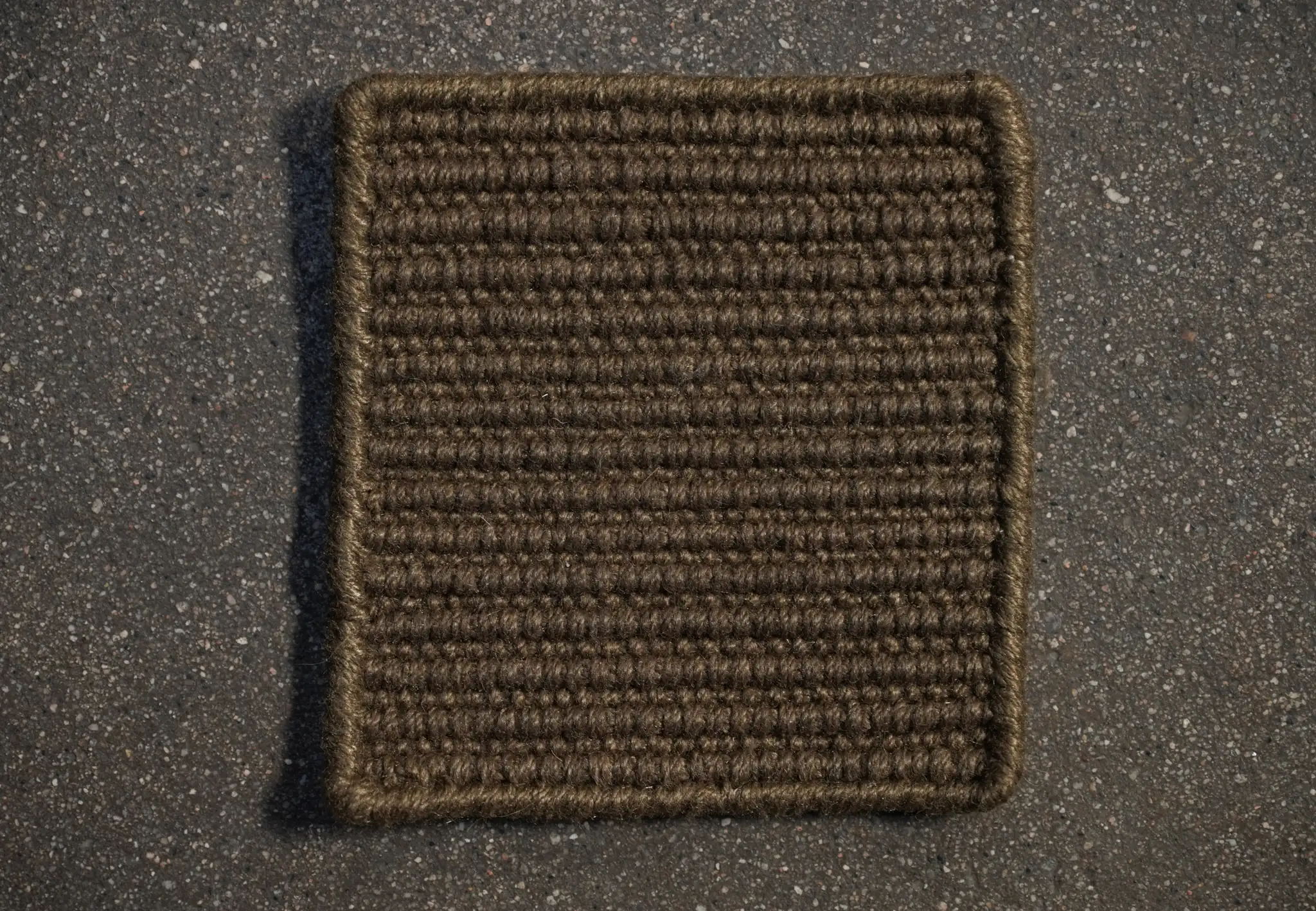
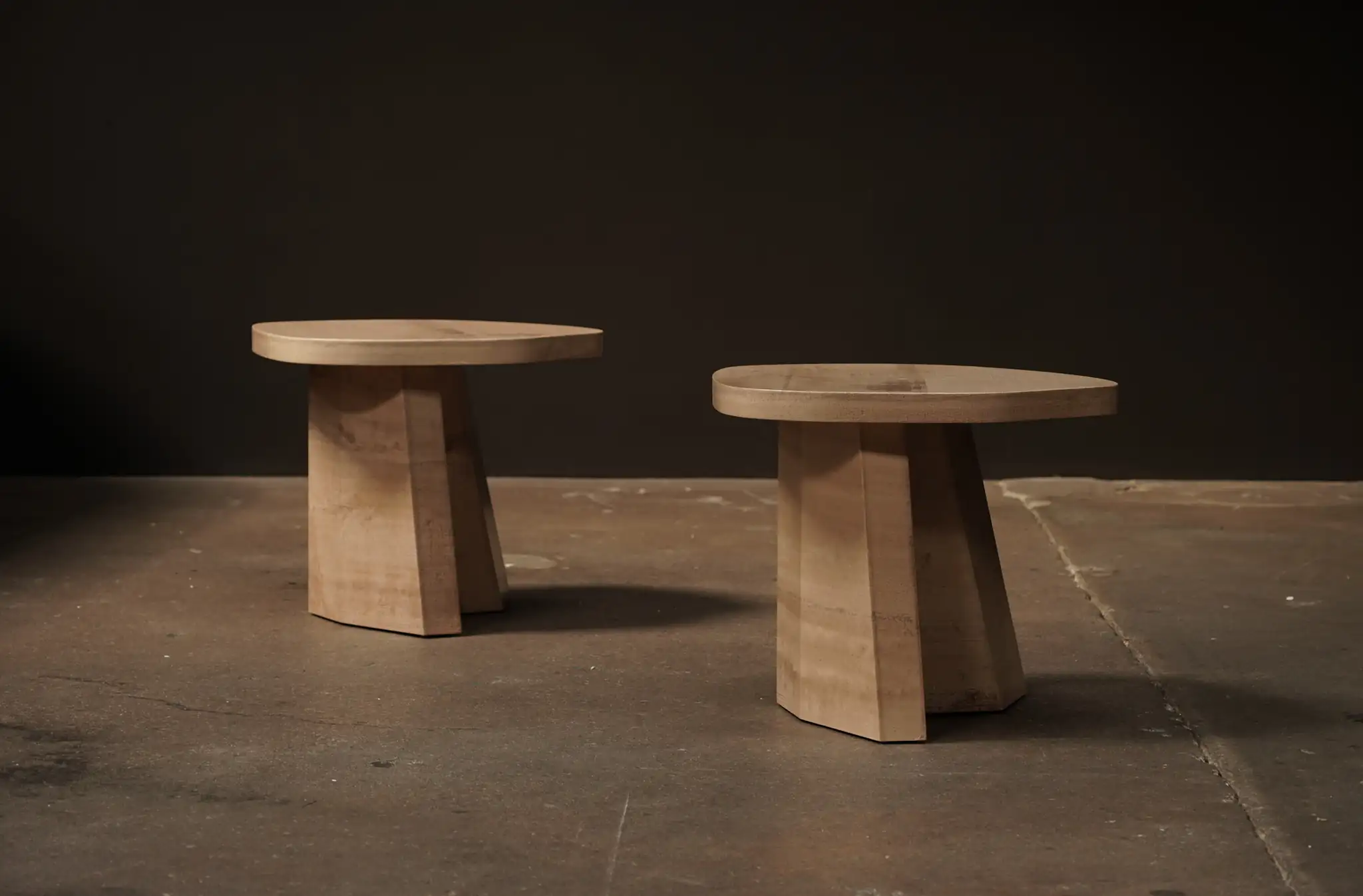
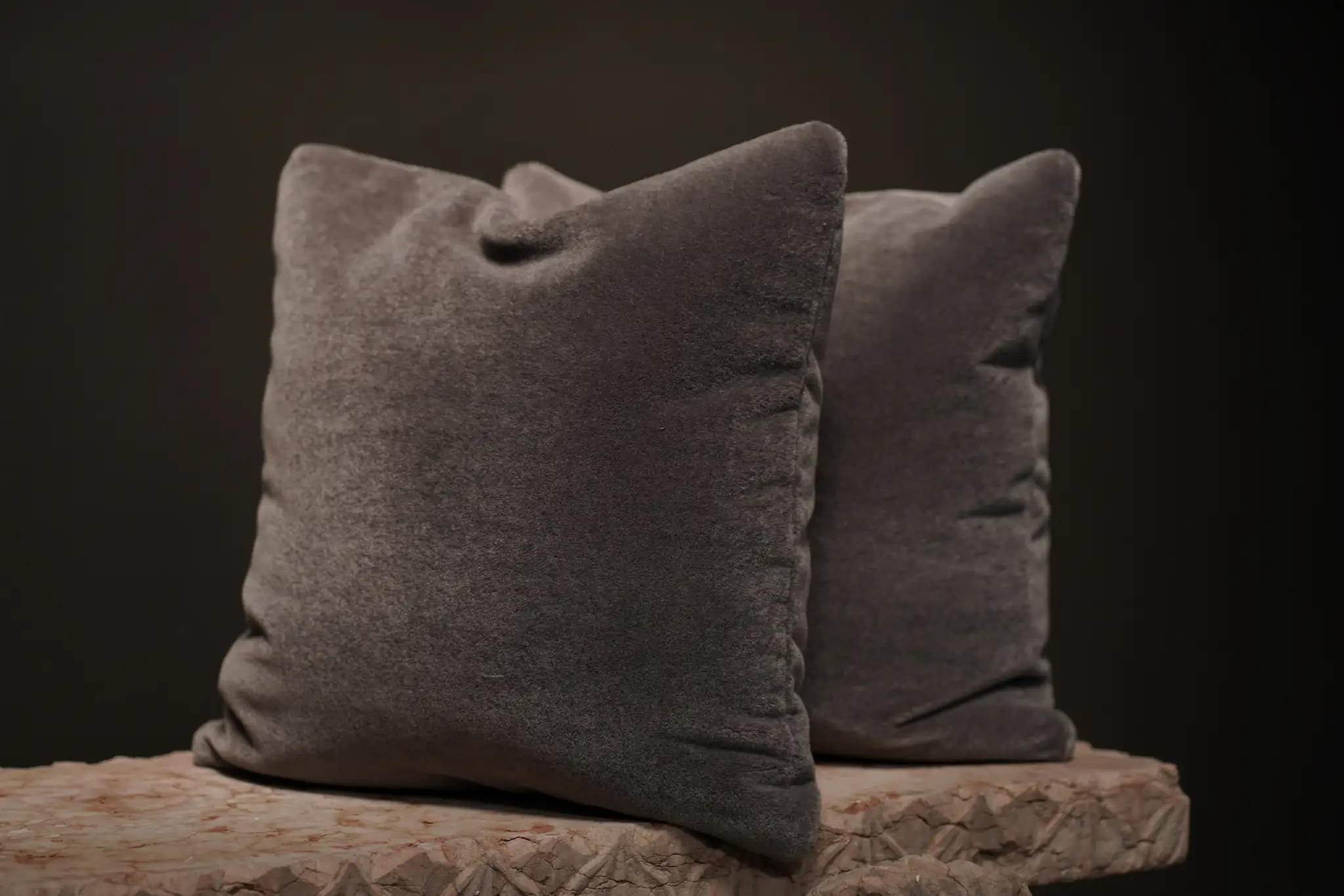
Teak and cane linen box by Pierre Jeanneret from the Chandigarh furniture program, circa 1955–1956, presented with a contemporary loose mohair cushion. The low rectangular case combines a solid timber lid, woven panels and simple metal closing hardware.
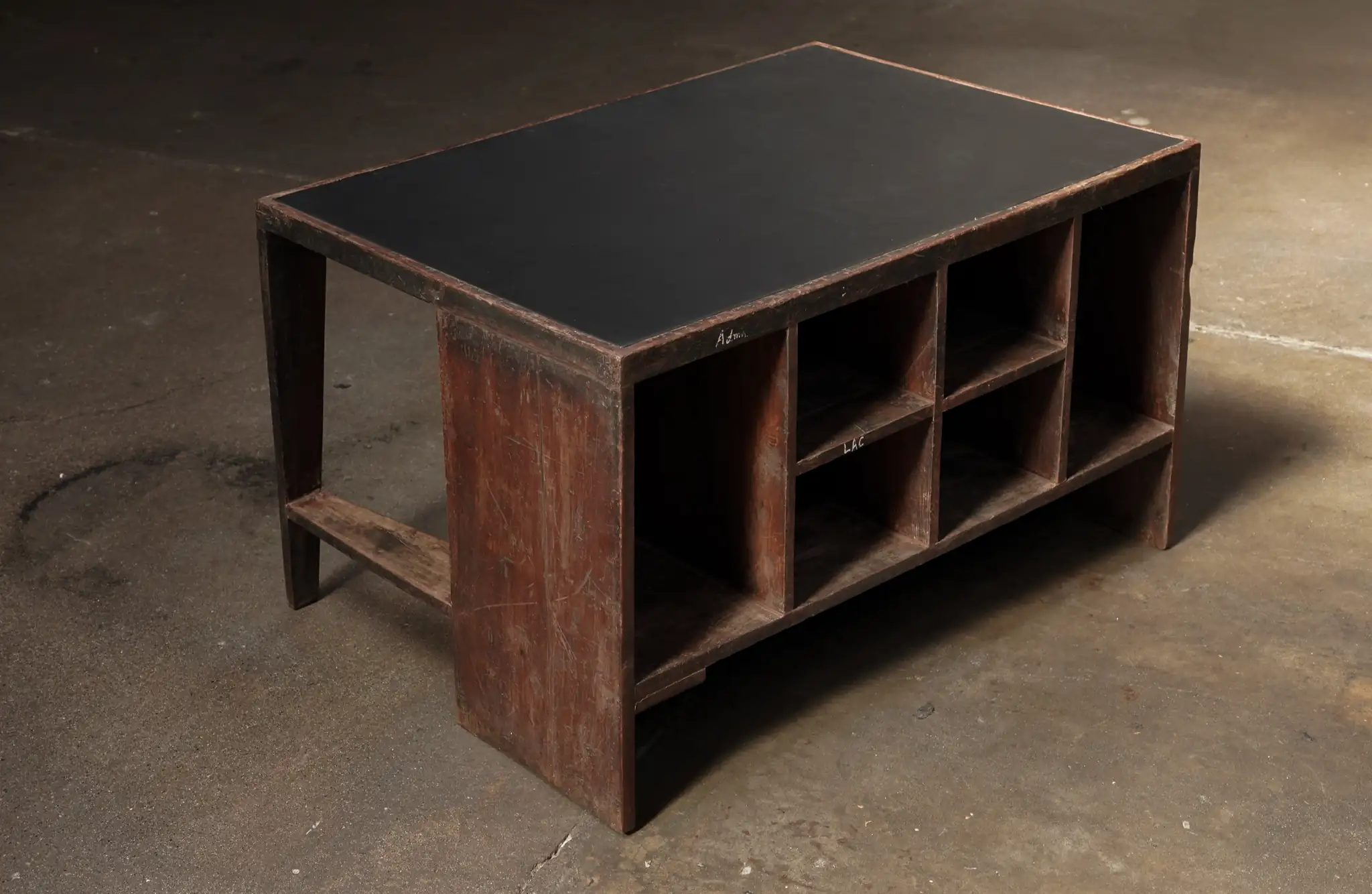
The furniture developed by Jeanneret for Chandigarh extended to the practical organization of the city’s institutions and residences. Storage was treated with the same architectural clarity as seating and tables: timber frames, repeated compartments and straightforward fittings made the function of each piece visible. Made in the context of post-independence India’s new city, these furnishings brought modernist ideas into a vocabulary of local woodworking and everyday materials. Their identity lies in the relationship between the enclosing case, its openings and the objects it was intended to hold.
The cane front and side panels are set within a broad teak framework, introducing ventilation and visual lightness to the enclosed storage volume. The hinged lid creates a continuous solid top, while the lower timber rails give the box a grounded rectangular outline. The removable cushion adds a soft seating layer above the vintage storage case.
A photographed front rail reads “PSD/CH/229,” with “B” beneath the inventory number. The departmental-style initials, Chandigarh abbreviation and numerals preserve an institutional identifier on the teak itself. The lettering is situated just below the lid, beside the metal latch, and remains visible above the woven panel. It forms a meaningful part of the box’s surface history.
The vintage teak retains variations in grain, color and surface wear, with softened edges and individual traces of use visible in the photographs. These details give the woodwork its material character and preserve the sense of a furnishing made for daily life in institutional or residential interiors. The timber has been refinished. The present upholstery is a later treatment of the vintage structure.
For a related Chandigarh linen-chest design, see Wright, Essential Design, August 2026, lot 139, citing Touchaleaume and Moreau, L’Aventure indienne, 2010, page 596.
Dimensions: approximately 27.5 inches wide, 17.5 inches deep, 17 inches high.
Provenance: private collection, Chandigarh, India, as recorded by Studio Balestra.
Accompanied by a Studio Balestra Certificate of Authenticity.